Hi, message us with any questions.
We're happy to help!





This article explains why traditional cleaning methods fail and how dust accumulation creates hidden risks across warehouse systems.
It provides engineering-based warehouse safety solutions centered on industrial vacuum systems, airflow control, and predictive maintenance strategies.A2
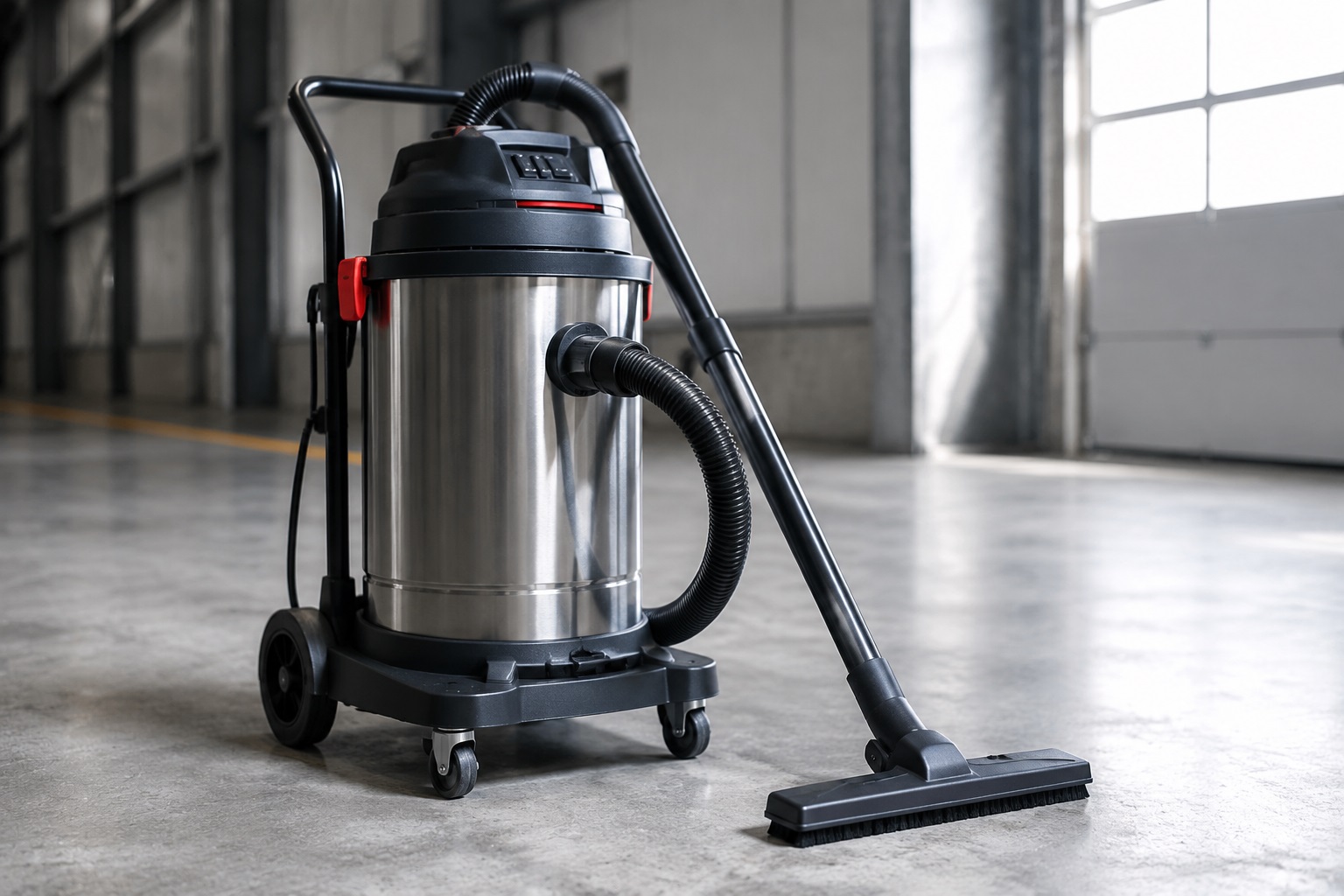
🧭 Introduction: Why Dust Control Directly Defines Warehouse Safety
In modern logistics environments across Europe and the United States, warehouse safety is no longer driven only by training, signage, or compliance documentation. The real hidden risk factor is dust accumulation.
Dust affects warehouse safety in three critical ways:
It increases slip-and-fall incidents on industrial floors
It interferes with automated systems and sensor accuracy
It accelerates equipment wear and unplanned downtime
This is why warehouse dust control has become a core engineering requirement rather than a housekeeping task.
For industrial operators, safety performance is now directly linked to how effectively dust is managed at scale.
⚠️ 1. Real-World Safety Failures Caused by Dust Accumulation
🏭 1.1 Case: US Retail Distribution Center (Illinois)
Facility profile:
58,000㎡ logistics warehouse
High-frequency forklift traffic (200+ cycles/day)
Mixed storage: cardboard + packaged goods
❌ Observed problems:
Fine dust layer formed within 48 hours after cleaning
Slip incidents increased during peak operation hours
Forklift braking distance increased due to floor micro-contamination
📉 Measured impact:
Slip-related safety incidents: +38% in 3 months
Maintenance intervention frequency: +22%
Floor friction coefficient dropped below safety threshold in key zones
👉 Root cause: inconsistent dust prevention methods and lack of continuous extraction system.
🏭 1.2 Case: Germany Automated Logistics Hub
Facility profile:
Fully automated picking system
Conveyor + AGV integration
24/7 operation cycle
❌ Failure pattern:
Dust accumulation on optical sensors
Conveyor misreads due to airborne particles
Emergency shutdowns triggered by contamination alarms
📉 Results:
Unplanned downtime: 6–9 hours/month
Sensor replacement cost increased by 19%
👉 Key insight: dust is not only a floor problem — it is a system-level automation risk.
🧠 2. Why Traditional Warehouse Dust Control Fails
🧹 2.1 Sweeping creates airborne contamination loops
Most warehouses still rely on:
Manual sweeping
Low-cost floor cleaning machines
❌ Hidden issue:
Instead of removing dust, sweeping:
Re-suspends fine particles into the air
Extends contamination cycle by 30–90 minutes
Increases HVAC system load
👉 Result: visible cleanliness, invisible contamination risk.
⚙️ 2.2 Wrong equipment selection for industrial scale
Many facilities misuse commercial-grade equipment instead of:
✔ Industrial vacuum for warehouses
✔ Continuous-duty extraction systems
✔ Multi-stage filtration units
This mismatch leads to:
Frequent clogging
Motor overheating
Incomplete dust capture
🔄 2.3 Lack of structured cleaning zones
High-performing warehouses segment space into:
| Zone | Risk Level | Cleaning Strategy |
|---|---|---|
| Docking areas | High | Daily extraction |
| Picking aisles | Medium | Scheduled vacuuming |
| Automation zones | Critical | Continuous dust control |
Without zoning, warehouse safety solutions lose efficiency by up to 50%.
🌀 3. Engineering-Based Warehouse Dust Control System
🏭 3.1 Industrial vacuum as core safety infrastructure
Modern industrial vacuum for warehouses is not a cleaning tool — it is a continuous safety system.
Required capabilities:
24/7 duty cycle operation
HEPA / ULPA filtration systems
High suction stability under heavy dust load
Large-capacity dust separation tanks
👉 This ensures stable warehouse dust control even in high-traffic environments.
🧼 3.2 Integrated floor safety management system
Floor safety is the most measurable safety indicator in warehouses.
Advanced systems combine:
Wet scrubbing machines
Vacuum recovery units
Anti-slip drying systems
📊 Case: UK 3PL Warehouse Upgrade
After deploying integrated floor safety management:
Slip incidents ↓ 52%
Cleaning efficiency ↑ 34%
Labor cost ↓ 29%
👉 Key takeaway: floor safety is a system outcome, not a single action.
🌫 3.3 Airborne dust suppression engineering
Effective dust prevention methods include:
Dock door air curtains
Negative pressure loading zones
High-efficiency HVAC filtration (MERV 13–16)
Result:
Airborne dust concentration reduced by up to 60%
Re-contamination cycle significantly slowed
🏗 4. Logistics Facility Maintenance as a Safety Strategy
🔄 4.1 From reactive cleaning to predictive maintenance
Traditional model:
Clean → dirt accumulates → clean again
Modern model:
Sensor-based dust detection
Usage-based cleaning triggers
Predictive maintenance scheduling
This transforms logistics facility maintenance into a proactive safety system.
📊 4.2 Safety KPI framework used in advanced warehouses
Leading logistics operators track:
Slip-and-fall incident rate
PM10 / PM2.5 concentration levels
Equipment failure due to dust
Floor friction coefficient stability
Cleaning cycle efficiency
📉 5. Commercial vs Industrial Dust Control Systems
| Feature | Commercial System | Industrial System |
|---|---|---|
| Duty cycle | Short intermittent use | Continuous operation |
| Dust handling | Limited capacity | High-volume extraction |
| Filtration | Basic filters | HEPA / ULPA systems |
| Safety reliability | Low | High |
| Warehouse suitability | ❌ Not suitable | ✅ Designed for warehouses |
📈 6. ROI Impact of Industrial Dust Control Systems
Upgrading warehouse dust control systems leads to measurable improvements:
📉 30–55% reduction in slip incidents
📉 20–40% reduction in maintenance downtime
📉 25–35% reduction in cleaning labor cost
📈 15–25% improvement in operational uptime
👉 Typical payback period: 12–24 months
🧾 Conclusion: Dust Control Is the Foundation of Warehouse Safety
In modern logistics systems, dust is not a minor cleaning issue — it is a structural safety risk affecting people, machines, and automation systems.
Companies that implement integrated warehouse dust control, industrial vacuum systems, and structured warehouse safety solutions achieve:
Higher operational stability
Lower accident rates
Reduced maintenance cost
Improved automation reliability
Ultimately, warehouse safety is no longer defined by policy — it is defined by engineering-level dust management.
🔖 Hashtags
warehouse dust control, warehouse safety solutions, industrial vacuum for warehouses, dust prevention methods, logistics facility maintenance, floor safety management, warehouse safety system design, industrial cleaning engineering, warehouse hygiene control, dust suppression system warehouse, warehouse accident prevention, forklift safety optimization, warehouse floor safety systems, HEPA industrial vacuum, warehouse airflow control, dust particle management, industrial vacuum systems, warehouse compliance safety, OSHA warehouse safety, EU warehouse safety standards, logistics safety engineering, warehouse maintenance strategy, predictive maintenance warehouse, smart warehouse safety system, industrial dust extraction, warehouse risk management, warehouse contamination control, warehouse cleaning automation, warehouse operational safety, industrial hygiene systems, warehouse safety KPI, logistics center safety design, warehouse floor friction control, dust monitoring system warehouse, warehouse automation safety, warehouse equipment protection, industrial cleaning ROI, warehouse facility optimization, warehouse safety compliance tools, warehouse cleaning systems, industrial vacuum supplier USA, industrial vacuum supplier Europe, warehouse safety engineering solutions, logistics warehouse maintenance systems, warehouse environmental safety, B2B warehouse safety equipment, warehouse safety optimization strategy, dust control engineering, warehouse infrastructure safety, Lanxstar