Hi, message us with any questions.
We're happy to help!





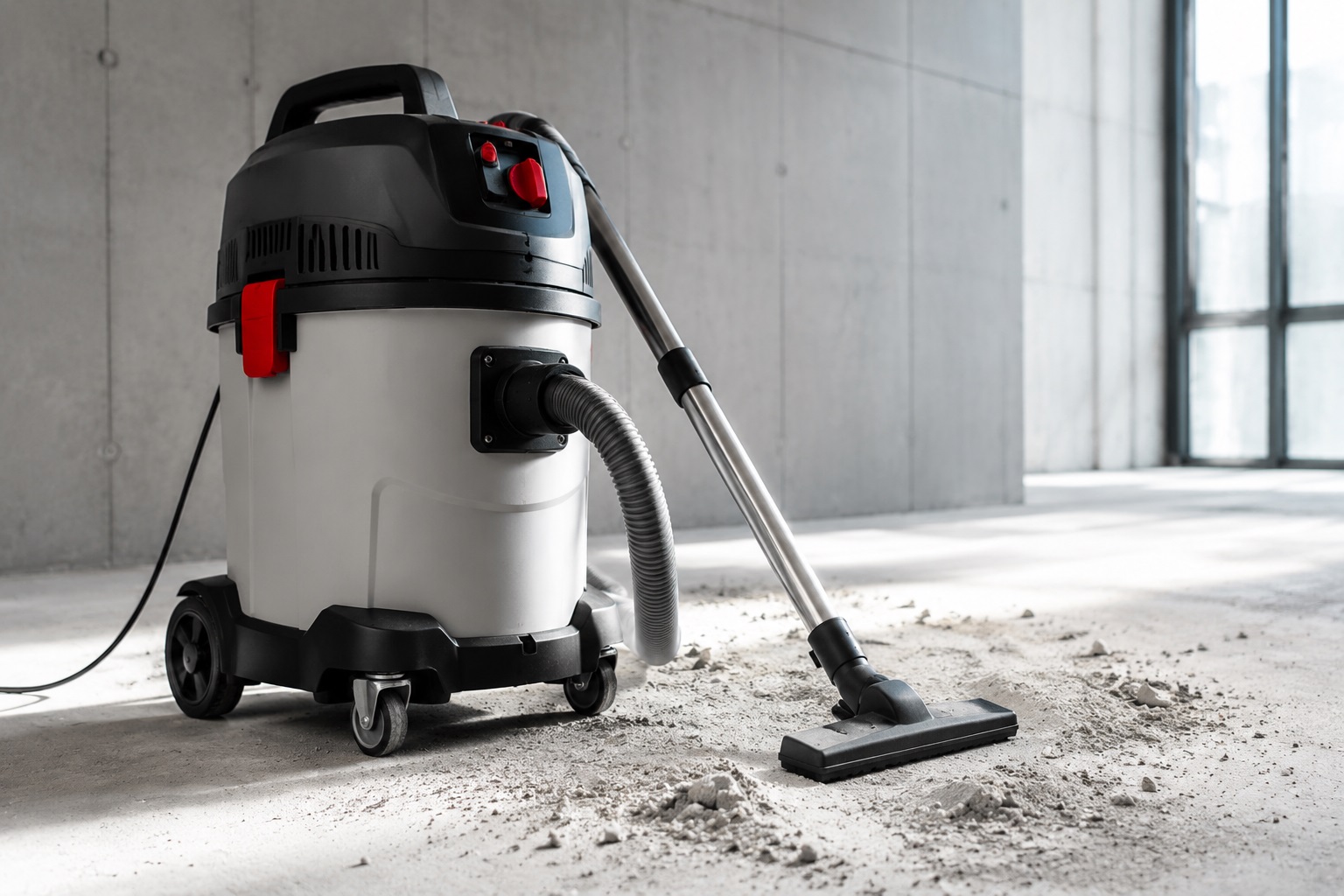
Silica dust exposure is one of the most critical occupational hazards in modern construction and industrial processing environments. For B2B buyers of silica dust vacuum systems, distributors, and engineering procurement teams, the focus is no longer simple cleaning performance—it is OSHA silica compliance, risk elimination, and engineered dust control systems.
This guide explains how professional contractors manage silica dust risks using industrial-grade extraction systems, how compliance is actually enforced, and what decision-makers should evaluate before purchasing equipment.
🧱 What Is a Silica Dust Vacuum and Why It Matters
A silica dust vacuum is a sealed industrial extraction system designed to capture respirable crystalline silica at the source of generation.
Unlike standard vacuums, it must include:
HEPA H13/H14 filtration
Fully sealed dust containment system
Negative pressure airflow design
Certified industrial-grade motors for continuous duty
⚠️ Why this matters:
Silica particles are often smaller than 10 microns and can remain airborne for long periods. Once inhaled, they can cause irreversible lung damage such as silicosis.
👉 This is why OSHA treats silica dust as a regulated airborne hazard—not a housekeeping issue.
⚖️ OSHA Silica Compliance Requirements for Construction Sites
Under OSHA silica compliance (29 CFR 1926.1153), employers must implement engineered controls before relying on PPE.
Key requirements include:
✔ Permissible Exposure Limit (PEL)
50 micrograms per cubic meter (8-hour TWA)
✔ Required control methods:
Wet cutting systems
Local exhaust ventilation
Certified vacuum-based extraction systems
✔ Written exposure control plan:
Task-based silica risk identification
Equipment specification documentation
Worker training and monitoring records
👉 Important insight: OSHA does not recognize generic vacuum cleaners as compliant systems.
🌪️ Industrial Dust Collection vs Standard Vacuum Systems
Many buyers confuse industrial dust collection systems with general-purpose vacuums. The difference is structural, not cosmetic.
❌ Standard vacuum systems:
Open or semi-sealed design
No verified filtration integrity
Rapid filter clogging
No airflow stability under load
✔ Industrial dust collection systems:
Fully sealed negative pressure architecture
Multi-stage filtration (cyclone + HEPA)
Continuous airflow stabilization
Designed for silica, concrete, and masonry dust
📊 Performance comparison
| System Type | Silica Safety | Filter Life | Compliance Level |
|---|---|---|---|
| Household vacuum | ❌ Unsafe | Low | Non-compliant |
| Industrial vacuum (non-certified) | ⚠️ Partial | Medium | Risky |
| Certified silica dust vacuum system | ✔ Safe | High | OSHA aligned |
🧰 Contractor Safety Equipment: What Buyers Actually Evaluate
For procurement teams sourcing contractor safety equipment, purchasing decisions are driven by compliance and lifecycle cost—not just suction power.
Key evaluation criteria:
✔ HEPA certification level (H13 vs H14)
✔ Sealed system integrity (zero leakage tolerance)
✔ Airflow stability under fine particle load
✔ Filter replacement cycle cost
✔ OSHA documentation support
👉 Key insight:
A low-cost system often becomes more expensive due to compliance failures and frequent downtime.
🏗️ Real-World Silica Dust Removal Case Studies
🏢 Case 1: Highway Construction Project (USA)
Problem:
High silica exposure during concrete cutting
Workers exceeding OSHA threshold during peak operations
Solution:
Tool-integrated silica dust vacuum system
HEPA H14 sealed extraction units
Wet + dry hybrid suppression method
Results:
78% reduction in airborne silica concentration
OSHA violations eliminated
22% reduction in downtime
🏭 Case 2: Stone Processing Facility (Spain)
Problem:
Continuous silica exposure from grinding operations
Frequent filter clogging every 5–7 days
Solution:
Cyclone pre-separation system
Multi-stage industrial dust collection network
Centralized airflow balancing system
Results:
Filter lifespan extended to 21+ days
Maintenance cost reduced by 40%
Productivity increased by 18%
🏗️ Case 3: Urban Renovation Project (UK)
Problem:
Mixed dust zones (silica + wood + concrete)
Compliance documentation gaps during inspection
Solution:
Sensor-based monitoring system
Zoned negative pressure containment
OSHA-aligned exposure control plan integration
Results:
First-pass compliance approval
Zero regulatory penalties
55% reduction in cleaning labor
🧠 Engineering Insight: Why Silica Dust Control Is an Airflow Problem
Silica dust control is not about suction power—it is about airflow containment physics.
Core principles:
Air moves from high-pressure to low-pressure zones
Fine particles follow airflow trajectories, not gravity
Capture efficiency depends on proximity and velocity
Key engineering implication:
Without negative pressure zoning, even high-end vacuums fail to control dispersion.
💰 Cost of Non-Compliance vs Investment in Silica Dust Removal Systems
❌ Non-compliance risks:
OSHA fines per violation
Site shutdown delays
Insurance premium increases
Worker compensation claims
✔ Prevention system investment:
Industrial vacuum system CAPEX
HEPA filter lifecycle cost
Monitoring system integration
📊 Industry benchmark:
Most compliant systems achieve ROI within:
👉 12–24 months
due to reduced:
Labor cleaning cost
Downtime
Equipment damage
🔍 FAQ (SEO Optimized)
❓ What vacuum is OSHA approved for silica dust?
Only HEPA-certified sealed industrial systems designed for silica dust control meet OSHA expectations.
❓ Is HEPA vacuum enough for silica dust?
HEPA filtration is necessary but not sufficient. The system must also be sealed and maintain negative pressure airflow.
❓ How often should silica dust vacuum filters be replaced?
It depends on load, but industrial systems typically range from 2–6 weeks with proper cyclone pre-separation.
❓ What is the best method for silica dust removal?
A combination of source capture, industrial dust collection, and HEPA filtration provides the most effective control.
🏁 Conclusion: Silica Dust Control Is a Compliance Engineering System
Modern silica dust removal is no longer a cleaning task—it is a regulatory engineering requirement. Contractors and industrial buyers are moving toward fully integrated industrial dust collection systems that ensure OSHA compliance while reducing long-term operational costs.
For B2B procurement teams, the key shift is clear:
You are not buying a vacuum—you are buying compliance assurance, risk reduction, and operational stability.
📌 Hashtags
silicadust, silicadustvacuum, oshasilicacompliance, constructionsafety, constructionsafetyguide, industrialdustcollection, silicareduction, respirabledustcontrol, constructionairquality, contractorvacuum, contractor safety equipment, hepa filtration, hepa h13, hepa h14, industrialvacuumsystem, dustextractionsystem, negativepressure, airflowengineering, constructionhealthandsafety, occupationalhealth, osharegulations, ehsmanagement, sitesafetysystems, dustremovalsolution, silicosisprevention, constructionengineering, jobsitecompliance, constructionequipment, industrialcleaningsystem, silicastoneprocessing, concretegrindingdust, masonrydustcontrol, toolintegratedvacuum, wetdustsuppression, drydustcontrol, airfiltration, cycloneseparator, multistagefiltration, constructionmonitoringsystem, particledetection, industrialsafetygear, safetycompliance, riskprevention, constructioninnovation, buildingmaintenance, engineeringprocurement, b2bindustrialequipment, dustcontroltechnology, Lanxstar



