Hi, message us with any questions.
We're happy to help!





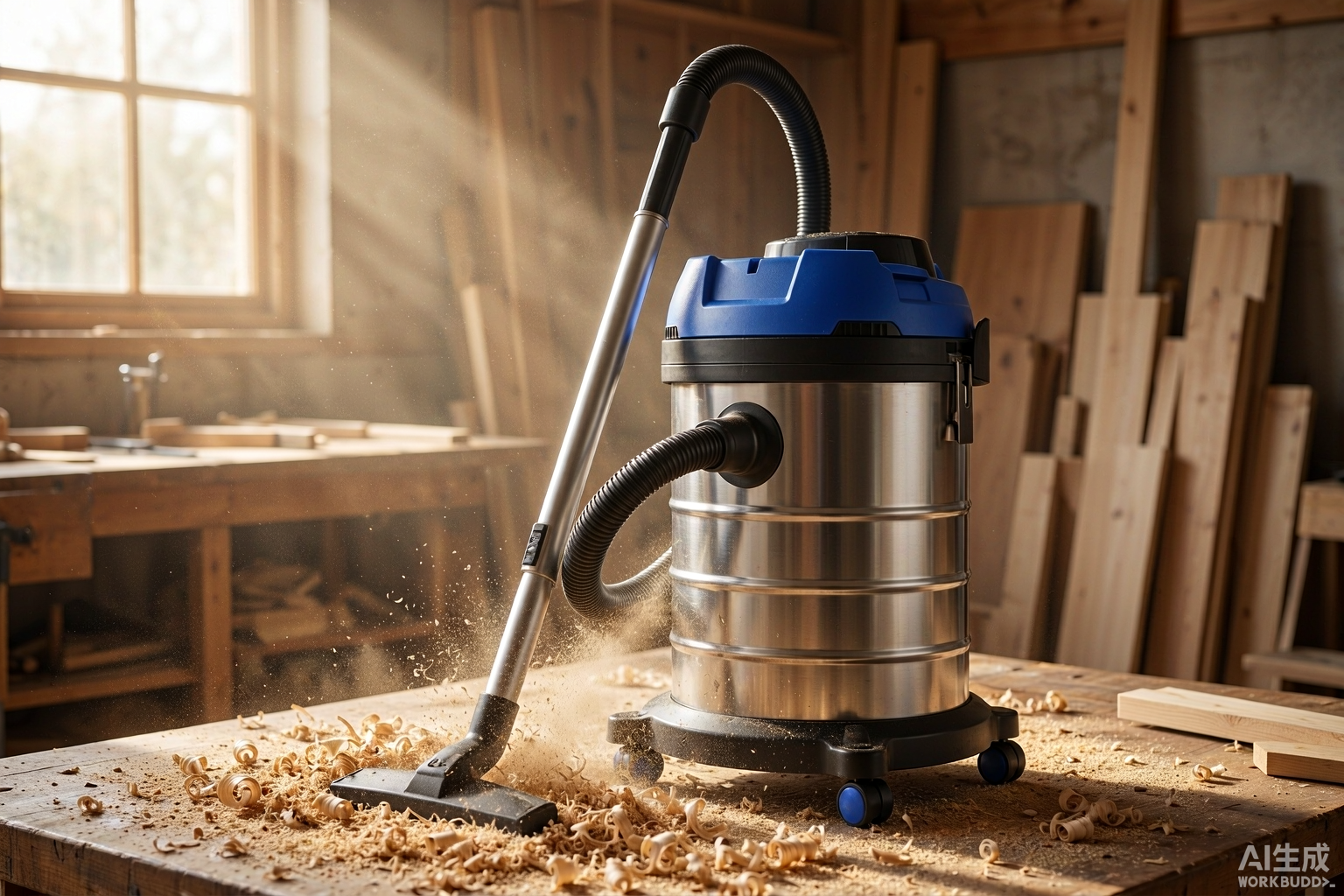
Ask a contractor what they need from a vacuum and they will say "something that doesn't break." Ask them again after lunch and they will describe something more specific: a machine that survives the van ride, swallows slurry and screws without dying, keeps dust paperwork compliant, and is back in service the same week something wears out. Every one of those sentences describes a purchase criterion — and most vacuum marketing answers none of them.
This guide translates what contractors actually need from heavy-duty vacuum cleaners into engineering requirements and buying standards, so the next machine you buy is specified like a tool, not picked like an appliance. 🧰
1. Survivability: The Machine Must Outlive the Project 🛡️
Contractor equipment lives a violent life. It rides loose in vans, gets carried up temporary stairs, works in rain and dust, and is used by every person on site — including the ones who treat tools like rented mules. A heavy-duty vacuum cleaner earns its name by surviving all of this:
Stainless steel tank (documented grade, 0.6–0.8mm): resists slurry chemistry, dropped wrenches and vibration. A stainless steel vacuum tank is the single most reliable predictor of an eight-year machine versus an eighteen-month one.
Crushproof anti-static hose with metal cuffs: thin plastic hoses kink on the first stair edge and abrade on rubble within days; anti-static construction also stops the hose from attracting fine dust to its walls.
Steel-framed trolley, 200mm+ castors: small plastic wheels block on cable runs and snap on van ramps. A full 70L tank rolling on proper wheels is a tool; the same tank on toy castors is a liability.
Bypass motor: the dusty, damp working airflow must never pass through the motor windings. Flow-through motors die on sites within a season, and the failure always happens during the busiest week.
The financial logic is simple: contractor margins cannot absorb a 30% annual fleet replacement rate. Machines that survive are not a luxury line item — they are the difference between equipment as an asset and equipment as a subscription to disappointment. 📉
2. Compliance: The Vacuum Is Part of the Paperwork 📋
Modern construction is regulated construction. Silica dust rules in the US, dust classes in Europe, and similar codes elsewhere mean the vacuum connected to a grinder is part of the site's legal compliance file. What contractors need from the machine is documentation, not promises:
Certified dust class — M-class (≤0.1% leakage) as the working minimum for concrete and mineral dust in Europe; sealed HEPA (99.97% @ 0.3μm) documentation for OSHA Table 1 work in North America
Certificates that match the machine configuration actually on site — not a dry-mode certificate on a machine being used wet
Filter-change logging that safety managers can show an inspector
Contractors who learned this the expensive way discovered that losing a tender or failing an inspection costs more than the price gap between a certified industrial vacuum cleaner and an uncertified lookalike. The compliance file is a deliverable; the machine feeds it. ✅
3. Uptime: A Broken Vacuum Stops a Crew ⏱️
A dead vacuum does not just sit there — it stops a grinding crew, delays a handover, or quietly moves regulated work to non-compliant methods. Uptime is what contractors actually purchase, and it comes from three design and supply features:
Continuous-duty rating: motors engineered for 240+ minutes of continuous operation, with industrial bearings and real cooling paths. Ask for the duty rating in writing; if the datasheet shows only peak watts, that silence is the rating.
Automatic or semi-automatic filter cleaning: fine mineral dust halves airflow within an hour without it. A filter shaker or pulse system keeps suction across the whole shift — and keeps crews using the machine instead of parking it.
Dual-motor redundancy: on critical phases, a dual motor vacuum cleaner keeps working at half capacity when one motor needs service, instead of stopping the pour schedule.
And uptime extends past the machine itself into the supply chain: filters, hoses and castors are wear items. What contractors need from a supplier is a written spares SLA — parts in transit within days, not quoted after weeks. The best machine from a supplier without spares logistics is a future paperweight. ⚠️
4. Wet Capability That Is Real, Not Decorative 💧
Every contractor site eventually involves water: rain in excavations, hydro-demolition residue, concrete slurry, pipe-test discharge. What they need from wet pickup is honesty:
A float valve that shuts the air path automatically as the tank fills — the difference between "wet rated" and wet-capable
A published usable wet capacity (typically 50–70% of nominal tank volume), not the tank's headline number
Alkaline-resistant contact surfaces for slurry, which attacks soft metals and unlined plastic
A wide, tool-free drain port — the single most repeated post-mortem finding on dead site vacuums is "the slurry set overnight"
A genuine wet and dry suction system lets the same machine switch from morning dust extraction to afternoon water removal without reconfiguration, which is exactly how contractors actually work. A large-capacity wet dry vacuum cleaner (60–100L) with a powered drain earns its footprint at cutting stations and floor-prep work.
5. Fleet Economics: Cost per Year of Service, Not Cost per Machine 💰
Contractors buy fleets, not appliances. The number that matters is total cost across the fleet's service life, and it has four components:
Purchase price — the only number on the quote
Filter consumption — the toner-cartridge economics of this category; fix filter pricing and lead time at purchase, in the machine contract
Downtime cost — a stopped crew costs more per day than most machines cost per year
Replacement rate — the annual percentage of the fleet that leaves service
Running the math usually inverts the cheap-versus-quality question: a machine costing 40% more that stays in service five years instead of eighteen months is roughly a third of the cost per service year — before counting downtime. This is why fleet buyers standardize on one platform: shared filters, hoses and castors across every tank size, one spares inventory, one training story for every crew.
6. The Contractor's Requirements Checklist ✅
Specify every machine against these twelve lines:
Bypass motor, continuous-duty rated in writing ✅
Stainless steel tank, grade and thickness documented ✅
Crushproof anti-static hose, metal cuffs ✅
Float valve with published usable wet capacity ✅
Wide tool-free drain port, alkaline-resistant ✅
Certified dust class matching the regulated tasks ✅
Filter cleaning system (shaker or pulse) ✅
Power take-off socket for tool-triggered extraction ✅
Steel trolley, 200mm+ castors, van-transportable ✅
Noise ≤68dB(A) for occupied-building work ✅
CE/GS certifications (ETL/UL for North America) ✅
Written spares SLA and filter supply commitment ✅
Items 1–6 are non-negotiable engineering; 7–12 are the difference between a machine that works and a machine that gets worked around. 🏆
Real Contractor Cases 📊
Case 1 — Mid-size general contractor, Sydney, Australia 🇦🇺: A firm audited three years of equipment spending and found "site vacuums" consumed 28% of its small-tool replacement budget — plastic tanks cracked, motors burned, hoses shredded. They standardized on stainless-tank bypass-motor machines with a spares kit per two machines. Replacement spending dropped to 9% of the previous level, and the audit itself became their procurement template for other tool categories.
Case 2 — Fit-out contractor, Munich, Germany 🇩🇪: Working in an occupied office tower, a fit-out crew ran M-class machines at 66dB with power take-off on every grinder and sander. Extraction happened automatically with the tools, daytime dust work stayed inside lease noise clauses, and the compliance file — certificates plus filter logs — passed a tenant-commissioned inspection without a finding. The contractor now quotes "documented dust compliance" in every tender response. 📋
Case 3 — Bridge repair subcontractor, Houston, USA 🇺🇸: Hydro-scarification work demanded slurry removal at the deck edge under a compressed schedule. Two 80L wet-dry machines with wide drains and dual motors kept pace with two scarifiers; surface-drying delays between passes fell from 45 minutes to 12. The schedule absorbed two weather days without penalty, and the drains never produced a set-tank incident on the entire project.
Case 4 — Renovation firm, Birmingham, UK 🇬🇧: A small firm bought one certified heavy-duty machine instead of three cheap ones, then tracked it for four years across 60+ projects. It survived two van crashes, one slurry set (drain port saved it) and daily abuse from rotating crews. Their conclusion in the company newsletter: the machine was the cheapest tool they owned per year of service — because it was the only one they didn't replace. 💡
How Fleet Buyers Should Engage Suppliers 🤝
For contractors scaling purchases and for distributors serving them, the engagement sequence that works:
Test one sample in your worst real conditions — one grinding week and one slurry week tell you more than any datasheet (see our sample-testing guide)
Contract the consumables up front — filter pricing, hose pricing and lead times belong in the machine contract, not in year two
Standardize on one chassis platform across tank sizes and dust classes, so every machine shares one spares set
Demand documentation — duty ratings, steel grades, dust certificates — and keep it in the compliance file alongside the machine serial numbers
For chains and private-label programs, discuss configurations directly with an industrial vacuum cleaner factory: cord standards, socket types and accessory kits can be tailored to your market while the certified core stays fixed
A vertically integrated vacuum cleaner manufacturer in China should meet all five requirements without flinching — written specs, sample units, spares commitments and certification files. Hesitation at any of the four is procurement data: it tells you what the after-sales experience will look like.
The Bottom Line 🎯
What contractors need from heavy-duty vacuum cleaners is not suction figures — it is survivability that keeps replacement rates boring, documentation that keeps compliance files complete, uptime that keeps crews moving, and spares logistics that keeps promises made at purchase time still true in year three. Specify the machine like a tool: engineering first, certificates second, price last. Buy that way once, and the fleet quietly stops being a problem.
If you are interested, please feel free to contact us anytime. And when you are ready to equip crews with machines built to these standards, explore the range at www.lxvacuum.com
50 Related Keywords
wet dry vacuum cleaner, wet and dry vacuum cleaner, heavy duty vacuum cleaner, industrial vacuum cleaner, commercial vacuum cleaner, construction site cleaning equipment, industrial dust extractor, HEPA filter vacuum cleaner, dual motor vacuum cleaner, stainless steel vacuum tank, large-capacity wet dry vacuum cleaner, wet and dry suction system, high suction power vacuum cleaner, low noise vacuum cleaner, energy efficient vacuum cleaner, commercial grade vacuum cleaner, industrial cleaning equipment, commercial cleaning equipment, workshop vacuum cleaner, warehouse cleaning solution, factory floor cleaning, hotel cleaning equipment, hospital cleaning equipment, facility management cleaning equipment, retail cleaning equipment, concrete slurry vacuum, best budget vacuum, best vacuum on a budget, good budget vacuum cleaner, vacuum cleaner supplier, vacuum cleaner manufacturer, vacuum cleaner manufacturer in China, vacuum cleaner maker, vacuum manufacturer, industrial vacuum cleaner supplier, industrial vacuum cleaner factory, cleaning equipment supplier, industrial equipment supplier, wholesale vacuum cleaner, bulk vacuum cleaner purchase, bulk order vacuum cleaner, factory direct vacuum cleaner, OEM vacuum cleaner, ODM vacuum cleaner, private label vacuum cleaner, import vacuum cleaner from China, vacuum cleaner distributor Europe, commercial cleaning servic