Hi, message us with any questions.
We're happy to help!





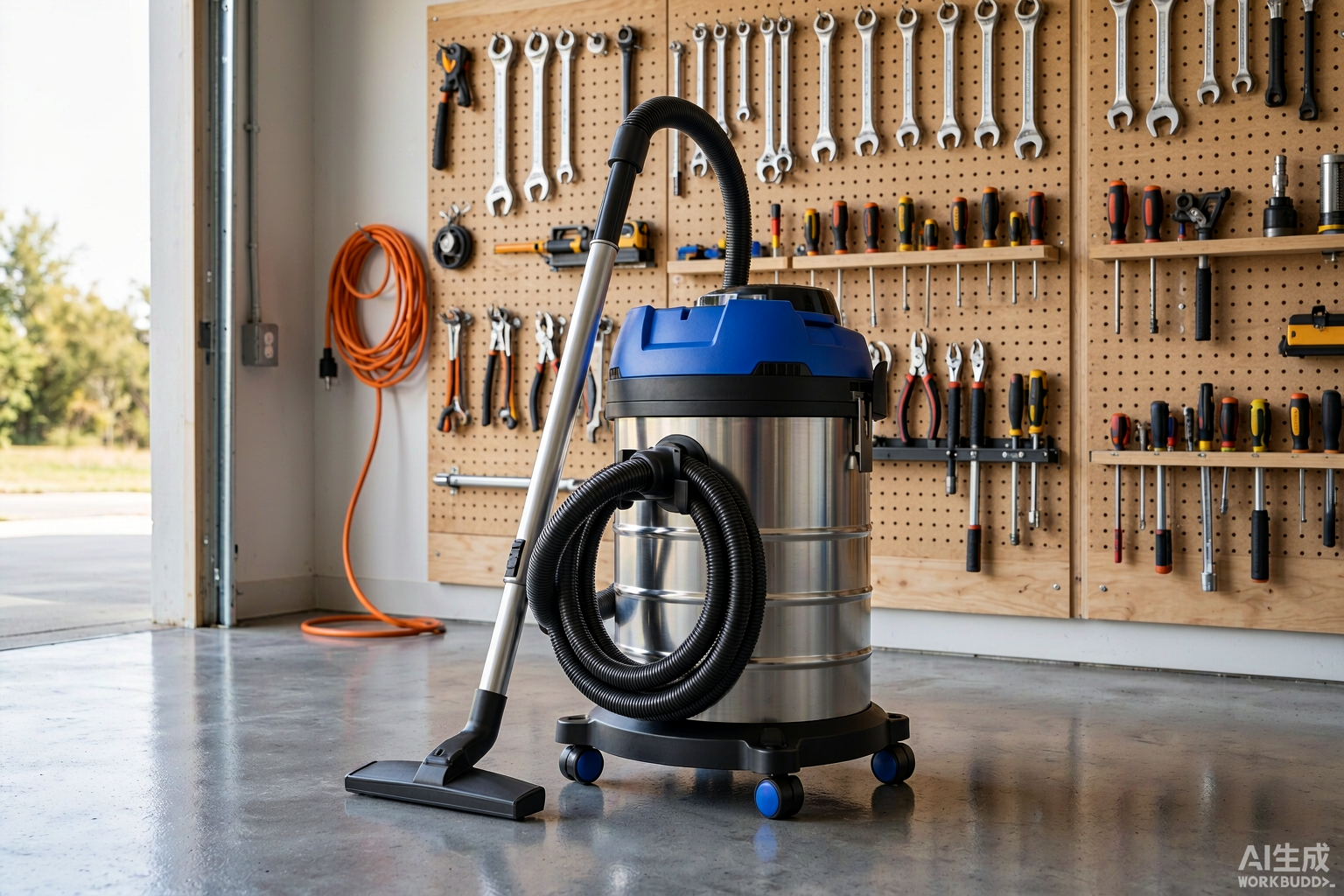
A warehouse is cleaned under conditions no other commercial building produces: floors measured in tens of thousands of square meters, docks where rain and spilled goods arrive together, forklift traffic that treats every object as an obstacle to be moved, and shifts that never fully end. The mop-and-bucket tradition fails here for structural reasons — and household vacuums fail for terminal ones.
What logistics operations need is a wet dry vacuum cleaner treated as production equipment: specified for safety compliance, deployed by zone, scheduled around shifts, and maintained like a forklift. This guide covers the whole decision. 🧰
1. What a Warehouse Floor Actually Collects 📋
Before specifying a machine, inventory what your floor holds in a typical week:
Dock-area liquids: rainwater blown in during door-open cycles, melted ice from reefer trailers, spilled beverages and liquid goods
Dry transit debris: shrink-wrap fragments, cardboard dust, pallet splinters, strapping, labels
Fine operational dust: forklift tire wear, concrete floor dust, inbound freight soil — amplified across a 40,000㎡ footprint
Special-hazard zones: battery-charging rooms (acid electrolyte risk), fuel or coolant storage, chemical spill containment areas
Each category points to a machine requirement: liquids demand float valves and drains; debris demands hose durability and tank capacity; fine dust across huge areas demands sustained airflow and filter cleaning; hazard zones demand their own dedicated machines — never shared with general cleaning. ⚠️
2. The Safety Dimension: Vacuums as Compliance Equipment 🦺
In a logistics operation, cleaning equipment enters the safety management system, not just the janitorial budget:
Battery rooms require machines compatible with acid-electrolyte cleanup — stainless contact surfaces and chemically resistant seals. Using a general-purpose machine in a battery room is both an equipment-killer and an audit finding.
Dust explosion zones (flour, sugar, grain, powder logistics) may require ATEX-rated machines. A standard vacuum in a combustible-dust zone is a recognized ignition source — this is regulated territory, not a preference.
Slip-and-fall prevention: docks and high-traffic aisles where liquid sits create injury exposure and insurance claims. Rapid wet pickup is a risk-control measure with measurable ROI.
Traffic safety: any machine working in live forklift aisles needs high-visibility marking, and crews need right-of-way protocols. A vacuum is a pedestrian in a vehicle zone.
Safety managers should treat vacuum selection the way they treat forklift selection: certified for the zone, marked, maintained, logged. ✅
3. Machine Requirements for Big-Floor Logistics ⚙️
Survivability under forklift-grade abuse
Stainless steel tank (0.6–0.8mm, documented grade) — a stainless steel vacuum tank survives impact, resists battery-room chemistry, and rinses clean after dock sludge
Crushproof anti-static hose with metal cuffs — shrink-wrap and strapping shred thin hoses in weeks
Steel trolley with 200mm+ castors — a full tank crossing expansion joints and ramp transitions needs real wheels; the machine must also be forklift-transportable between zones
Sustained performance across huge areas
Bypass motor with continuous-duty rating — warehouse cleaning runs in hours, not minutes; demand the duty rating in writing
Filter cleaning system (shaker or pulse) — fine dust across 40,000㎡ will blind a static filter before the first aisle is finished
High sustained airflow — wide-area pickup of light debris (wrap, labels) is an airflow job, not a peak-suction job
Wet capability that is honest
Float valve with a published usable wet capacity (typically 50–70% of nominal)
Wide, tool-free drain port — dock sludge emptied in two minutes, not twenty
For high-volume water events, a large-capacity wet dry vacuum cleaner (60–100L) with powered drain belongs at the dock permanently
Human factors
Noise ≤70dB(A) — many DCs run cleaning during partial operations; 24/7 facilities need quiet machines for live shifts
Cable reach and machine weight — 10m cords and pushable weight reduce the ergonomic cost of long routes; an energy efficient vacuum cleaner design cuts the running cost of multi-hour daily use
4. Zone Deployment: One Machine Does Not Fit a Warehouse 🗺️
The economics of warehouse cleaning come from matching machines to zones, not from buying the biggest machine for everywhere:
Zone | Duty Profile | Machine Profile |
Loading docks | Rain, ice melt, liquid spills, heavy sludge | 60–100L large-capacity wet-dry, wide drain, stainless tank |
Racking aisles | Fine dust, wrap fragments, 24/7 access | 25–35L maneuverable unit, sustained airflow, anti-static hose |
Pick faces and staging | Constant light debris, tight spaces | 20–30L compact unit, low noise for live shifts |
Battery rooms | Acid-electrolyte risk, strict compliance | Dedicated corrosion-resistant machine, never shared |
Office and amenity areas | Standard commercial cleaning | Standard commercial wet-dry unit |
Yards and external areas | Weather exposure, coarse debris | Blower-capable heavy-duty unit or outdoor-rated machine |
A typical mid-size DC deploys one platform in three configurations: the same motor-and-chassis family with different tanks and accessories per zone — which collapses the spares inventory (one filter SKU, one hose SKU, one castor SKU) and simplifies crew training. This platform logic is exactly what a commercial vacuum cleaner fleet buyer should demand from a supplier. 🏆
5. Scheduling: Cleaning Around a 24/7 Operation ⏱️
Logistics facilities rarely close, so cleaning strategy splits into three patterns:
Continuous spot-cleaning — docks and high-traffic aisles cleaned during operations by dedicated staff with low-noise machines; this is slip-prevention, not cosmetics
Shift-change deep cleans — full-floor passes in the 2–4 hour windows between shift patterns, when aisles partially clear
Event response — spill response within minutes, using dock-located machines; the response time target should be written into the safety plan, and machine placement is what makes it achievable
Fleet sizing follows: one maneuverable unit per 8,000–12,000㎡ of active floor for shift cleaning, plus one large-capacity unit per dock cluster, plus hazard-zone machines as compliance requires. A 40,000㎡ DC with eight docks typically lands on 4–6 machines across the platform — fewer than most managers assume, provided each is specified correctly.
6. The Logistics Buyer's Checklist ✅
Bypass motor, continuous-duty rated in writing ✅
Stainless steel tank, grade documented ✅
Float valve with published usable wet capacity ✅
Wide tool-free drain port for dock sludge ✅
Filter cleaning system for sustained large-floor airflow ✅
Crushproof anti-static hose, metal cuffs ✅
Zone certifications: ATEX where combustible dust applies; corrosion resistance for battery rooms ✅
Noise ≤70dB(A) for live-shift cleaning ✅
Steel trolley, 200mm+ castors, forklift-transportable footprint ✅
One-platform-many-configurations supply with shared spares and a written SLA ✅
CE/GS certifications (ETL/UL for North America) ✅
Crew training documentation included by the supplier ✅
Machines passing all twelve become part of the operation's infrastructure. Machines failing 3–7 become the reason docks flood, aisles stay dusty and audits sting. 📉
Real Warehouse Cases 📊
Case 1 — Regional distribution center, Rotterdam, Netherlands 🇳🇱: A 38,000㎡ DC with 14 docks ran mop-based dock cleaning with rain-season flooding. They deployed two 80L stainless wet-dry machines at dock clusters plus four 30L aisle units on one supplier platform. Dock water removal dropped from 90 minutes to under 15 per weather event, slip incidents in the dock zone fell to zero over the following year, and the insurance renewal noted the improvement.
Case 2 — 3PL fulfillment operator, Chicago, USA 🇺🇸: A fulfillment center running continuous shifts needed aisle cleaning without stopping pick operations. Low-noise (68dB) machines with pulse filter cleaning ran live-shift spot cleaning in pick faces, with deep passes in shift-change windows. Dust-related pick-errors and scanner misreads — a chronic complaint — measurably declined, and the cleaning program paid for itself in error-rate terms the operations manager had never attributed to floor dust. 💡
Case 3 — Cold-chain logistics hub, Brisbane, Australia 🇦🇺: Ice melt and reefer condensation made docks a chronic slip zone. The hub stationed large-capacity wet-dry machines with wide drains at each dock cluster, with a written five-minute spill-response target. The drain-port specification proved decisive: machines without wide drains had previously died of ice-melt scale within months, while the new fleet passed its second winter intact.
Case 4 — Battery-room compliance, Duisburg, Germany 🇩🇪: A logistics operator's safety audit flagged general-purpose vacuums being used in battery-charging rooms. They procured dedicated corrosion-resistant machines, segregated them by color and storage location, and added them to the compliance log with filter-change records. The follow-up audit passed, and the battery-room machines outlasted their general-fleet predecessors by years — properly specified machines last longer in their own zone than misapplied machines last anywhere.
Buying for a Logistics Fleet 🤝
For single-facility buyers, start with the dock and the worst aisle — the machines that handle the hardest zones define the platform. For multi-site operators, 3PLs and distributors building logistics-sector lines:
Pilot one site fully — every zone, one platform, three months — then clone the configuration
Contract consumables with the machines — filters, hoses and castors priced and lead-time-committed at purchase
Standardize the platform across sites so spares, training and audit documentation are universal
For private-label and rental programs, configure directly with an industrial vacuum cleaner factory — tank sizes, cord lengths, voltage standards and zone-specific kits can be tailored per market while the certified core stays fixed
A vertically integrated vacuum cleaner manufacturer in China can deliver the platform-and-configurations model with documented specs, zone certifications and sample units for pilot testing — the exact engagement structure large logistics buyers should require before any fleet commitment.
The Bottom Line 🎯
A wet dry vacuum cleaner in a warehouse is not a janitorial purchase; it is operations and safety equipment. Specify for survivability under forklift-grade abuse, honest wet capability at the docks, sustained airflow across large floors, and zone-correct certifications where hazards demand them. Deploy by zone on a single platform, schedule around shifts, and maintain like a forklift. Done this way, the fleet stops being a cost line and starts showing up in slip statistics, audit results and equipment longevity.
If you are interested, please feel free to contact us anytime. And when you are ready to specify machines for every zone of your operation, explore the range at www.lxvacuum.com
50 Related Keywords
wet dry vacuum cleaner, wet and dry vacuum cleaner, warehouse cleaning solution, logistics warehouse cleaning, industrial vacuum cleaner, commercial vacuum cleaner, industrial cleaning equipment, commercial cleaning equipment, heavy duty vacuum cleaner, large-capacity wet dry vacuum cleaner, dual motor vacuum cleaner, stainless steel vacuum tank, wet and dry suction system, HEPA filter vacuum cleaner, industrial dust extractor, high suction power vacuum cleaner, low noise vacuum cleaner, energy efficient vacuum cleaner, energy-saving efficient powerful vacuum cleaner, fast lightweight vacuum cleaner, portable quiet vacuum cleaner, commercial grade vacuum cleaner, factory floor cleaning, construction site cleaning equipment, hotel cleaning equipment, hospital cleaning equipment, facility management cleaning equipment, retail cleaning equipment, car detailing vacuum cleaner, best budget vacuum, best vacuum on a budget, good budget vacuum cleaner, vacuum cleaner supplier, vacuum cleaner manufacturer, vacuum cleaner manufacturer in China, vacuum cleaner maker, vacuum manufacturer, industrial vacuum cleaner supplier, industrial vacuum cleaner factory, cleaning equipment supplier, industrial equipment supplier, wholesale vacuum cleaner, bulk vacuum cleaner purchase, bulk order vacuum cleaner, factory direct vacuum cleaner, OEM vacuum cleaner, ODM vacuum cleaner, private label vacuum cleaner, import vacuum cleaner from China, Lanxstar