Hi, message us with any questions.
We're happy to help!





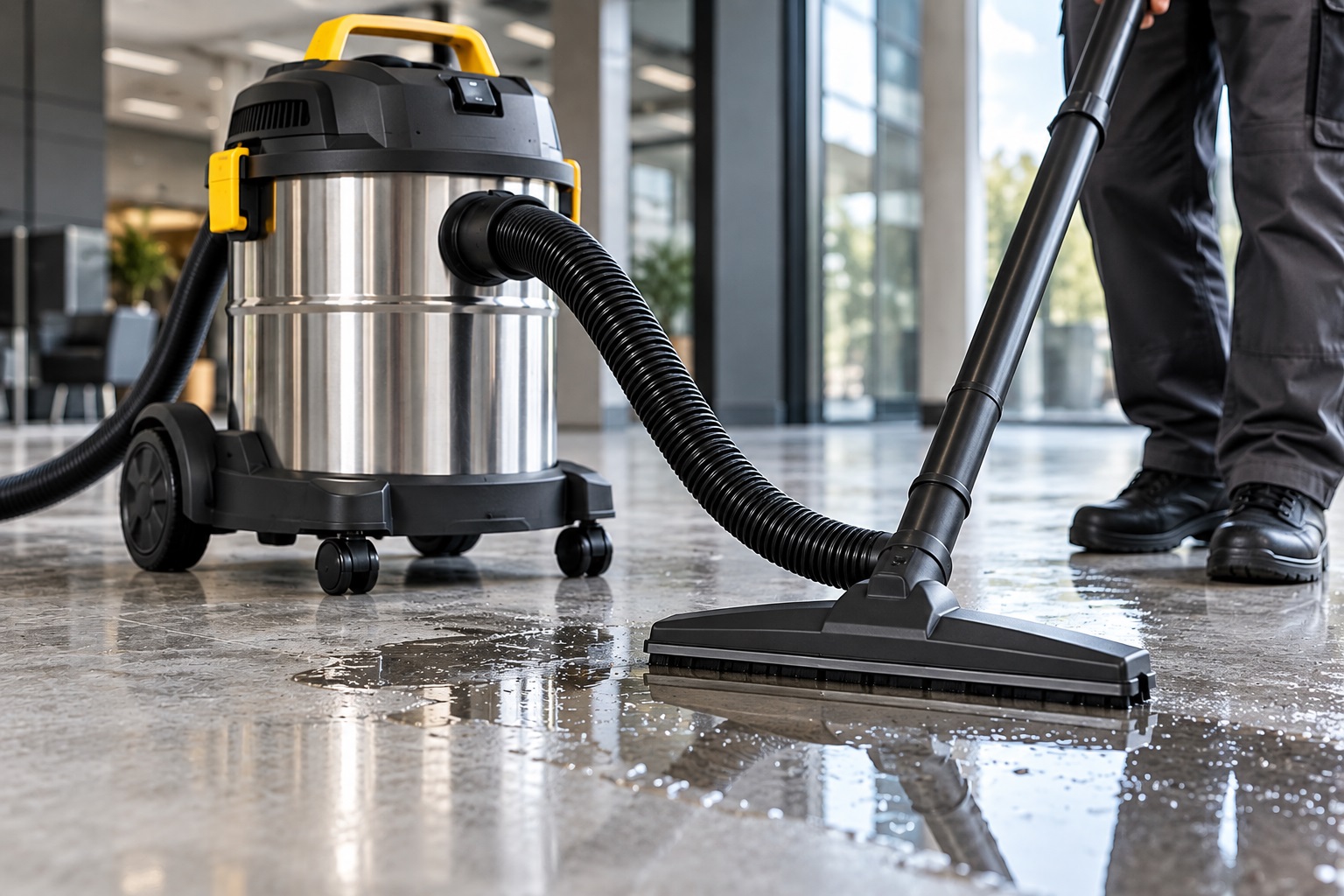
Washable vs Disposable Filters: Why the Choice Matters
For a household vacuum used once or twice a week, replacing or washing a filter may seem like a minor maintenance task.
Commercial cleaning is different.
A commercial vacuum cleaner may operate for hours every day across hotels, workshops, warehouses, retail facilities, offices, vehicle detailing centers, and production areas. Under these conditions, filter maintenance directly affects airflow, suction performance, labor requirements, operating costs, and machine availability.
That is why commercial buyers should look beyond the simple question:
“Which filter is cheaper?”
The more useful question is:
“Which filtration system delivers the right balance of performance, maintenance, downtime, and total operating cost for this application?”
Both washable and disposable filters can be appropriate. The better option depends on what the vacuum collects, how frequently it operates, how maintenance is managed, and what the end user expects.
🔍 For importers and distributors, this choice can also influence replacement-parts revenue, inventory planning, customer satisfaction, and the positioning of an OEM vacuum cleaner range.
1. What Is a Washable Vacuum Filter?
A washable vacuum filter is designed to tolerate cleaning according to the manufacturer's specified procedure and, depending on the filter design, may be reused after appropriate drying.
The key phrase is according to the manufacturer's procedure.
Not every filter that looks washable should be rinsed with water. Some filter media can be damaged by inappropriate cleaning, while others may require specific drying or maintenance procedures.
Washable filters are commonly considered for applications where users want to reduce the frequency of purchasing replacement filters.
Potential advantages include:
repeated use,
reduced replacement frequency,
lower consumable demand in suitable applications,
convenience where replacement filters are difficult to obtain,
and potentially lower long-term consumable costs.
However, washable does not mean maintenance-free.
A filter still needs inspection, cleaning, correct drying, and eventual replacement.
For a wet dry vacuum cleaner, buyers should also distinguish between a washable dry filter and a filter specifically designed for wet pickup. These are not automatically the same thing.
2. What Is a Disposable Vacuum Filter?
A disposable filter is intended to be replaced rather than repeatedly washed and returned to service.
From an operational perspective, its biggest advantage is simplicity.
When the filter reaches its service limit, the operator removes it and installs a new one.
This approach can be useful for commercial cleaning organizations that prioritize predictable maintenance procedures and want to reduce the variability associated with manual filter washing.
Disposable filters can also make sense where collected contamination makes washing undesirable.
The trade-off is obvious: replacement filters become an ongoing operating expense.
For a distributor buying a wholesale vacuum cleaner range, the cost and availability of disposable filters therefore need to be considered before the machines reach the market.
📦 A vacuum with an attractive factory price can become inconvenient for customers if compatible filters are expensive, frequently unavailable, or difficult to identify.
3. Filtration Performance Is More Important Than “Washable” or “Disposable”
One common procurement mistake is treating the washable/disposable distinction as a measure of filtration quality.
It is not.
Filtration performance depends on factors such as:
filter media,
particle size,
filter construction,
effective filtration area,
sealing,
airflow resistance,
dust loading,
system design,
and applicable filtration standards.
A washable filter can provide suitable performance for its intended application. A disposable filter can also provide suitable performance.
What matters is whether the complete filtration system matches the cleaning environment.
For buyers evaluating a HEPA filter vacuum cleaner, for example, the relevant question is not simply whether the filter can be washed.
Buyers should verify the stated filtration performance, applicable test method, system sealing, replacement requirements, and manufacturer instructions.
🧪 For professional procurement, measurable technical documentation is more valuable than labels such as “advanced filter” or “premium filtration.”
4. Maintenance Cost: The Obvious Difference
Washable filters are often selected because they can reduce the number of replacement filters consumed.
Imagine a commercial user operating multiple machines.
If every machine requires regular disposable-filter replacement, the annual consumable expense can become significant. A reusable filter may reduce that expense, assuming it can be maintained effectively and has a suitable service life.
However, washing also has a cost.
Someone must:
remove the filter,
clean it correctly,
inspect it,
allow it to dry as required,
reinstall it,
and ensure the machine is ready for operation.
Labor is not free.
This creates an important procurement concept:
Total Filter Cost ≠ Filter Purchase Price
A better evaluation includes:
Filter price + replacement frequency + maintenance labor + downtime + inventory cost + disposal requirements
For commercial buyers, this calculation can produce a different result from a simple comparison of replacement-filter prices.
5. Downtime Can Change the Economics
⏱️ Consider a cleaning contractor with 30 commercial vacuum cleaners.
A washable filter may have a lower consumable cost, but what happens while each filter is being washed and dried?
If the company keeps spare clean filters ready, downtime may be minimal. Operators can replace the dirty filter immediately and send the used one through the maintenance process.
Without spare filters, machines may remain unavailable longer than expected.
Disposable filters can simplify this process because a new filter can be installed immediately.
This means a commercial user should consider not just the price of the filter but the entire maintenance workflow.
For high-utilization environments, an inexpensive spare-filter rotation system may be more valuable than trying to minimize the number of filters purchased.
6. Warehouse Case: Washable Filters and Planned Rotation
📦 Consider a hypothetical logistics warehouse operating several industrial vacuum cleaner units.
The machines collect ordinary floor dust, packaging debris, and dirt carried into loading areas.
The facility originally replaces filters frequently because employees have no standardized maintenance procedure.
Operating costs rise, and procurement begins looking for alternatives.
After reviewing the debris type and manufacturer instructions, the facility tests a washable-filter configuration.
Instead of washing filters only when suction becomes noticeably weak, the maintenance team establishes a rotation:
Filter A operates in the machine.
Filter B is clean and ready.
Filter C is being maintained and dried.
When Filter A requires service, the operator immediately installs Filter B.
This approach reduces unnecessary machine downtime while creating a predictable maintenance schedule.
The important lesson is not that washable filters are universally superior.
The lesson is that filter performance depends partly on the maintenance system surrounding the equipment.
7. Hotel Case: Simplicity Can Be More Valuable
🏨 Now consider a hotel group using a fleet of cleaning machines.
The housekeeping operation has many employees, multiple shifts, and limited time for technical maintenance.
Management wants a Portable Quiet Vacuum Cleaner with straightforward servicing.
In this scenario, a disposable or easily replaceable filtration system may offer operational advantages if it simplifies staff training.
Instead of requiring employees to determine whether a filter has been cleaned and dried correctly, supervisors can establish a simple replacement interval.
The best commercial solution therefore depends on organizational structure.
A filter that works well for an industrial maintenance department with trained technicians may not be the most practical option for a hospitality team seeking maximum simplicity.
8. How Filter Condition Affects Suction
A High Suction Vacuum Cleaner still depends on unrestricted airflow.
As dust accumulates on a filter, airflow resistance may increase. The actual effect depends on the filter design, media, dust type, filtration area, and vacuum system.
This is why buyers should not judge a commercial vacuum only by vacuum cleaner motor power.
Motor wattage alone does not describe real cleaning performance.
A more complete technical review considers:
vacuum cleaner suction power,
airflow,
vacuum pressure,
hose diameter,
filter resistance,
filter surface area,
sealing,
and the condition of the filter during operation.
⚙️ For R&D engineers, the key challenge is balancing filtration efficiency with airflow throughout a realistic cleaning cycle.
A machine may perform impressively with a completely clean filter but behave differently after collecting significant quantities of dust.
Commercial testing should therefore include realistic filter loading whenever possible.
9. What About Wet Pickup?
💧 Filter selection becomes more complicated for a wet dry vacuum.
A wet/dry machine may use different filtration configurations for dry debris and liquid pickup.
Depending on the machine, the manufacturer may specify:
removal of a dry cartridge filter before wet pickup,
installation of a foam filter,
use of a wet-compatible filter,
or another dedicated configuration.
The machine may also include a float mechanism designed to protect the motor when the liquid reaches a specified level.
Commercial buyers sourcing a powerful wet dry vacuum should confirm these procedures before placing a bulk order.
Ask the wet dry vacuum manufacturer:
What happens to the filter when switching from dry cleaning to liquid collection?
If changing modes is complicated, employees may use the machine incorrectly.
For commercial equipment, ease of operation is part of product quality.
10. Washable Filters for Industrial Applications
A heavy duty shop vacuum or industrial machine can encounter substantial quantities of debris.
Washable filters may be attractive in these environments because replacement consumption can otherwise become significant.
However, the debris itself matters.
If the collected material creates contamination that is difficult or inappropriate to wash, disposable filtration may be preferable.
Industrial purchasers should evaluate the material being collected before selecting a filter strategy.
For example, a workshop collecting ordinary coarse debris presents a different filtration challenge from an application involving very fine particulate matter.
Similarly, a stainless steel shop vacuum may have a durable collection tank, but stainless-steel construction does not determine whether its filtration system is appropriate for every industrial contaminant.
Tank material, filtration, airflow, and application suitability should be evaluated separately.
11. Disposable Filters and Predictable Commercial Maintenance
Disposable filters can provide a highly standardized maintenance workflow:
Inspect → Remove → Replace → Resume operation.
For companies managing equipment across multiple locations, this simplicity has value.
A facility management company may operate hundreds of machines across offices, stores, hotels, or public facilities.
Creating a standardized filter replacement program can simplify training and procurement.
The disadvantages include ongoing consumable costs and the need to maintain replacement-filter inventory.
For this reason, distributors should ask their vacuum cleaner supplier whether several vacuum models can share the same replacement filter.
Common components can simplify inventory management.
A distributor carrying six machines but only two filter types may find spare-parts management easier than supporting six completely different filtration systems.
12. Sustainability and Waste Considerations
🌱 Reusable filters can reduce the number of filters discarded, but sustainability should not be judged by filter count alone.
Washing may require water, labor, cleaning processes, and drying.
Disposable filters require manufacturing, packaging, transportation, storage, and disposal.
The practical environmental impact depends on the complete lifecycle.
An Energy-Saving Efficient Powerful Vacuum Cleaner should likewise be evaluated as a system.
Energy efficiency is influenced not only by rated motor power but also by airflow design, filter condition, operating time, and cleaning productivity.
A machine that requires substantially more time to complete a task may consume more operational resources even if its rated wattage is relatively low.
For commercial procurement, sustainability assessments should therefore consider the equipment's actual use pattern.
13. Consider Tank Capacity and Filter Maintenance Together
A Large-Capacity Wet Dry Vacuum Cleaner may reduce the frequency of tank emptying, particularly when collecting substantial quantities of debris or liquid.
But a large tank does not guarantee long uninterrupted operating periods.
If the filter clogs rapidly, the operator still needs to stop.
That means vacuum cleaner tank capacity and filtration capacity should be evaluated together.
For long cleaning cycles, ask:
How much debris can the tank hold?
How quickly does the filter load?
How easy is the filter to access?
Can the filter be cleaned on-site?
Is a spare filter available?
How quickly can an operator return the machine to service?
These questions provide a more realistic picture of productivity.
14. OEM and Private-Label Buyers Need a Filter Strategy
For an OEM vacuum cleaner manufacturer, filter configuration is part of product positioning.
A buyer developing a private-label range might want different solutions for different market segments.
For example:
Entry Commercial Model
Simple filtration, competitive replacement-filter cost, straightforward maintenance.
Professional Workshop Model
Larger filtration area, durable construction, strong airflow, convenient filter access.
Premium Commercial Model
Higher-efficiency filtration options, improved sealing, quieter operation, enhanced accessories.
Industrial Wet/Dry Model
Large tank, robust motor configuration, application-specific filters, convenient drainage, and heavy-duty accessories.
Working with an ODM vacuum cleaner manufacturer can allow buyers to adapt existing platforms rather than developing every component from the beginning.
However, importers should request documentation for performance claims.
An attractive private-label package cannot compensate for a filtration system that does not match the target application.
15. What Wholesalers Should Ask Before a Bulk Order
Before committing to a bulk vacuum cleaner supplier, wholesalers should request more than the unit price.
📋 A filter-focused purchasing checklist can include:
standard filter type,
optional filter types,
filtration specifications,
filter dimensions,
effective filtration area,
washable/disposable status,
recommended cleaning procedure,
expected maintenance schedule,
replacement filter price,
replacement filter MOQ,
filters included with each machine,
spare-filter packaging,
model compatibility,
wet pickup procedure,
sample availability,
and customization options.
For a wholesale vacuum cleaner program, replacement filters should ideally be planned before the first shipment.
Waiting until customers begin requesting filters can create unnecessary after-sales problems.
16. How R&D Engineers Can Compare the Two Options
🛠️ R&D teams should test washable and disposable filters under representative operating conditions rather than evaluating new filters only.
Useful testing can examine:
initial airflow,
airflow after dust loading,
pressure characteristics,
particle filtration,
sealing,
structural integrity,
cleaning durability,
drying behavior,
installation accuracy,
and repeated maintenance cycles where applicable.
For washable designs, repeated cleaning tests are especially important.
A filter may perform well after one cleaning cycle but change after repeated maintenance.
For disposable designs, engineers may focus more heavily on consistency between replacement units and ease of installation.
The target is not simply the best filter in isolation.
The target is a filtration system that works reliably with the motor, tank, air path, housing, and intended cleaning application.
17. Does “Budget Vacuum” Mean Disposable Filters?
Not necessarily.
Consumers and retailers searching for the best vacuum on a budget, best budget hoover, good budget vacuum, best affordable vacuum, best value for money hoover, or best vacuums on a budget may focus strongly on purchase price.
Commercial buyers should broaden that calculation.
Suppose Vacuum A costs less initially but requires frequent replacement filters.
Vacuum B costs slightly more and uses a washable filter with a practical spare-filter rotation.
Vacuum C uses disposable filters but has inexpensive, widely available consumables and requires very little maintenance labor.
Which one offers the best value?
There is no universal answer.
The result depends on labor cost, operating hours, filter prices, cleaning conditions, replacement frequency, and expected equipment lifetime.
This is why commercial buyers should calculate total cost of ownership, not simply factory price.
18. When a Washable Filter May Be the Practical Choice
A washable filter may make sense when:
the collected debris is suitable for the filter design,
operators can maintain filters correctly,
drying time can be managed,
spare filters are available,
machines operate frequently,
reducing consumable replacement is important,
and the manufacturer's instructions support repeated cleaning.
For a Multi-Functional Durable Vacuum Cleaner, a reusable filter can complement a product designed around long-term commercial use.
However, the maintenance system must be practical.
19. When a Disposable Filter May Be the Practical Choice
Disposable filters may be attractive when:
maintenance simplicity is a priority,
washing is inconvenient,
rapid replacement is important,
operators need standardized procedures,
replacement filters are inexpensive and readily available,
contamination makes washing undesirable,
or the organization prefers predictable consumable management.
For a Fast Lightweight Vacuum Cleaner used across multiple commercial locations, easy filter replacement may support a simple maintenance model.
Again, application matters more than the label.
20. A Simple Commercial Selection Framework
Before deciding between washable and disposable filters, procurement teams can use this sequence:
1. Identify the debris.
Determine what the vacuum will collect.
2. Measure usage intensity.
Estimate daily operating hours and cleaning frequency.
3. Calculate consumable requirements.
Estimate annual replacement-filter consumption.
4. Calculate maintenance labor.
Include removal, cleaning, drying, inspection, and reinstallation.
5. Consider downtime.
Determine whether machines can remain operational during filter maintenance.
6. Check spare-part availability.
Confirm price, MOQ, lead time, and compatibility.
7. Review filtration requirements.
Select filtration according to the actual cleaning environment.
8. Test samples.
Compare performance with representative debris rather than only clean filters.
9. Evaluate wet pickup.
For wet/dry models, verify the required filter configuration.
10. Compare total operating cost.
Combine equipment price, filters, labor, maintenance, and expected service life.
Final Thoughts: Which Filter Is Better?
For commercial users, neither washable nor disposable filters are automatically better in every situation.
Washable filters can reduce replacement consumption and may offer attractive long-term economics where maintenance procedures are well managed.
Disposable filters can simplify servicing and provide predictable replacement procedures, particularly for organizations that prioritize operational consistency.
The better purchasing decision comes from matching the filtration system to the debris, cleaning environment, operating schedule, workforce, maintenance capability, and total cost expectations.
For importers and wholesalers, there is another important consideration: after-sales support.
A good vacuum cleaner manufacturer should not only supply machines. It should also provide clear filter specifications, replacement options, maintenance guidance, and reliable spare-parts availability.
Whether you are sourcing a High Suction Vacuum Cleaner, Portable Quiet Vacuum Cleaner, Multi-Functional Durable Vacuum Cleaner, Energy-Saving Efficient Powerful Vacuum Cleaner, or Large-Capacity Wet Dry Vacuum Cleaner, filtration should be considered from the beginning of the sourcing process.
For OEM, ODM, wholesale, and commercial wet/dry vacuum cleaner development information, visit www.lxvacuum.com.
If you are interested, please feel free to contact us.
50 Related SEO Keywords:
washable vacuum filter, disposable vacuum filter, wet dry vacuum cleaner, wet and dry vacuum cleaner, Lanxstar, vacuum manufacturer, vacuum cleaner maker, vacuum cleaner manufacturer, shop vacuum manufacturer, wet dry vacuum manufacturer, vacuum cleaner supplier, OEM vacuum cleaner, ODM vacuum cleaner, private label vacuum cleaner, wholesale vacuum cleaner, bulk vacuum cleaner supplier, commercial vacuum cleaner, industrial vacuum cleaner, heavy duty shop vacuum, stainless steel shop vacuum, portable shop vacuum, high suction vacuum cleaner, professional vacuum cleaner, powerful wet dry vacuum, HEPA filter vacuum cleaner, commercial vacuum filter, industrial vacuum filter, reusable vacuum filter, replacement vacuum filter, vacuum cleaner filtration system, vacuum cleaner suction power, vacuum cleaner motor power, vacuum cleaner tank capacity, high suction power vacuum cleaner, low noise vacuum cleaner, energy efficient vacuum cleaner, commercial grade vacuum cleaner, industrial vacuum cleaner supplier, OEM vacuum cleaner manufacturer, ODM vacuum cleaner manufacturer, industrial cleaning equipment, commercial cleaning equipment, warehouse cleaning vacuum, hotel cleaning equipment, factory floor cleaning vacuum, wet dry suction system, vacuum filter supplier, bulk vacuum cleaner purchase, vacuum cleaner supplier China, commercial wet dry vacuum