Hi, message us with any questions.
We're happy to help!





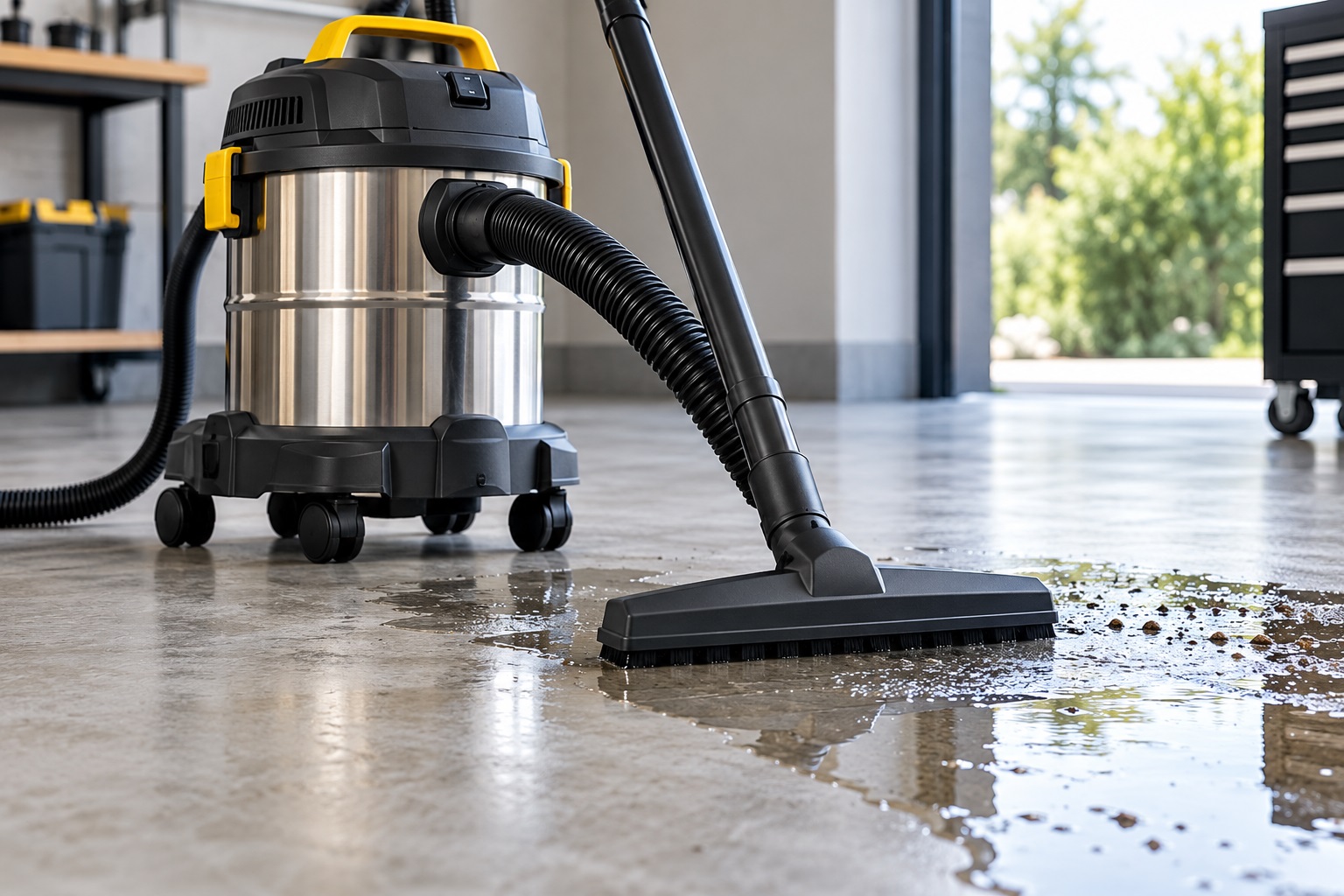
Why Filter Selection Matters in a Wet and Dry Vacuum Cleaner
A wet and dry vacuum cleaner may look straightforward from the outside: a motor generates suction, debris enters through the hose, and a tank collects the material. Inside the machine, however, filtration has a major influence on performance.
The filter has to balance two competing requirements. It needs to capture unwanted particles while allowing enough air to pass through the vacuum system.
If filtration resistance becomes excessive, airflow can decrease. If filtration is inadequate for the application, fine particles may pass through the system or create additional maintenance requirements.
For professional buyers, therefore, choosing a vacuum should involve more than comparing vacuum cleaner suction power, vacuum cleaner motor power, and vacuum cleaner tank capacity. The vacuum cleaner filtration system should also be evaluated according to the material being collected and the intended working environment.
This is particularly important when sourcing a commercial vacuum cleaner, industrial vacuum cleaner, or heavy duty shop vacuum expected to operate regularly.
🔍 A useful purchasing principle: do not select a filter only by its appearance or material. Start with the debris, operating environment, cleaning frequency, and required filtration performance.
1. Start with What the Vacuum Will Collect
The first question should be simple:
What material will actually enter the vacuum cleaner?
A machine used for workshop sawdust has different requirements from one used to collect ordinary hotel debris. Likewise, a vacuum handling water requires a different filtration arrangement from a unit primarily collecting fine dry particles.
General Dry Debris
For relatively coarse material such as:
wood chips,
crumbs,
packaging debris,
larger workshop particles,
general floor dirt,
a standard dry filtration configuration may provide a practical balance between filtration and airflow.
This type of configuration can be appropriate for a shop vacuum, portable workshop cleaner, or general-purpose commercial vacuum cleaner.
Fine Dry Dust
Fine particles require more attention.
Applications involving fine dust may benefit from higher-efficiency filtration, depending on the particle characteristics and applicable workplace requirements. Buyers should examine not only the filter specification but also the complete filtration system, sealing design, airflow path, and maintenance procedure.
A HEPA filter vacuum cleaner, for example, may be considered when higher filtration efficiency is required. However, buyers should verify what standard the manufacturer is using when describing a filter as HEPA and whether the claim applies to the filter alone or to the complete vacuum system.
For demanding professional applications, filtration claims should be supported by appropriate technical documentation rather than marketing terminology alone.
2. Understand the Difference Between Wet and Dry Filtration
💧 This is one of the most important points for buyers new to wet/dry machines.
A wet dry vacuum is designed to handle both liquid and dry material, but that does not necessarily mean the same filter should remain installed in exactly the same configuration for every task.
For dry pickup, a filter typically prevents dust from reaching the motor area and being discharged with exhaust airflow.
For wet pickup, the machine may use a different configuration depending on its design. Some models use foam filters or other wet-compatible components, while certain systems require dry filter elements to be removed before collecting liquids.
Manufacturers should provide clear operating instructions.
Using an unsuitable filter for liquid collection can restrict airflow, contaminate the filter, or negatively affect performance.
Therefore, professional purchasers evaluating a powerful wet dry vacuum should ask the supplier:
Which filter is recommended for dry pickup?
Which filter configuration is required for liquid pickup?
Does the machine use a float shut-off mechanism?
Can the standard filter tolerate occasional moisture?
How quickly can operators switch between wet and dry modes?
Are replacement filters readily available?
For commercial users, these operational details can matter as much as headline suction specifications.
3. Match Filtration Efficiency to the Application
More filtration is not automatically better for every job.
A highly restrictive filter can create additional resistance to airflow. The overall vacuum system therefore needs to balance particle capture with sufficient airflow.
⚙️ Engineers developing a High Suction Vacuum Cleaner usually evaluate the interaction between the motor, impeller, airflow path, hose diameter, filter surface area, seals, tank structure, and filter resistance.
This explains why buyers should avoid evaluating suction from motor wattage alone.
Two vacuum cleaners with similar rated motor power can perform differently because their complete airflow systems are different.
When discussing an OEM project with a vacuum cleaner manufacturer, buyers can request information about:
airflow,
vacuum pressure,
filter media,
filtration efficiency,
effective filtration area,
filter resistance,
motor configuration,
hose diameter,
sealing,
and performance as the filter accumulates dust.
These specifications provide a more useful technical picture than a single power figure.
4. Consider Filter Surface Area and Dust Loading
Imagine two filters made from similar media. One has substantially more effective filtration area than the other.
The larger filter may distribute collected dust across a broader surface, potentially helping maintain airflow longer before cleaning is required.
This can become important for an industrial vacuum cleaner working for extended periods.
🏭 Consider a warehouse maintenance team cleaning loading zones, storage aisles, and packing areas throughout the day. Frequent filter blockage means operators must repeatedly stop the machine.
Even if each interruption lasts only several minutes, accumulated downtime can affect productivity.
For this reason, professional buyers should ask a wet dry vacuum manufacturer about both filtration efficiency and usable filter area.
A well-designed filter system should make routine maintenance straightforward while supporting the expected operating cycle.
5. HEPA Filtration: When Does It Make Sense?
A HEPA filter vacuum cleaner can be useful where controlling fine airborne particles is an important requirement.
Potential applications include certain:
commercial facilities,
workshops,
hospitality environments,
offices,
public buildings,
maintenance operations,
and controlled cleaning tasks.
However, buyers should avoid assuming that every product carrying the word “HEPA” offers identical system-level performance.
Ask the vacuum cleaner supplier for the relevant filter specifications and available test documentation.
Also examine sealing.
Even an efficient filter cannot deliver its intended system performance if unfiltered air can bypass it through poorly sealed connections.
For OEM development, engineers should therefore examine the entire air path rather than treating the filter as an isolated component.
🧪 Engineering point: filtration efficiency, sealing integrity, airflow resistance, and dust-holding behavior should be considered together.
6. Disposable vs. Washable Filters
Filter maintenance influences the lifetime operating cost of a vacuum cleaner.
Washable Filters
Washable filters can reduce replacement frequency in suitable applications.
They may appeal to distributors and commercial users looking for reusable components. However, operators must follow the manufacturer's cleaning and drying instructions.
A filter returned to service before it has dried adequately may affect performance or hygiene.
Disposable Filters
Disposable filters offer straightforward replacement and can be useful where operators prefer predictable maintenance procedures.
For a wholesale vacuum cleaner program, filter availability can become an important commercial consideration.
Importers should calculate not only the vacuum cleaner purchase price but also:
replacement filter cost,
recommended replacement interval,
availability of consumables,
packaging quantities,
spare-part lead times,
and compatibility across models.
A slightly higher initial equipment cost may be commercially reasonable if the machine has a practical long-term consumables strategy.
7. Filter Selection for Different Commercial Scenarios
Different environments create very different filtration requirements.
🏨 Hotel Cleaning
A commercial vacuum cleaner for hotel use may need low operating noise, convenient mobility, manageable weight, and effective filtration for routine floor debris.
A Portable Quiet Vacuum Cleaner can therefore be attractive for hospitality environments where cleaning may occur near guests.
🏭 Workshop and Factory Cleaning
A heavy duty shop vacuum or stainless steel shop vacuum may encounter larger debris and demanding cleaning cycles.
Durability, tank construction, filter access, hose dimensions, and motor protection become especially important.
A Multi-Functional Durable Vacuum Cleaner can be configured for several maintenance tasks when the filtration system matches the intended debris.
📦 Warehouse Cleaning
Warehouses may generate packaging fragments, floor dust, dirt carried by vehicles, and other debris.
An industrial wet and dry vacuum cleaner for warehouse cleaning supplier should therefore be able to explain which filtration configuration is appropriate for the actual warehouse environment rather than simply recommending the highest-rated filter.
🚗 Vehicle and Detailing Applications
A portable shop vacuum used for automotive cleaning benefits from convenient handling and suitable accessories.
For this scenario, a Fast Lightweight Vacuum Cleaner may prioritize mobility while maintaining sufficient filtration and suction for seats, carpets, footwells, and cargo areas.
8. Case Example: Selecting a Filter for a Warehouse Vacuum Program
Consider a hypothetical European cleaning-equipment distributor sourcing wet/dry vacuums for warehouse maintenance customers.
The distributor initially focuses on motor wattage and tank capacity. During application review, however, it becomes clear that customers frequently collect cardboard fibers, ordinary floor debris, and moderate quantities of fine dust.
The sourcing team changes its evaluation process.
Instead of requesting only a high suction vacuum cleaner, it asks manufacturers to provide information about filter media, effective filter area, airflow, replacement filters, wet-pickup configuration, and maintenance access.
Samples are then tested under representative debris conditions.
One filter configuration provides strong initial airflow but requires frequent cleaning as dust accumulates. Another configuration provides a more practical balance between filtration and sustained airflow for the distributor's intended application.
The lesson is important:
The most suitable filter cannot always be identified from a specification sheet alone.
Representative application testing can reveal how the machine behaves as the filter loads with actual debris.
9. Think About Energy Efficiency as a Complete System
An Energy-Saving Efficient Powerful Vacuum Cleaner should not be evaluated simply by choosing the lowest-wattage motor.
Energy efficiency depends on how effectively electrical input is converted into useful cleaning performance.
Poor airflow design, restrictive filters, leakage, inefficient air paths, or badly matched accessories can reduce practical performance.
For buyers comparing OEM models, useful evaluation factors include:
rated input power,
airflow,
vacuum pressure,
cleaning performance,
filter condition,
motor efficiency,
operating noise,
and application-specific productivity.
A lower-powered machine that performs the intended task efficiently may provide better practical value than a higher-powered product whose airflow system is poorly optimized.
10. Large-Capacity Vacuums Need Practical Filter Access
A Large-Capacity Wet Dry Vacuum Cleaner is often purchased to reduce interruptions associated with emptying the collection tank.
However, increasing tank capacity does not eliminate filter maintenance.
For large commercial machines, buyers should examine how quickly an operator can access, inspect, clean, and replace the filter.
A filter hidden behind complicated assemblies can increase servicing time.
Tool-free or simplified access may be valuable for commercial environments where multiple employees use the equipment.
The same principle applies to tank drainage, hose storage, cable management, and accessory organization.
Professional cleaning equipment should be evaluated as a complete working system rather than a collection of impressive specifications.
11. Questions Buyers Should Ask an OEM Vacuum Cleaner Manufacturer
🌍 Importers planning an OEM vacuum cleaner or private label vacuum cleaner program should discuss filtration early in product development.
A useful RFQ can include questions such as:
What filter media are available for this model?
What filtration efficiency has been tested?
Which test method or standard was used?
What is the effective filter surface area?
Is the filter washable or disposable?
What configuration is required for wet pickup?
How is the motor protected during liquid collection?
Is a float shut-off system included?
What replacement filters are available?
Can filters be customized for an OEM program?
What documentation is available for filtration claims?
How does filter loading affect airflow?
Are replacement filters shared across multiple vacuum models?
What is the MOQ for spare filters?
Can replacement filters be supplied with bulk orders?
These questions help buyers compare suppliers using measurable requirements.
An experienced OEM vacuum cleaner manufacturer or ODM vacuum cleaner manufacturer should be able to discuss the relationship between filtration, airflow, suction, motor characteristics, tank design, and the target application.
12. Don't Choose a Vacuum on Price Alone
Searches such as best vacuum on a budget, best budget hoover, good budget vacuum, best affordable vacuum, and best value hoover reflect a legitimate concern: buyers want good performance without unnecessary cost.
For commercial procurement, however, “budget” should usually mean total value rather than simply the lowest unit price.
💡 Consider:
Purchase cost + consumables + maintenance + downtime + expected service life = a more useful cost picture.
This becomes especially relevant for wholesalers placing bulk orders.
A low-cost vacuum requiring unusually frequent filter replacement may become less economical over time. Conversely, paying for a sophisticated filtration system that the target customer does not require can unnecessarily increase the retail price.
The objective is to match the filtration system to the application.
13. Filter Decisions During OEM and ODM Development
For buyers working directly with a vacuum cleaner manufacturer, filtration can be considered during product configuration rather than after the machine is completed.
An OEM/ODM project may evaluate:
filter material,
pleat geometry,
filtration surface area,
filter mounting,
sealing structure,
pre-filter options,
wet pickup configuration,
replacement accessibility,
packaging of spare filters,
instruction manual requirements,
and target-market documentation.
This is also where collaboration between purchasing teams and R&D engineers becomes valuable.
Procurement professionals understand target pricing and customer expectations, while engineers can evaluate airflow resistance, motor protection, materials, and system integration.
When these teams work together, a professional vacuum cleaner can be configured around actual market requirements rather than specifications selected primarily for marketing appeal.
14. A Practical Filter Selection Framework
Before confirming a bulk purchase, use this sequence:
Step 1 — Define the debris.
Identify whether users will collect coarse dirt, fine dry particles, liquids, or a combination.
Step 2 — Define the environment.
A hotel, workshop, warehouse, vehicle-detailing operation, and industrial facility have different requirements.
Step 3 — Establish filtration requirements.
Determine whether standard filtration, higher-efficiency filtration, or another application-specific system is appropriate.
Step 4 — Check wet-pickup compatibility.
Confirm exactly how the filter configuration changes when liquids are collected.
Step 5 — Evaluate airflow and suction together.
Do not judge performance from motor wattage alone.
Step 6 — Examine maintenance.
Check filter access, cleaning procedures, replacement cost, and spare-part availability.
Step 7 — Test representative samples.
Use realistic debris and operating cycles whenever possible.
Step 8 — Calculate total value.
Include consumables and maintenance instead of comparing only factory prices.
Final Thoughts
The filter is one of the most important components in a wet and dry vacuum cleaner because it directly interacts with airflow, collected debris, motor protection, maintenance, and operating performance.
For household users, the decision may involve convenience and replacement cost. For wholesalers and retailers, spare-filter availability and market positioning become important. For industrial purchasers, application suitability and operating continuity may carry greater weight. For R&D engineers, filtration must be integrated with the entire airflow system.
Whether you are developing a High Suction Vacuum Cleaner, Portable Quiet Vacuum Cleaner, Multi-Functional Durable Vacuum Cleaner, or Large-Capacity Wet Dry Vacuum Cleaner, start with the application rather than selecting a filter based only on a marketing label.
For OEM, ODM, wholesale, and wet/dry vacuum cleaner development information, additional product and manufacturing information is available at www.lxvacuum.com.
If you are interested, please feel free to contact us.
50 Related SEO Keywords:
wet dry vacuum cleaner, wet and dry vacuum cleaner, Lanxstar, vacuum manufacturer, vacuum cleaner maker, vacuum cleaner manufacturer, shop vacuum manufacturer, wet dry vacuum manufacturer, vacuum cleaner supplier, OEM vacuum cleaner, ODM vacuum cleaner, private label vacuum cleaner, wholesale vacuum cleaner, bulk vacuum cleaner supplier, commercial vacuum cleaner, industrial vacuum cleaner, heavy duty shop vacuum, stainless steel shop vacuum, portable shop vacuum, high suction vacuum cleaner, professional vacuum cleaner, powerful wet dry vacuum, HEPA filter vacuum cleaner, wet dry vacuum filter, industrial vacuum filter, shop vacuum filter, vacuum cleaner filtration system, vacuum cleaner suction power, vacuum cleaner motor power, vacuum cleaner tank capacity, washable vacuum filter, replacement vacuum filter, commercial vacuum filter, industrial vacuum cleaner supplier, OEM vacuum cleaner manufacturer, ODM vacuum cleaner manufacturer, high suction power vacuum cleaner, low noise vacuum cleaner, energy efficient vacuum cleaner, large capacity wet dry vacuum, commercial cleaning equipment, industrial cleaning equipment, warehouse cleaning vacuum, hotel vacuum cleaner, factory cleaning vacuum, bulk vacuum cleaner purchase, vacuum cleaner supplier China, vacuum cleaner factory, wet dry suction system, commercial grade vacuum cleaner