Hi, message us with any questions.
We're happy to help!





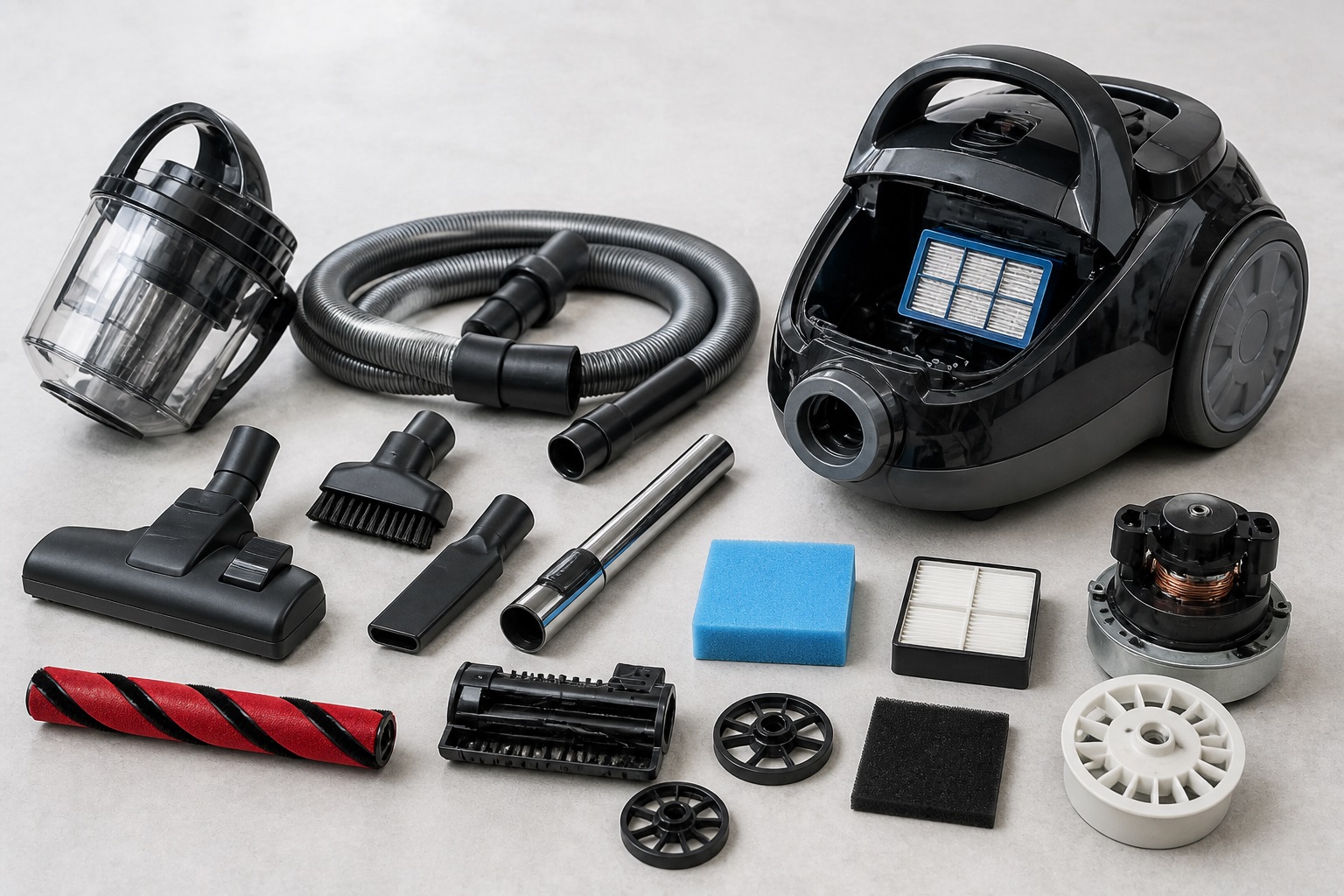
🚨 In the Vacuum Cleaner Industry, Product Lifespan Is Often Determined Long Before Consumers Ever Open the Box
Most consumers assume vacuum cleaners fail because products become old.
But across the appliance industry, engineers and repair technicians increasingly understand a different reality:
Vacuum cleaner lifespan is often determined by the quality of internal spare parts selected during manufacturing.
In many cases, the real problems begin months before the customer even uses the product.
Low-cost sourcing decisions involving:
motors
bearings
filters
batteries
airflow systems
PCB protection components
can dramatically shorten long-term durability.
And the hidden costs rarely appear during production itself.
They appear later through:
warranty claims
Amazon return spikes
overheating complaints
suction loss
customer dissatisfaction
damaged brand reputation
As global competition intensifies, understanding how:
vacuum spare parts impact lifespan
has become increasingly important for:
vacuum cleaner manufacturers
sourcing managers
product engineers
OEM procurement teams
appliance distributors
aftermarket parts suppliers
because long-term reliability is rapidly becoming a major competitive advantage.
🔍 Why Spare Parts Matter More Than Most Buyers Realize
Inside every vacuum cleaner are dozens of high-stress components operating continuously under heat, airflow pressure, vibration, and dust exposure.
These include:
motors
filters
brush rollers
batteries
bearings
airflow channels
charging systems
PCB protection modules
sealing components
Even if a vacuum cleaner appears visually premium, weak internal components can significantly shorten its operational lifespan.
Several repair technicians estimate that more than 60% of household vacuum cleaner failures are linked to wear-prone internal components rather than complete system failure.
This creates a critical industry reality:
The true durability of a vacuum cleaner is heavily dependent on invisible engineering decisions.
⚠️ Why Motor Durability Remains the Core Lifespan Factor
Among all vacuum spare parts, the motor remains the most important durability variable.
Vacuum motors operate under extreme conditions involving:
high-speed rotation
continuous thermal stress
airflow pressure
dust particle exposure
long operational cycles
Low-quality motors frequently experience:
overheating
unstable RPM control
carbon brush wear
suction inconsistency
premature burnout
Several appliance engineers estimate that airflow blockage and poor cooling structures can increase motor operating temperature by approximately 15%-30% during continuous household usage.
This dramatically accelerates wear.
One EU importer reported rising warranty claims after a supplier quietly downgraded copper wiring quality inside motor systems to offset raw material cost increases.
The issue remained invisible during early sample testing but became highly visible after 6-12 months of consumer usage.
This highlights an important sourcing reality:
Motor durability problems often appear long after factory inspections are completed.
📦 Case Example: How Cheap Bearings Triggered Warranty Problems
A mid-sized European vacuum cleaner distributor once switched to a lower-cost cordless vacuum platform to improve retail margins.
Initial testing showed acceptable product performance.
However, within the first year:
vibration complaints increased
motor noise became unstable
suction consistency declined
return rates rose sharply
After engineering inspection, technicians discovered the supplier had replaced premium internal bearings with lower-grade alternatives to reduce manufacturing cost.
Under continuous high-speed motor rotation, the bearings degraded rapidly.
The consequences included:
increasing warranty claims
negative marketplace reviews
retailer dissatisfaction
higher after-sales service costs
The distributor later switched to a more reliable vacuum parts supplier, significantly improving long-term product stability.
This case reflects a broader industry truth:
Small internal component decisions can create massive long-term operational consequences.
🌪️ Airflow Engineering May Be More Important Than Suction Power Alone
Most consumers focus heavily on advertised suction power.
However, many engineers now believe airflow engineering has an even bigger impact on long-term vacuum cleaner lifespan.
Poor airflow management creates:
excessive motor stress
heat accumulation
internal dust concentration
cooling inefficiency
unstable performance degradation
Several appliance engineers estimate that inefficient airflow structures can accelerate internal motor wear by increasing thermal fluctuation during continuous operation.
This is why premium vacuum cleaner manufacturers increasingly invest in:
smoother airflow channels
multi-stage dust separation systems
turbulence reduction design
advanced cooling pathways
to improve both performance and durability.
Future competition may increasingly depend on:
Airflow Optimization Rather Than Raw Suction Numbers Alone
🔋 Battery Quality Is Becoming a Critical Reliability Benchmark
As cordless vacuum cleaners dominate global markets, battery durability has become one of the most important lifecycle variables.
Industry repair data suggests that many low-cost cordless vacuum batteries begin experiencing noticeable capacity degradation after roughly 300-500 charging cycles.
Low-grade battery systems frequently cause:
unstable charging performance
shortened runtime
thermal instability
overheating risk
premature capacity decline
One European importer discovered that a supplier quietly switched battery vendors during later production batches to reduce procurement costs.
Initially, the products passed standard inspections.
However, several months later:
runtime complaints surged
charging failures increased
customer return rates climbed sharply
The importer eventually implemented:
battery traceability systems
lifecycle stress testing
thermal cycling evaluation
supplier consistency agreements
before approving future mass production.
This reflects a growing sourcing trend:
Professional buyers increasingly evaluate battery ecosystems rather than battery capacity alone.
⚠️ Cheap Spare Parts Often Create Expensive After-Sales Problems
The true cost of low-quality vacuum spare parts rarely appears during production.
It usually appears later through:
returns
warranty claims
retailer penalties
repair costs
negative online reviews
Some low-cost suppliers reduce costs through hidden compromises such as:
thinner copper wiring
lower-density filters
simplified PCB protection systems
weaker plastics
reduced insulation materials
lower-grade seals and bearings
These changes may remain invisible during short-term inspection.
However, after extended consumer usage, durability problems begin appearing gradually.
One US Amazon vacuum seller experienced rising return rates after brush rollers started cracking under normal household usage.
The issue was later linked to lower-grade plastic materials introduced during cost-reduction efforts.
This highlights an important business reality:
Extremely cheap components often become extremely expensive long-term liabilities.
🔧 Why Vacuum Maintenance Plays a Bigger Role Than Consumers Expect
Even premium vacuum cleaners require proper maintenance to achieve maximum lifespan.
Poor maintenance habits accelerate:
motor stress
airflow blockage
battery degradation
overheating risk
filtration inefficiency
Professional repair technicians commonly recommend:
✅ Regular Filter Cleaning
Dirty filters increase airflow resistance and motor workload.
✅ Brush Roller Maintenance
Hair accumulation and debris can overload internal motor systems.
✅ Battery Temperature Management
Extreme charging temperatures accelerate lithium battery degradation.
✅ Hose and Seal Inspection
Air leakage reduces suction efficiency and increases thermal stress.
📜 Europe’s Right to Repair Movement Is Reshaping the Industry
Europe’s growing Right to Repair regulations are gradually changing vacuum cleaner design philosophy.
Regulators increasingly encourage manufacturers to provide:
replaceable batteries
accessible spare parts
repair documentation
longer product support cycles
modular repair-friendly structures
This trend may significantly reshape future product engineering strategies across the appliance industry.
For many manufacturers, long-term repairability is becoming both:
A Compliance Requirement And A Brand Strategy
This also creates new opportunities for:
vacuum parts suppliers
aftermarket repair providers
modular appliance manufacturers
OEM component specialists
🤖 The Future of Vacuum Maintenance May Become AI-Driven
Future smart vacuum cleaners may increasingly use sensor systems to monitor:
motor vibration
airflow resistance
thermal fluctuation
battery degradation patterns
filtration efficiency
before performance failure occurs.
Several product engineers believe predictive maintenance systems could become a major competitive advantage in future smart cleaning ecosystems.
Instead of waiting for failure, future vacuum cleaners may proactively recommend:
filter replacement
airflow cleaning
battery servicing
motor inspection
through app-based monitoring systems.
This could dramatically extend product lifespan while reducing warranty costs.
🚀 How Smart Manufacturers Improve Vacuum Cleaner Lifespan
Leading companies increasingly focus on:
✅ Higher-Quality Motors
Better thermal resistance and longer operational cycles.
✅ Stable Spare Parts Supply Chains
Consistent component sourcing improves production reliability.
✅ Advanced Airflow Engineering
Reduced thermal stress and smoother cooling systems.
✅ Modular Repair-Friendly Design
Simplified maintenance and easier component replacement.
✅ Predictive Reliability Testing
Lifecycle simulation helps identify failure risks before mass production.
📈 Why Durability Is Becoming a Competitive Advantage
As Amazon reviews and online reputation increasingly influence purchasing decisions, durability is becoming a major market differentiator.
Consumers increasingly value:
long-term reliability
repairability
lower maintenance cost
sustainable product lifespan
rather than simply low initial pricing.
This trend is reshaping sourcing priorities for:
vacuum cleaner manufacturers
OEM procurement teams
distributors
private-label brands
because long-term product stability directly impacts:
profitability
customer trust
operational cost
brand reputation
🎯 Final Thoughts
Understanding how:
vacuum spare parts impact lifespan
is becoming increasingly important across the global appliance industry.
Vacuum cleaner durability depends heavily on:
motor durability
airflow engineering
battery quality
filtration systems
spare parts consistency
maintenance practices
For manufacturers, sourcing managers, and distributors, choosing reliable:
vacuum cleaner manufacturers
vacuum parts suppliers
OEM engineering partners
can significantly reduce:
warranty claims
return rates
product instability
long-term operational risk
Because in the future vacuum cleaner industry:
Brands competing only on low pricing may struggle to maintain long-term customer trust.
And increasingly:
Product lifespan itself is becoming a competitive advantage.
📌 Suitable Audience
Vacuum cleaner manufacturers
Product engineers
OEM sourcing managers
Appliance distributors
Aftermarket parts suppliers
Vacuum repair professionals
Amazon vacuum sellers
Procurement teams
📌 Hashtags
vacuumspareparts, vacuumsparepartsimpactlifespan, vacuumcleanermanufacturer, vacuumpartssupplier, motordurability, vacuummaintenance, cordlessvacuumparts, vacuumcleanerrepair, HEPAfiltration, vacuumcleanercomponents, brushlessmotorvacuum, vacuumbatteryperformance, vacuumcleanerengineering, airflowoptimization, vacuumcleanerQC, vacuumcleanersourcing, vacuumcleanerOEM, appliancecomponentsupplier, aftermarketvacuumparts, vacuummotorquality, vacuumcleanerwarranty, vacuumcleanerreturns, batterydurability, smartvacuumtechnology, cleaningapplianceindustry, vacuumproductdesign, OEMvacuumfactory, vacuumrepairmarket, householdapplianceparts, vacuummotorengineering, vacuumcleanerinnovation, vacuumcleanersustainability, righttorepairEurope, modularvacuumdesign, vacuumcleanerperformance, productdurability, vacuumairflowsystem, vacuummaintenanceguide, vacuumcleanerlifespan, applianceengineering, vacuumcleanerindustry, replacementvacuumparts, vacuumcleanerwholesale, premiumvacuumcomponents, vacuumqualitycontrol, motorcoolingsystem, vacuumrepairsolutions, supplychainstability, longlifevacuumcleaner, Lanxstar