Hi, message us with any questions.
We're happy to help!





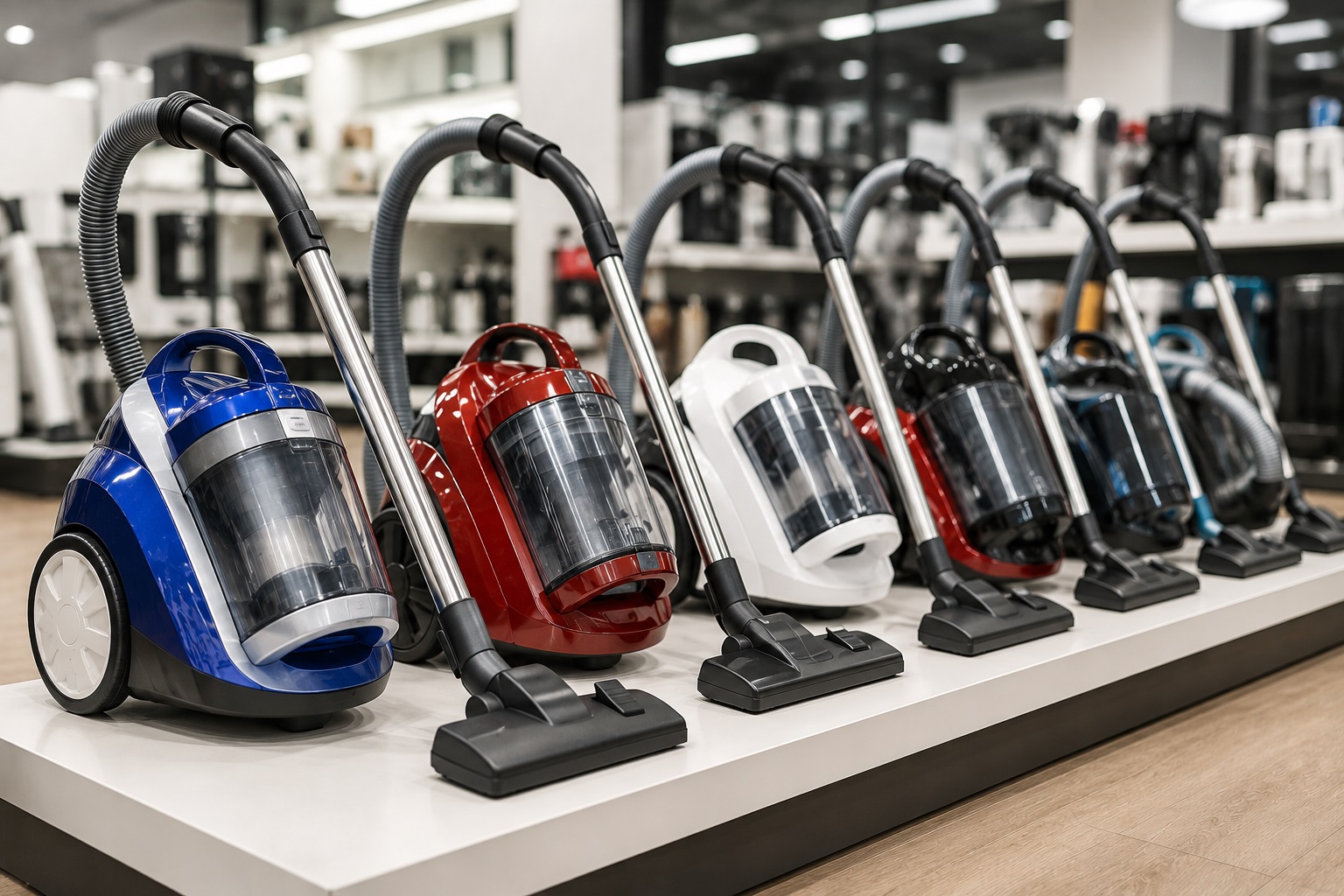
🚨 Europe’s Vacuum Cleaner Industry Is Entering a Dangerous Commodity Era
Across Europe, the vacuum cleaner market is becoming increasingly aggressive.
What was once a technology-driven appliance category is rapidly transforming into a price-driven battlefield.
Consumers now encounter:
ultra-low-priced cordless vacuums
heavy Amazon discounts
aggressive retail promotions
private-label price attacks
constant marketplace comparisons
For many distributors and brands, margins are shrinking faster than expected.
And the most alarming reality is this:
In Europe’s vacuum cleaner industry, price competition is no longer destroying margins alone — it is reshaping the entire supply chain.
The ongoing:
price war vacuum cleaner market Europe
trend is not caused by a single factor.
It is the result of multiple structural changes happening simultaneously:
OEM manufacturing expansion
Amazon marketplace pressure
oversupply across Europe
weakening product differentiation
inflation-driven consumer behavior
rapid private-label growth
This article explains why Europe vacuum competition is intensifying — and which companies are most likely to survive the next phase of industry consolidation.
📉 Why Vacuum Cleaner Prices Are Falling Across Europe
Over the past several years, Europe’s vacuum cleaner market has experienced a sharp decline in average selling prices.
According to multiple European appliance distributors, average cordless vacuum cleaner ASPs (average selling prices) across major online marketplaces declined approximately 18%-25% between 2023 and 2025.
The strongest downward pricing pressure appeared in:
| Market | Main Pricing Pressure |
|---|---|
| UK | Amazon competition and discount culture |
| Germany | Price-performance comparison behavior |
| France | Private-label retail expansion |
| Italy | Import-driven low-cost competition |
| Eastern Europe | Aggressive entry-level pricing |
This trend reflects a broader transformation:
Consumers increasingly treat vacuum cleaners as comparable commodity products.
And commodity markets almost always trigger price wars.
🏭 How Chinese OEM Expansion Changed the Entire Market
One of the biggest reasons behind Europe vacuum competition is the explosive growth of Chinese OEM manufacturing.
In the past, launching a vacuum cleaner brand required:
engineering capability
tooling investment
manufacturing expertise
supply chain resources
Today, many vacuum cleaner suppliers offer:
ready-made cordless platforms
low MOQ production
private-label packaging
OEM customization
Amazon-ready compliance support
This dramatically lowered market entry barriers.
A sourcing consultant in the UK appliance industry noted that some Amazon-focused sellers can now launch a private-label cordless vacuum brand within 60-90 days using existing OEM ecosystems.
The result?
Massive product oversupply
And oversupply almost always creates aggressive pricing competition.
📦 Case Example: How Amazon Accelerated Europe Vacuum Competition
A mid-sized UK vacuum cleaner distributor once relied heavily on traditional electronics retailers.
For years, its average retail pricing remained relatively stable.
However, after Amazon competition intensified:
low-cost sellers entered aggressively
sponsored advertising costs surged
flash discount campaigns became constant
review competition escalated rapidly
Within 18 months:
average retail pricing declined nearly 22%
customer loyalty weakened significantly
marketing costs increased sharply
profit margins compressed heavily
The distributor eventually reduced pricing simply to maintain marketplace visibility.
This reflects a growing market reality:
Amazon is no longer just a sales channel — it is redefining pricing behavior across Europe.
⚠️ Product Similarity Is Destroying Premium Pricing Power
One of the biggest hidden problems in the modern vacuum cleaner market is product similarity.
Many vacuum cleaner products sold under different brands now share:
similar brushless motors
identical battery structures
matching PCB systems
similar filtration designs
common upstream suppliers
A European sourcing consultant once conducted teardown comparisons between several cordless vacuum cleaners sold under different labels.
The products surprisingly shared:
nearly identical internal layouts
similar motor architecture
matching battery sourcing systems
equivalent suction structures
The primary differences were often:
cosmetic housing changes
packaging design
branding strategy
This creates a dangerous market condition:
Consumers begin comparing products mainly through price.
And once pricing becomes the primary differentiator, long-term margin pressure becomes unavoidable.
💥 Why Mid-Range Vacuum Brands Face the Biggest Risk
The market is gradually splitting into two extremes:
| Segment | Competitive Logic |
|---|---|
| Budget Market | Lowest-price competition |
| Premium Market | Innovation and ecosystem value |
This creates enormous pressure on mid-range brands.
Budget products compete aggressively through pricing.
Premium brands compete through:
technology
design
brand ecosystem
customer experience
Mid-tier brands often struggle because they lack both:
ultra-low manufacturing cost
premium brand power
Several European distributors now believe that:
Mid-range vacuum cleaner brands may face the highest consolidation risk over the next five years.
🔬 Case Example: How Low-Cost Competition Damaged Product Quality
One EU importer attempted to reduce procurement costs by switching to a cheaper wholesale vacuum cleaner supplier.
Initially, the pricing advantage appeared attractive.
However, during later production batches, the supplier quietly changed:
battery vendors
motor materials
packaging density
Within months:
overheating complaints increased
Amazon return rates surged
customer satisfaction declined
warranty claims rose sharply
The importer later discovered that the factory had reduced copper content inside motor wiring to offset rising raw material costs.
The issue was nearly impossible to detect during early sample evaluation.
This highlights a growing sourcing reality:
Extremely low pricing often introduces hidden supply chain risks.
📈 Inflation Changed Consumer Buying Behavior Across Europe
Europe’s inflation pressure significantly reshaped appliance purchasing behavior.
Consumers increasingly prioritize:
affordability
discounts
promotional bundles
practical functionality
Instead of paying premium prices, buyers now compare:
suction power
battery duration
online ratings
promotional pricing
This weakens traditional premium pricing advantages.
Especially in markets like the UK and Eastern Europe, price sensitivity has increased dramatically during recent economic uncertainty.
⚡ Why Technology Advantages No Longer Last Long
In the past, leading vacuum brands could maintain competitive advantages for years through innovation.
Today, product imitation cycles are dramatically shorter.
When premium brands launch:
anti-tangle systems
LED dust sensors
AI cleaning functions
smart displays
OEM factories often develop comparable alternatives within months.
As manufacturing ecosystems mature, innovation spreads faster throughout the supply chain.
This reduces long-term pricing protection.
🌍 Why Europe Vacuum Competition Will Continue Intensifying
Several long-term trends suggest pricing pressure will continue for years.
📌 Market Saturation
Most European households already own vacuum cleaners.
Future demand depends heavily on replacement cycles rather than first-time buyers.
📌 Faster OEM Replication
Factories can replicate mainstream product trends faster than ever before.
📌 E-Commerce Transparency
Consumers instantly compare:
pricing
reviews
features
shipping speed
across multiple marketplaces.
📌 Private Label Expansion
Retailers and Amazon sellers increasingly launch their own branded products using OEM factories.
This creates even more pricing pressure.
🚀 How Smart Brands Survive Vacuum Cleaner Price Wars
The future winners of Europe vacuum competition may not be the brands with the lowest prices, but the companies with the most stable manufacturing ecosystems.
The strongest companies increasingly focus on:
✅ Product Differentiation
Successful brands now emphasize:
quieter motors
pet-focused cleaning systems
premium filtration
ergonomic lightweight design
smart home integration
✅ Supply Chain Stability
Reliable partnerships with professional vacuum cleaner manufacturers help reduce:
defect rates
shipping delays
warranty claims
compliance risks
✅ Brand Ecosystem Building
The market increasingly rewards brands capable of creating:
stronger customer loyalty
premium user experience
accessory ecosystems
after-sales service systems
rather than relying only on discounts.
✅ Operational Efficiency
Companies that balance:
sourcing cost
inventory turnover
logistics efficiency
quality consistency
will likely outperform competitors during prolonged pricing pressure.
📊 The Future of the Europe Vacuum Cleaner Market
The European vacuum cleaner industry may gradually evolve into a “commodity + premium ecosystem” structure.
Future market winners will likely combine:
stable OEM partnerships
differentiated product positioning
supply chain transparency
faster innovation cycles
stronger branding capability
rather than relying purely on aggressive low pricing.
Because in long-term market competition:
Sustainable operational systems usually outperform short-term pricing tactics.
🎯 Final Thoughts
The ongoing:
price war vacuum cleaner market Europe
trend is being driven by multiple structural forces:
OEM manufacturing expansion
oversupply
Amazon marketplace competition
inflation-driven consumer behavior
faster product imitation
private-label growth
While aggressive pricing may temporarily increase sales volume, excessive competition often damages:
product quality
brand loyalty
supply chain stability
long-term profitability
For distributors, importers, and appliance brands, the real competitive advantage increasingly comes from:
Stable manufacturing partnerships, differentiated products, and long-term operational strategy.
In the future European vacuum cleaner market, brands competing only on price may struggle to survive the next wave of consolidation.
📌 Suitable Audience
European vacuum cleaner distributors
Appliance wholesalers
Amazon vacuum cleaner sellers
OEM sourcing managers
Cleaning appliance importers
Product strategy managers
Vacuum cleaner startups
Retail procurement teams
📌 Hashtags
vacuumcleanermarket, pricewarvacuumcleanermarketEurope, vacuumcleanersupplier, wholesalevacuumcleaner, lowpricevacuum, Europevacuumcompetition, cordlessvacuummarket, OEMvacuumfactory, vacuumcleanermanufacturer, vacuumcleanerindustry, privatelabelvacuumcleaner, Amazonvacuumseller, Europeanappliancemarket, smartvacuumcleaner, robotvacuummarket, vacuumcleanersourcing, cleaningapplianceindustry, householdappliancesupplier, vacuumcleanerdistribution, B2Bvacuumsolutions, vacuummarkettrends, vacuumcleanerOEM, lowcostvacuumcleaner, cordlessvacuumOEM, vacuumcleanerpricing, retailvacuumcleaner, AmazoncompetitionEurope, vacuumcleanerinnovation, vacuummarketanalysis, vacuumcleanerbranding, smartcleaningtechnology, Europeappliancemarket, vacuumcleanerstartup, vacuumindustrytrends, cleaningtechnologyEurope, vacuumcleanercompetition, OEMcleaningproducts, vacuumcleanerwholesale, supplychainstability, vacuummanufacturing, qualitycontrolvacuum, vacuumcleanerimporter, applianceprocurement, lowmarginretail, vacuumcleanertrend2026, privatebrandvacuum, cordlesscleaningtechnology, vacuumproductstrategy, Europeanretailcompetition, Lanxstar