Hi, message us with any questions.
We're happy to help!





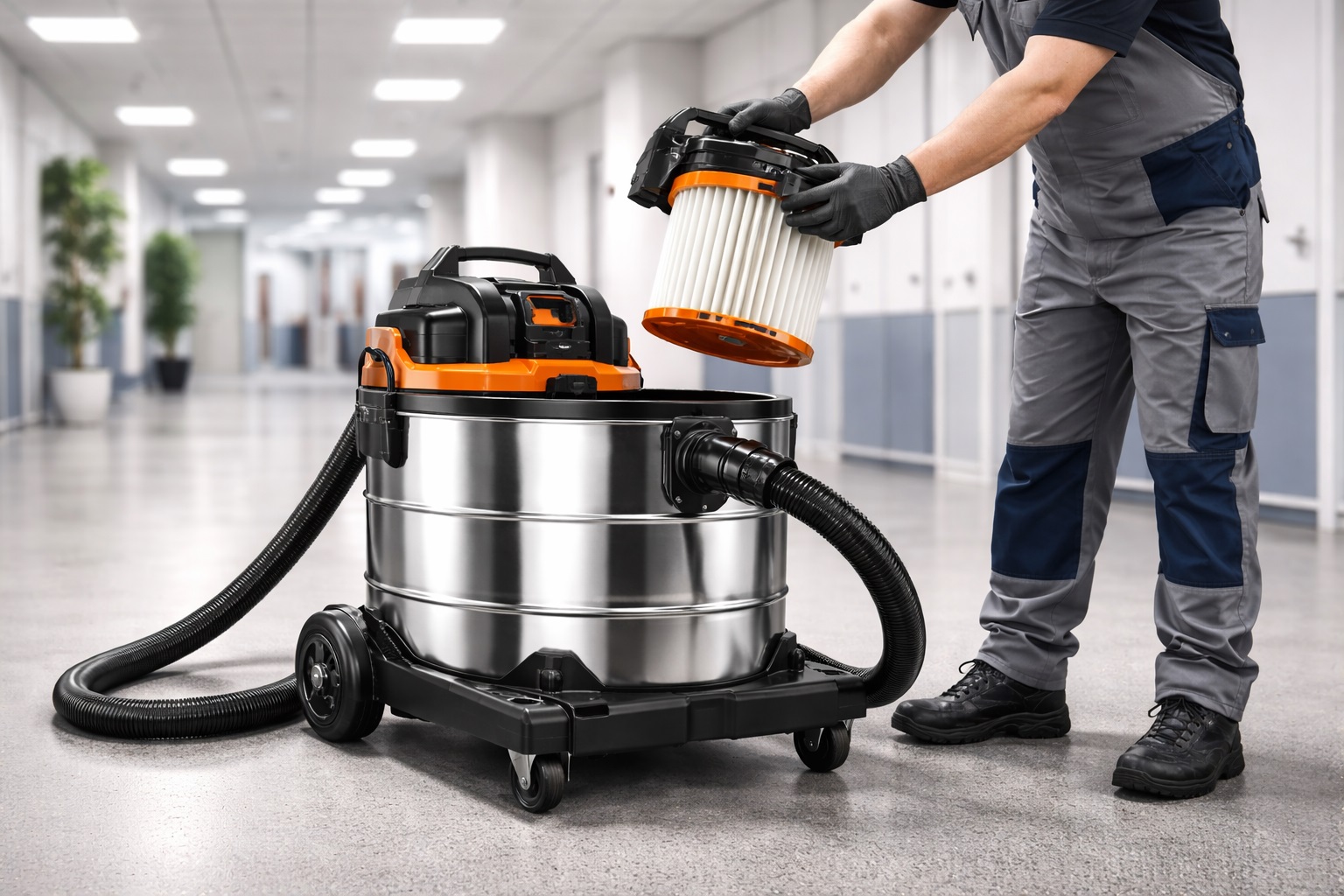
Best Practices for Facility Managers and Cleaning Contractors
In large commercial facilities—offices, hospitals, shopping malls, hotels, warehouses, and schools—vacuum cleaners are not just tools; they are critical operational assets.
For facility managers, cleaning contractors, and B2B buyers in Europe, the US, and the Middle East, maintaining your vacuum equipment is key to maximizing performance and minimizing downtime, especially in facilities with high traffic and diverse cleaning needs.
This article explains how to effectively manage vacuum maintenance in large commercial settings, covering equipment types, routine maintenance, cost management, and troubleshooting techniques to keep your facility running smoothly.
🧠 Why Vacuum Maintenance is Crucial in Large Facilities
Large facilities are complex environments with a wide range of floor types, debris types, and cleaning challenges. Frequent use, varied surfaces, and exposure to harsh materials (like construction dust, food waste, or chemicals) can put a significant strain on vacuum cleaners.
Without effective maintenance:
Suction performance drops
Motors overheat
Filters clog
Downtime increases, leading to delays in cleaning tasks
Key insight:
Maintenance is not just about extending the lifespan of your vacuum equipment; it’s about ensuring consistent cleaning results and operational efficiency across your facility.
🧩 Understanding Vacuum Needs in Commercial Facilities
In large commercial facilities, vacuum cleaners face diverse demands:
High-traffic areas: Offices, lobbies, and hallways
Specialized cleaning: Healthcare environments or food-processing facilities
Hard and soft floors: Carpets, tiles, concrete, or even outdoor spaces
The right vacuum management strategy starts with understanding the types of vacuums you need, based on your facility's specific cleaning requirements. Key equipment to consider:
Wet and dry vacuum cleaners for versatile use across debris types
Multi-functional durable vacuum cleaners for high traffic and varied surfaces
Cordless vacuums for fast, flexible cleaning
HEPA filter vacuums for environments that require high air quality
🧹 Best Practices for Vacuum Maintenance in Large Facilities
1. Create a Comprehensive Vacuum Maintenance Schedule
Regular maintenance is essential to ensure consistent cleaning results and avoid costly repairs. A maintenance schedule helps facility managers track:
Routine tasks: Filter cleaning, motor inspections, cord checks
Performance checks: Suction tests, battery health (for cordless models), noise level measurements
Replacement timelines: When filters, bags, or components should be replaced to avoid clogging
Ensure that staff are trained to follow a preventative maintenance plan, which helps reduce equipment failures and minimizes downtime. A typical maintenance schedule should include:
Weekly: Check filters, inspect hoses, clean tanks
Monthly: Test suction, clean brush rolls, inspect motor components
Quarterly: Deep clean the machine, replace worn-out parts, check electrical components
2. Keep Track of Equipment Performance with KPIs
Set up key performance indicators (KPIs) to measure the effectiveness of your vacuum maintenance program. This will allow you to track vacuum performance and identify areas for improvement:
Uptime vs. downtime
Time to service or repair
Cost per cleaning hour (dividing total maintenance cost by total cleaning hours)
Energy efficiency (for energy-saving models)
Cleaning consistency (how well vacuums are removing debris, dust, etc.)
3. Routine Filter and Bag Maintenance
A vacuum’s filtration system plays a crucial role in maintaining performance and cleanliness, especially when working in high-traffic environments with heavy dust or allergens. Ensure filters are regularly cleaned or replaced to:
Maintain suction power
Prevent dust and allergens from being recirculated
Improve air quality in the facility
For vacuums with HEPA filters, make sure they are replaced according to manufacturer recommendations. Regularly inspect filters for tears, blockages, or excessive buildup.
4. Proper Storage and Handling
Improper storage and handling can contribute to unnecessary wear and tear on vacuums. Ensure that:
Cordless vacuums are stored with fully charged batteries or in safe charging stations
Vacuum cords are wound correctly and stored neatly to avoid damage
Vacuum components (brushes, hoses, filters) are kept clean and dry to avoid bacterial or mold growth
🔧 Troubleshooting Common Vacuum Maintenance Issues
1. Lack of Suction Power
Common causes:
Clogged filters or bags
Blocked hoses or attachments
Low battery in cordless models
Solution: Regularly check and clean filters, clear hoses, and ensure that batteries are properly charged or replaced.
2. Overheating Motors
This often occurs when vacuums are used continuously or improperly.
Solution: Schedule regular rest periods for vacuums to avoid overheating. Ensure proper ventilation and inspect fans and vents for blockage.
3. Unusual Noises
Noises may indicate issues with brush rolls, motors, or debris in the vacuum.
Solution: Inspect brushes for hair or debris buildup. If the vacuum is noisy despite being cleaned, it may need a motor inspection.
4. Leaks in Wet-Dry Models
For wet-dry vacuum models, leakage can damage internal components.
Solution: Check the seal of the wet and dry compartments and ensure tanks are properly emptied and cleaned after each use.
📊 Cost Management and ROI: Investing in Maintenance
Properly maintaining your vacuums can reduce long-term operational costs and increase ROI. Key benefits include:
Extended equipment life
Fewer emergency repairs and replacements
Lower downtime and maintenance costs
Choosing multi-functional, durable vacuums with long-term warranties can also reduce the frequency of replacement purchases, improving ROI.
🧭 A Vacuum Maintenance Management Framework
| Challenge | Solution |
|---|---|
| Frequent breakdowns | Implement regular maintenance checks |
| Clogged filters | Regular cleaning and filter replacement |
| Short vacuum lifespan | Invest in durable, high-quality vacuums |
| Poor suction | Regular performance checks, clean components |
| High energy consumption | Choose energy-efficient models for long shifts |
🧠 Final Insight for Facility Managers
Vacuum maintenance in large commercial facilities is more than just fixing issues when they arise—it’s about implementing a systematic approach to ensure continuous performance. By investing in quality vacuums, creating a solid maintenance schedule, and using data-driven KPIs, facility managers can keep operations running smoothly and maintain high cleaning standards across the entire facility.
👥 Suitable Readers
Facility operations managers
Commercial cleaning contractors
B2B vacuum equipment buyers
Procurement and maintenance teams
Building service contractors
🔖 Hashtags
wet and dry vacuum cleaner, Multi-Functional Durable Vacuum Cleaner, Fast Lightweight Vacuum Cleaner, Cordless Vacuum Cleaner, HEPA Filter Vacuum Cleaner, Apartment Vacuum Cleaner, commercial vacuum maintenance, vacuum fleet management, vacuum maintenance program, cleaning equipment uptime, facility cleaning efficiency, vacuum repair management, cleaning equipment management, B2B cleaning solutions, vacuum filtration maintenance, cleaning equipment service, multi-functional cleaning equipment, vacuum filter replacement, vacuum suction maintenance, HEPA filtration cleaning, energy-efficient vacuum systems, commercial cleaning solutions, janitorial cleaning tools, vacuum performance monitoring, commercial facility management, cleaning equipment tracking, operational cleaning tools, vacuum system troubleshooting, routine vacuum maintenance, predictive maintenance for vacuums, vacuum battery care, cleaning process efficiency, professional cleaning equipment, durable vacuum systems, commercial facility compliance, vacuum service optimization, commercial cleaning strategies, facility hygiene management, industrial cleaning maintenance, facility operations cleaning, cleaning equipment lifecycle, vacuum downtime reduction, professional janitorial tools, Lanxstar