Hi, message us with any questions.
We're happy to help!





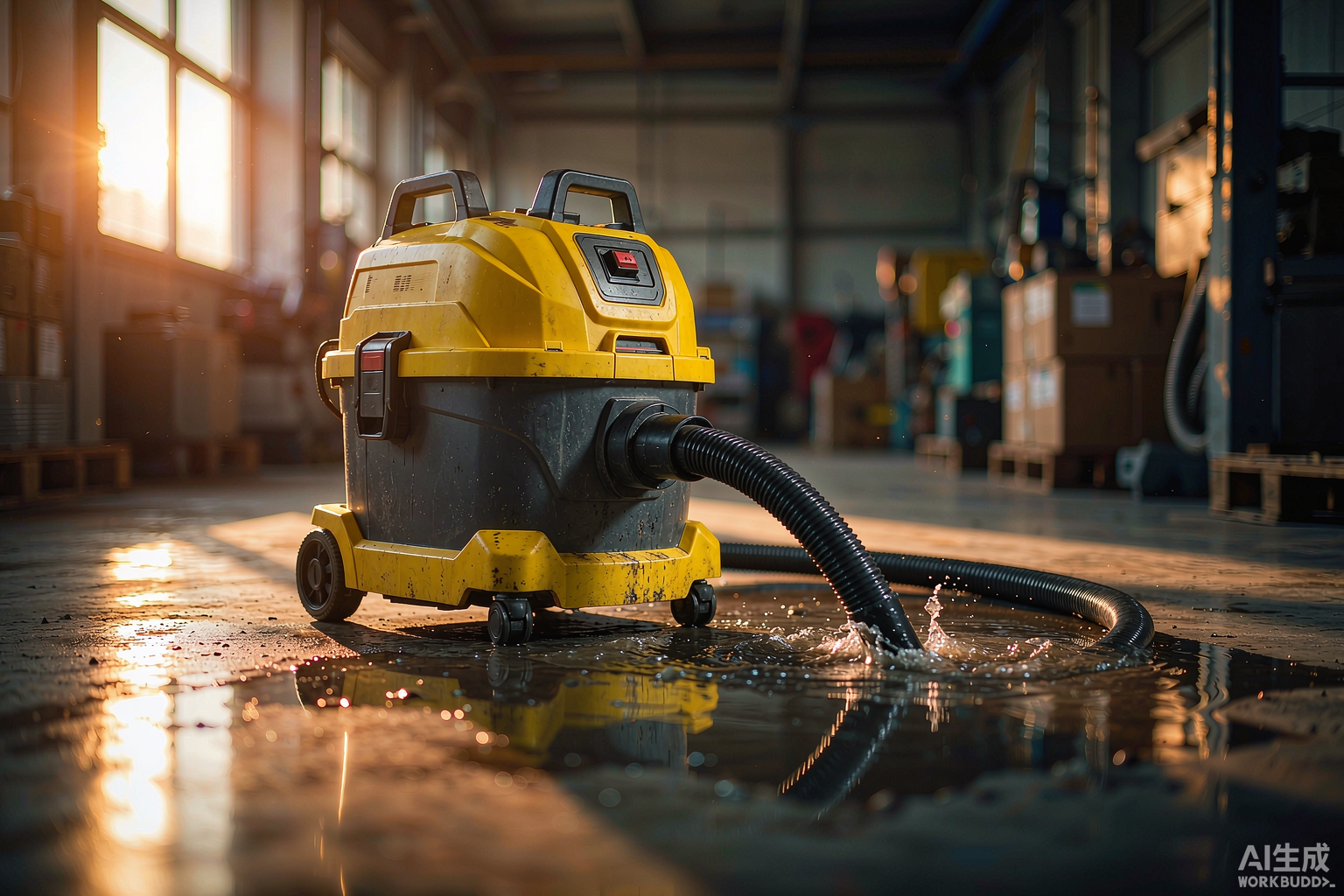
A sample order is the most expensive mistake an importer can fail to make. You pay for 3 to 50 machines, sometimes from two or three candidate factories, to answer a single question: should we order 1,000? Yet most buyers still treat the sample phase as a courtesy — accept a carton, plug it in, ship it to a customer. That is not testing. That is optimism. This guide is the 12-step test protocol that professional wholesale vacuum cleaner importers run before signing any bulk vacuum cleaner purchase commitment.
1. Phase One: Documentation Before Anything Arrives 📄
Sample testing begins before the freight forwarder is even involved. A serious vacuum cleaner manufacturer in China provides a complete documentation pack with every sample:
📘 Technical specification sheet — actual measured suction, airflow, motor power draw at working load
📜 Test reports — CE, GS, RoHS, ETL, UL as relevant to your destination market
📦 Packing list, including weight, carton dimensions and 40HQ fill quantity
⚙️ Motor datasheet — brand, model, rated duty cycle, expected service life
🔋 Filter specification — media type, particle capture rate, washable or replaceable
🛡️ Warranty terms — what is covered, what is excluded, response time
The first red flag is missing documents. A factory direct vacuum cleaner partner with structured quality systems hands these over in advance. If you have to chase certificates after the samples land, you are watching your supplier's quality system operate in slow motion.
2. Phase Two: Unboxing Inspection 📦
When samples arrive, inspect three cartons, not one. Compare against the quotation's promise:
📐 Outer carton: Does the spec match your quotation? Are drop-test and tip-over marks visible? Has the inner tray shifted in transit?
🛢️ Tank integrity: Run your hand along seams; check for sharp edges, dings or weld inconsistencies on any stainless steel vacuum tank
🧰 Accessory count: Wands, hoses, brushes, filters, bags — every item in the brochure must be in the box
🎨 Branding and labels: Even on a sample, a private label vacuum cleaner should carry your logo at the correct font, color and proportion
🔌 Plugs and cord lengths: 220–240V vs 110–120V, VDE vs BS vs NEMA plugs, and cord length matching the technical sheet
Three-carton unboxing takes an hour and saves a container-load of customer complaints.
3. Phase Three: Suction and Airflow Performance 💨
Marketing claims are aspirational; tests are factual. To verify a high suction power vacuum cleaner:
🔧 Use a calibrated vacuum gauge at the inlet — measure the working vacuum in mbar/kPa (a 30–60L industrial machine should hold 220–260 mbar under load)
📊 Use an anemometer at the exhaust to verify airflow (L/s or CFM)
⏱️ Sealed suction test — measure how long it takes the motor to reach peak suction from cold start
⚡ Read wattage at the plug with a power meter — does the energy efficient vacuum cleaner draw actually match the rated input at full load?
A genuine commercial grade vacuum cleaner sustains its numbers across a 15-minute continuous run. Specs measured at the first second of operation are the easiest promises to break.
4. Phase Four: Noise Verification 🔇
A low noise vacuum cleaner claim is easy to fake with creative photography and a sound booth that nobody visits. Verify it:
🔊 Measure dB at 1 meter and 3 meters with a calibrated sound meter
🏨 Compare against the noise level promised for hotel or hospital use — a portable quiet vacuum cleaner should sit at 64–68 dB at 1m
🧏 Subjective check — can staff hold a normal conversation beside the running machine?
For hospital cleaning equipment and hotel cleaning equipment tendering, this single test routinely disqualifies candidates that pass every spec sheet.
5. Phase Five: Filtration Integrity 🧬
A HEPA filter vacuum cleaner must demonstrate actual particle capture, not just a HEPA label. Test it:
🔬 Particle counter before and after a 30-minute fine-dust run — does the exhaust hold below threshold?
💧 For wet-dry models: run the slurry test to verify float valve activation — no liquid should reach the motor
🧽 Disassemble the filter housing after wet runs — check for moisture migration into the motor compartment
🔄 Cycle the washable filter five times — does performance degrade, and does the housing seal remain tight?
For factory floor cleaning and silica-heavy construction site cleaning equipment programs, HEPA integrity is not optional.
6. Phase Six: Durability and Continuous Duty ⏱️
This is the test most importers skip — and the one that reveals the truth between a Tier 2 and Tier 3 motor. Run the heavy duty vacuum cleaner sample continuously:
⏰ 8-hour continuous run at full load — listen for bearing rumble, monitor motor temperature
🛞 50-cycle drop test from trolley height — tank, latches and trolley casters must hold
💧 Leak test — run liquid pickup for an hour, inspect every seal afterward
🔁 Hose flex test — bend 200 times around a 90° radius; check for cracks or hardening
A genuine dual motor vacuum cleaner designed for commercial duty survives this regime. A consumer-grade unit dressed in industrial-looking plastic fails within the first two hours.
7. Phase Seven: Application Field Trial 🏗️
Bench testing is necessary but not sufficient. The most important test is the one in your customer's actual environment:
🏨 Run the sample in a real hotel for one housekeeping shift — does it survive 12 rooms?
🏗️ Run it on a real construction site cleaning day — how does it handle gypsum dust and water at the same time?
🚗 Run it in a detailing bay — does it deliver the extraction performance for premium service pricing?
🚚 Run it on a real warehouse dock — does it handle the wet/dry mix that defines warehouse cleaning solution demands?
Most suppliers will ship two or three samples for this phase. A vacuum cleaner supplier confident in their machine welcomes field-trial exposure; one who resists is showing you their product's likely weaknesses.
8. Phase Eight: Cost and Documentation Recalculation 🧾
After performance testing, return to the quotation and validate cost assumptions:
💵 Verify that the sampled machine's components match the vacuum cleaner price wholesale breakdown — same motor brand, same tank gauge, same filter grade
🔍 Compare weight and carton dimensions against the quoted 40HQ fill
📋 Ask the vacuum cleaner maker for the production-version spec, not the showroom version
🛡️ Confirm warranty process — who handles claims, what is the response SLA, and where are spares stocked
This is also where OEM vacuum cleaner and ODM vacuum cleaner programs diverge from catalog orders. The brand, the tooling and the documentation trail you tested must match the production run exactly. Any deviation between sample and bulk order is a contract violation.
9. Phase Nine: Reference Customer Calls ☎️
Before signing, ask for two reference customers who have run the platform for 12+ months. Ask them:
❓ What does your warranty data actually look like over the past year?
❓ When something breaks, how fast does the industrial vacuum cleaner supplier respond?
❓ How does the current platform compare to the previous one they sold?
❓ Would they buy industrial vacuum cleaner from this supplier again, and at what price tier?
The most revealing question is the last one. Buyers who would not return are the strongest signal to look elsewhere.
10. The Sample-Order Mistakes That Cost Real Money ⚠️
Three traps catch even experienced importers:
🛑 Testing only one sample. A factory's best unit can be cherry-picked; three cartons reveal the variance
🛑 Skipping the field trial. Bench numbers never capture a real shift's worth of misuse
🛑 Treating samples as free. A sample program that costs
200 per machine is cheap insurance against a200,000 bulk order vacuum cleaner mistake
The strongest vacuum cleaner supplier China partners structure their sample programs professionally — fixed price, documented spec, and a defined path from sample to bulk. Imitate that discipline when evaluating them.
11. Real Cases: Sampling Done Right 📁
Case 1 — Dutch Retail Chain's Three-Carton Truth 🇳🇱
A Dutch chain planning a private label vacuum cleaner line of 1,200 units ordered six samples from a candidate industrial vacuum cleaner factory — three as compact units, three as wet/dry units. Unboxing revealed that the compact units shipped with a 0.5mm tank while the wet/dry units shipped with 0.7mm — different production runs, different cost structures. Without three-carton sampling, the chain would have approved a quotation based on the cheaper tank. Instead, they negotiated a uniform 0.7mm spec and saved their customers from a generation of warranty claims.
Case 2 — Middle East HVAC Service Company Field Trial 🇦🇪
An HVAC service company evaluating commercial cleaning equipment for duct-cleaning crews requested three samples for a real two-week field trial. The first supplier's portable quiet vacuum cleaner passed bench tests but failed in dust-laden ductwork when fine particles overwhelmed the cartridge filter within hours. The second supplier — a vacuum cleaner manufacturer in China with a HEPA-upgrade option — passed the same trial. The HVAC company reordered 220 units from supplier two and has remained a client since. Sample orders saved the company roughly $130,000 in unusable inventory.
Case 3 — Canadian Property Management Group 8-Hour Test 🇨🇦
A Canadian property group evaluating commercial vacuum cleaner for hotel use candidates ran an 8-hour continuous noise test. The first sample drifted from 66 dB at hour one to 74 dB by hour six — a bearing-warming signature of a Tier 3 motor hidden behind marketing copy. The second sample held 65 dB flat. The cost difference between the two quotations was $7.30 per unit; the noise difference drove the decision. Three years later, the property group has standardized on the second platform across 60 sites.
Case 4 — UK Online Retailer Brand-Match Verification 🇬🇧
A UK online retailer launching a budget-friendly line ran a logo-color match test on its first best value hoover-class samples. The factory's printed logo was 8% off in Pantone match against the brand book. Catching this on a 30-unit sample cost 4.50 per unit to fix. Catching it on a 2,000-unit **bulk order vacuum cleaner** would have cost 9,000 in reprints plus six months of reputational damage on a launch SKU. Sample discipline paid for itself on day one.
12. The Bottom Line 🎯
A sample order is not an expense — it is the cheapest insurance policy in your sourcing budget. The 12-step protocol above is what separates importers who scale profitably from those who subsidize quality failures with replacement margins. Each test adds minutes or days; collectively they convert a 200 sample spend into a 200,000 bulk-order decision you can defend to your CFO, your customers and your own conscience. That is the work of a serious industrial vacuum cleaner supplier partnership — and exactly the standard a factory like Lanxstar builds into every program.
If you are interested, please feel free to contact us anytime — request a structured sample kit with documented specs and field-trial protocols. Begin at www.lxvacuum.com 🚀
50 Related Keywords
vacuum cleaner sample order, sample testing checklist, vacuum cleaner manufacturer, vacuum cleaner manufacturer in China, vacuum cleaner maker, vacuum manufacturer, vacuum cleaner supplier, vacuum cleaner supplier China, industrial vacuum cleaner supplier, industrial vacuum cleaner factory, factory direct vacuum cleaner, wholesale vacuum cleaner, bulk vacuum cleaner purchase, bulk order vacuum cleaner, buy industrial vacuum cleaner, vacuum cleaner price wholesale, industrial vacuum cleaner cost, best industrial vacuum cleaner, industrial vacuum cleaner, commercial vacuum cleaner, commercial vacuum cleaner for sale, OEM vacuum cleaner, ODM vacuum cleaner, private label vacuum cleaner, import vacuum cleaner from China, vacuum cleaner distributor Europe, industrial cleaning equipment, commercial cleaning equipment, cleaning equipment supplier, industrial equipment supplier, commercial grade vacuum cleaner, multi-functional durable vacuum cleaner, large-capacity wet dry vacuum cleaner, wet dry vacuum cleaner, wet and dry vacuum cleaner, heavy duty vacuum cleaner, dual motor vacuum cleaner, high suction power vacuum cleaner, HEPA filter vacuum cleaner, low noise vacuum cleaner, energy efficient vacuum cleaner, portable quiet vacuum cleaner, construction site cleaning equipment, hotel cleaning equipment, hospital cleaning equipment, warehouse cleaning solution, facility management cleaning equipment, factory floor cleaning, car detailing vacuum cleaner, Lanxstar