Hi, message us with any questions.
We're happy to help!





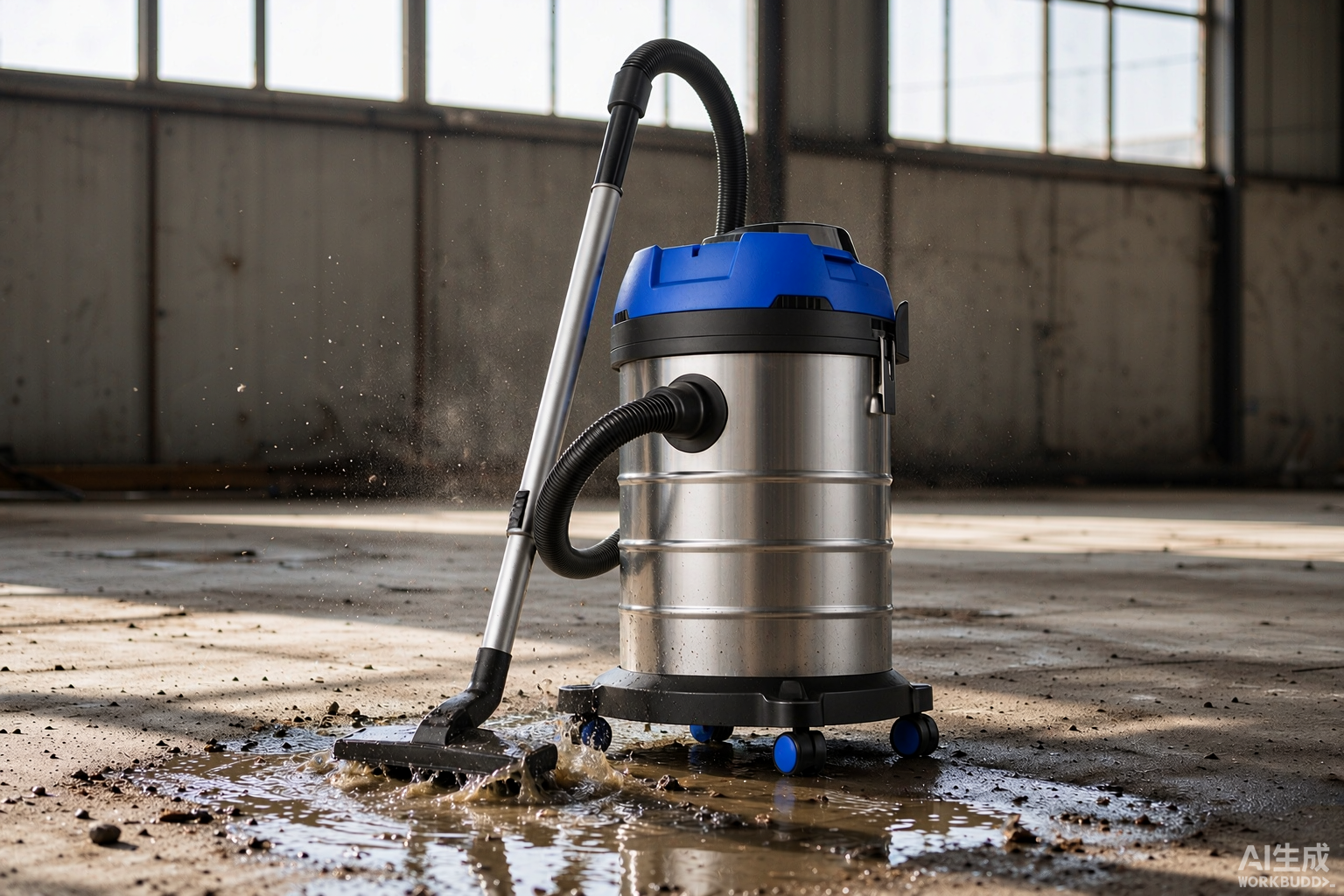
Every buyer eventually hears the same advice: "just push the factory for a lower price." And every experienced buyer knows how that story ends — thinner tank steel, unbranded motors, and a warranty claim curve that spikes in month fourteen. Cutting cost and cutting quality are not the same discipline. This guide shows nine ways global buyers genuinely reduce industrial vacuum cleaner sourcing costs — moves that leave motor tiers, tank gauges and filtration specs exactly where they should be.
1. Audit the Factory Before You Negotiate the Price 🏭
You cannot cut cost intelligently on a machine you have not seen built. Before quoting season begins, walk the floor of your candidate vacuum cleaner manufacturer in China:
🔍 Motor assembly lines — Are motors branded and batch-traceable, or arriving in unmarked boxes?
🔍 Tank fabrication — Verify actual steel gauge with a micrometer, not the brochure
🔍 Testing stations — Does every unit pass a suction and leak test, or is testing sampled?
🔍 Component stock — Flag brand-name filters sitting beside no-name equivalents (a classic substitution point)
Buyers who audit first negotiate from facts; buyers who don't negotiate from faith. A factory that welcomes an on-site or third-party audit is also signaling the kind of partner worth consolidating volume with. Most established industrial vacuum cleaner factory operations pass this screen easily — the ones that resist it were where your quality risk lived all along.
2. Consolidate Models: One Platform Beats Five Orders 🔄
The quietest cost killer is fragmentation. Many distributors order a 30L model from one supplier, a 60L from another, a car detailing vacuum cleaner from a third — paying three tooling amortizations, three freight consolidations and three minimum order quantities.
Consolidating onto one multi-functional durable vacuum cleaner platform across applications changes the math:
📉 One 1,500-unit order prices 10–18% better than five 300-unit orders
📦 Unified accessories cut spare-parts inventory complexity by 60%+
🧑🔧 One training program for all customer sites
A single well-chosen commercial grade vacuum cleaner chassis with accessory kits can legitimately serve hotel, warehouse and detailing applications — which is precisely why experienced buyers ask their vacuum cleaner supplier to quote a platform strategy, not a product list.
3. Master the Tooling Decision: ODM Speed vs OEM Differentiation 🧠
Tooling is a strategic cost, and misreading it is expensive:
ODM vacuum cleaner route: near-zero tooling ($0–8,000), 30–45 day lead time, factory-held certifications you inherit. Ideal for a first private label vacuum cleaner launch or market entry.
OEM vacuum cleaner route: $15,000–60,000 tooling, 4–6 month development, but proprietary design you control long-term.
The quality-preserving cost move is sequencing: launch ODM to validate demand, then convert your bestseller to OEM once cumulative volume covers amortization. Buyers who jump straight to custom OEM designs for unproven SKUs pay twice — once in tooling, once in unsold inventory.
4. Negotiate Spares-in-Lieu Instead of Unit Discounts 🔧
When a vacuum cleaner supplier China partner offers a 5% unit discount, do the math on what that buys: on a 80 machine, 4 per unit. Now compare that same value delivered as a spares package — 2% of the order in filters, hoses, switches and wand sets.
The spares-in-lieu approach:
💪 Costs the factory less than the discount (they produce parts at marginal cost), so they can offer more value
🛡️ Protects your after-sales margin — spares you don't pay for are pure service profit
🔒 Locks quality — those spares are genuine branded components, not aftermarket substitutes
For a commercial cleaning service equipment fleet, this single negotiation tactic routinely outperforms raw price cuts by 2–3× in three-year total cost terms.
5. Optimize the Container, Not Just the Unit Price 🚢
Freight is a sourcing cost, and it is the most commonly ignored one. Two buyers paying identical EXW prices can land machines $4–7 apart per unit purely on container engineering:
📐 Nested packaging: Tanks stacked inside tanks, wands nested in handle channels
🧩 Flat-pack options: Trolleys and handles assembled at destination for distributors with light assembly capability
📋 Loading plans requested in advance: Ask your industrial equipment supplier for the 40HQ fill simulation before ordering — a document most buyers never request
An experienced vacuum cleaner manufacturer plans packaging for ocean freight from day one of design. If your supplier's cartons waste 20% of container cube, that air is costing you real money on every bulk vacuum cleaner purchase.
6. Time Your Order Into Production Low Season 📅
Chinese factory capacity breathes seasonally. Q4 and post-Chinese-New-Year windows typically run hot; mid-year slots often sit open. A buyer who offers flexible delivery windows — "ship anytime between July 15 and September 1" — lets the factory slot the order into otherwise idle lines.
In exchange, factories can price 3–6% better without touching a single component. For a 1,000-unit wholesale vacuum cleaner order, that is $2,400–4,800 saved by being flexible about which boat your machines take. Quality is untouched; only calendar risk is shared.
7. Right-Size Specifications Instead of Gold-Plating Them 🎯
Overspecification is a quality problem in disguise — you pay for capability you never use. The fix is application-matched specification:
✅ A fast lightweight vacuum cleaner chassis serves retail and office settings; specifying heavy duty stainless steel there is waste
✅ A portable quiet vacuum cleaner at 64 dB is right for hotels; a full low noise vacuum cleaner engineering package for a warehouse floor is not
✅ HEPA belongs in hospital cleaning equipment and silica dust control; standard cartridge filtration is legitimate for general factory floor cleaning
✅ An energy efficient vacuum cleaner with on-demand motor pays back in 6+ hour daily duty cycles, not in occasional-use machines
Right-sizing is not downgrading — it is refusing to pay tier-one prices for tier-three duty. Your cleaning equipment supplier should help you map specs to applications; a supplier who only upsells is costing you money.
8. Structure Payment Terms as a Cost Lever 💳
Price is not only the number on the proforma invoice:
🏦 A 30% deposit / 70% against B/L structure sometimes prices differently from 50/50 — cash-flow pressure is real at the factory
💱 Ask for quotations in USD but negotiate in RMB when currency trends favor it; factories sometimes share FX buffer
📉 Annual framework contracts with scheduled releases beat spot orders on both price and production priority
None of these moves touch the machine. All of them touch the invoice.
9. Choose a Partner Whose Costs Are Structurally Lower 🤝
The deepest cost advantage is structural, not transactional. A vertically-integrated vacuum cleaner manufacturer — one that makes tanks, winds motors or molds housings in-house — carries margins a trading company cannot match. When you import vacuum cleaner from China, every intermediary layer adds 8–15% before the machine reaches you.
Ask candidates directly: What do you make in-house? What do you buy in? A genuine industrial vacuum cleaner supplier with its own industrial vacuum cleaner factory will answer in specifics. Established brands like Lanxstar publish this structure openly — because structural transparency is exactly what allows factory-direct pricing to stay honest.
10. Real Cases: Cost Reduction Done Right 📁
Case 1 — Australian Distributor Consolidation 🇦🇺
A Brisbane cleaning equipment distributor sourced seven SKUs across four suppliers. Consolidating to two platforms from one vacuum cleaner manufacturer in China (a 60L stainless large-capacity wet dry vacuum cleaner and a compact 30L unit) lifted their annual volume tier from 500 to 1,400 units per model. Result: −13% unit pricing, −60% spare-parts SKUs, and one customs clearance per shipment instead of four. Their landed industrial vacuum cleaner cost fell 19% with zero spec changes.
Case 2 — Nordic Retail Chain Spares Negotiation 🇸🇪
A Swedish retail chain planning a bulk order vacuum cleaner of 2,000 units chose spares-in-lieu over a 6% discount: instead of $5.20/unit off, they took a 3% genuine-parts package plus priority warranty dispatch. Year-one service margin on the spares exceeded the discount value by 41%, and their return rate held at 1.2% — the best value for money hoover program in their house-brand history.
Case 3 — UAE Facilities Group Seasonal Slotting 🇦🇪
A UAE facility management cleaning equipment buyer needed 220 heavy duty vacuum cleaner units for a portfolio expansion but could accept delivery across a 7-week window. Slotting into the factory's mid-year low season earned a 5% structure discount and a free upgraded dual motor vacuum cleaner wiring harness on every unit — a spec improvement obtained purely through calendar flexibility.
Case 4 — Canadian E-Commerce Brand Container Engineering 🇨🇦
A Toronto online brand selling a budget-friendly shop vac line requested the factory's 40HQ loading simulation and redesigned cartons with the vacuum cleaner maker to nest tanks and flat-pack trolleys. Container fill rose from 285 to 372 units. Freight per machine dropped $4.90 — on their annual volume, saving more than the entire tooling cost of their private label vacuum cleaner launch.
11. The Bottom Line 🎯
Cost reduction without quality sacrifice is not one negotiation — it is a system: audit before you quote, consolidate before you order, sequence tooling strategically, take spares over discounts, engineer the container, time the calendar, right-size specs, structure payments, and finally choose a partner whose factory structure makes honesty cheap. Buyers who run this playbook routinely land 12–20% below their previous sourcing costs with warranty curves that stay flat. That is the whole discipline — and it starts with a factory visit.
If you are interested, please feel free to contact us anytime — our sourcing engineers will build a cost-reduction plan around your current quotations. Start at www.lxvacuum.com 🚀
50 Related Keywords
vacuum cleaner sourcing costs, reduce sourcing costs, vacuum cleaner manufacturer, vacuum cleaner manufacturer in China, vacuum cleaner maker, vacuum manufacturer, vacuum cleaner supplier, vacuum cleaner supplier China, industrial vacuum cleaner supplier, industrial vacuum cleaner factory, factory direct vacuum cleaner, wholesale vacuum cleaner, bulk vacuum cleaner purchase, bulk order vacuum cleaner, vacuum cleaner price wholesale, industrial vacuum cleaner cost, buy industrial vacuum cleaner, best industrial vacuum cleaner, industrial vacuum cleaner, commercial vacuum cleaner, commercial vacuum cleaner for sale, OEM vacuum cleaner, ODM vacuum cleaner, private label vacuum cleaner, import vacuum cleaner from China, vacuum cleaner distributor Europe, industrial cleaning equipment, commercial cleaning equipment, cleaning equipment supplier, industrial equipment supplier, multi-functional durable vacuum cleaner, commercial grade vacuum cleaner, large-capacity wet dry vacuum cleaner, wet dry vacuum cleaner, wet and dry vacuum cleaner, heavy duty vacuum cleaner, dual motor vacuum cleaner, high suction vacuum cleaner, fast lightweight vacuum cleaner, portable quiet vacuum cleaner, low noise vacuum cleaner, energy efficient vacuum cleaner, car detailing vacuum cleaner, hospital cleaning equipment, factory floor cleaning, facility management cleaning equipment, commercial cleaning service equipment, warehouse cleaning solution, best value for money hoover, Lanxstar



