Hi, message us with any questions.
We're happy to help!





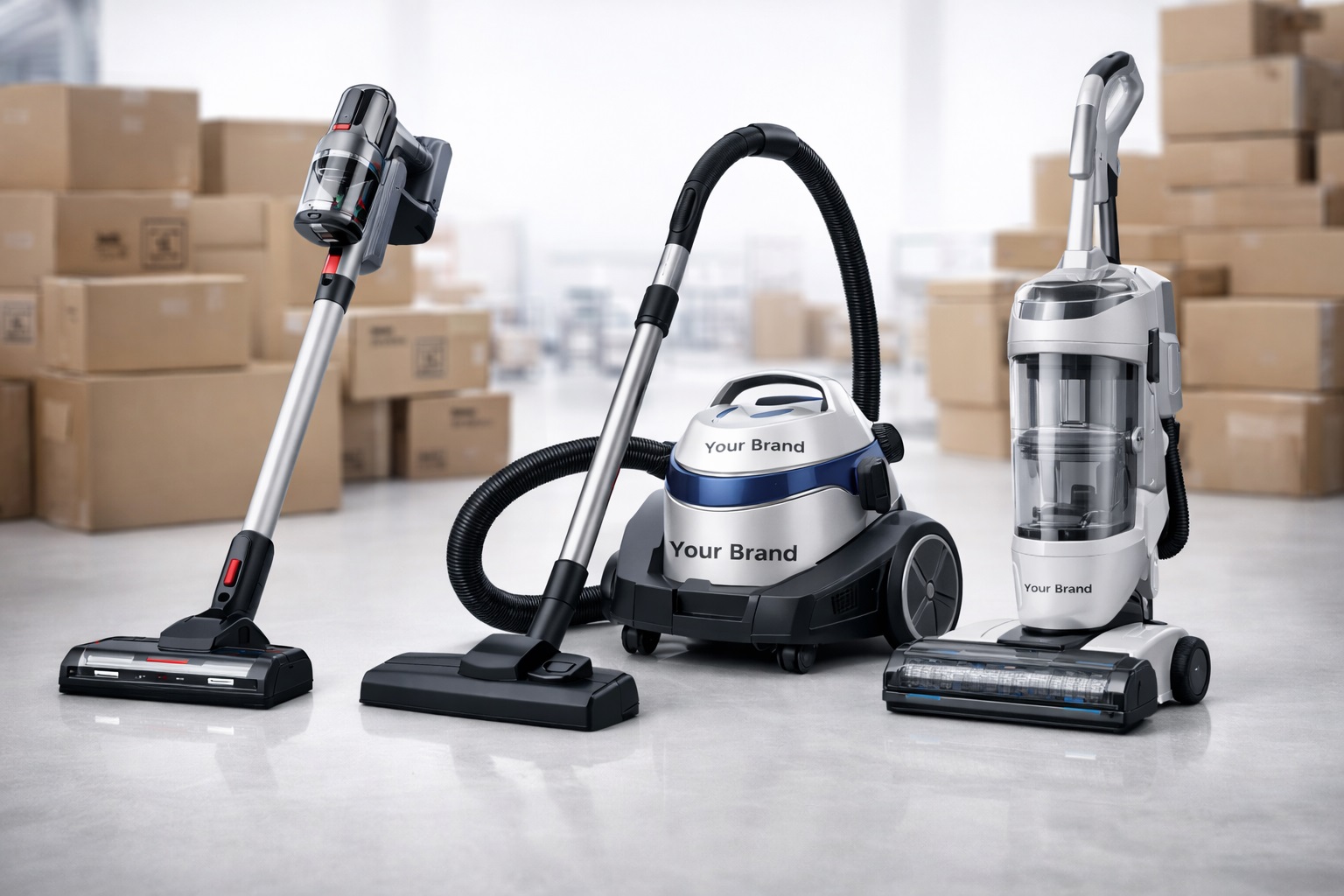
How to Build, Source, and Sell Your Own Brand with Confidence
🧠 Introduction — Why Private Label Vacuum Cleaners Are a Smart Business Move
In today’s competitive cleaning equipment market, private label vacuum cleaners are a fast-growing segment for brands, distributors, and OEM partners alike. Whether you want to launch your own brand of wet dry vacuums for garages, workshops, or industrial settings — or scale an existing line — understanding the manufacturing sources, cost structures, and market expectations is key.
Private labeling gives you the power to control your brand while outsourcing manufacturing to wet dry vacuum suppliers or industrial vacuum OEM partners who handle production. In this guide, you’ll learn:
Why private labeling is valuable for 2026
How to choose the right wet dry vacuum manufacturer
Steps for working with an OEM wet dry vacuum partner
What to expect from vacuum cleaner manufacturers in China
Launching, marketing, and scaling your own vacuum brand
Let’s dive in.
📌 What Is a Private Label Vacuum Cleaner?
A private label vacuum cleaner is a product manufactured by a third-party supplier (often via contract manufacturing) and sold under your own brand name. You control the design, branding, and packaging — while the manufacturer produces the vacuum units.
Key Benefits of Private Labeling:
Brand Ownership: Create a unique brand identity.
Higher Profit Margins: Private labeling generates better margins compared to reselling generic products.
Customization: Tailor features to target niche markets (e.g., workshop vacuums, eco-friendly vacuums, etc.).
Flexibility: Choose your suppliers and manage production timelines.
Private label vacuum cleaners allow you to build a distinct brand while taking advantage of the expertise of established manufacturers.
🛠️ Why Private Label Vacuum Cleaners Are Winning in 2026
🔹 1. Brand Differentiation
Private labeling allows you to offer something unique compared to generic, mass-market vacuum cleaners. You’re not just reselling — you’re presenting a product tailored to your customer’s needs.
🔹 2. Higher Margins
Private label products typically have higher profit margins than selling standard branded products. You can control pricing and branding.
🔹 3. Design Control
You choose the design features — motor power, tank size, filtration system, hose accessories, etc. This means your product can stand out and meet specific customer needs.
🔹 4. Flexible Minimum Order Quantities (MOQ)
Reliable vacuum cleaner manufacturers in China often provide low MOQ options, allowing smaller brands to enter the market with manageable investment.
🔹 5. Rapid Product Development
Through OEM wet dry vacuum partnerships, you can prototype, test, and bring new models to market faster than ever before.
🧭 Step‑by‑Step Guide to Launching Your Private Label Vacuum
✔ Step 1 — Define Your Target Market
Before selecting a vacuum model or supplier, understand your target market:
Are you selling to DIY consumers, workshops, or industrial users?
What type of vacuum features do they prioritize? (e.g., wet/dry capability, HEPA filtration, portability)
Example Niche Markets:
Home garage wet dry vacuum
Professional workshop vacuums
Industrial-grade cleaning solutions
Commercial facility cleaning vacuums
Each of these markets has distinct expectations, and choosing the right target helps narrow down the product specs you need to focus on.
✔ Step 2 — Determine Your Product Specifications
To create a private label vacuum cleaner, you’ll need to define:
Tank capacity: 15L, 20L, 30L+ (for industrial uses)
Motor power: 1200W–2000W for strong suction
Filtration: HEPA or ULPA filters for cleaner air
Wet/dry capability: Essential for versatility in factory environments
Accessories: Hoses, floor heads, attachments
Documenting these specs makes it easier when you request quotes or evaluate suppliers.
✔ Step 3 — Research and Shortlist Manufacturers
The next step is to select a manufacturer that can bring your private label vision to life.
Key Points to Consider:
Quality certifications (e.g., ISO, CE, UL/ETL)
OEM capabilities: Can they customize based on your product specifications?
Reputation and reliability: Look at customer reviews and third-party audits
Experience with global markets: Especially vacuum cleaner manufacturers in China, who are experts in export markets.
Supplier Comparison Table:
| Supplier | Location | MOQ | Certifications | Customization |
|---|---|---|---|---|
| Lanxstar | China | 500 units | CE, UL, RoHS | Full product customization |
| Zhejiang Sanli | China | 200 units | CE, RoHS, ISO 9001 | Design and branding options |
| Shenzhen Airrose | China | 300 units | CE, UL, RoHS | Packaging and logo support |
✔ Step 4 — Prototype and Sample Evaluation
Request product samples and evaluate their performance. Key considerations include:
Suction power
Filtration efficiency
Ease of use
Material quality (durability, strength)
Noise level: Ensure it’s within acceptable limits for your target audience
After receiving the samples, make any necessary adjustments to meet your market’s needs.
✔ Step 5 — Branding, Packaging, and Compliance
Create a professional look for your product with:
Branding: Custom logo and product design
Packaging: Ensure it’s attractive and protects the vacuum during shipping
User Manuals: Clear instructions for safe and effective use
Compliance Labels: Ensure your product meets EU/US standards (CE, UL, RoHS, etc.)
Work with the manufacturer to ensure packaging compliance in each target market (EU, US, etc.).
✔ Step 6 — Production and Quality Control
Before beginning large‑scale production, establish a solid quality control process. This includes:
Factory audits and regular product checks
Third-party inspections to verify standards
Batch sampling for each production cycle
This ensures that all vacuums are consistent in quality and meet your branding requirements.
✔ Step 7 — Launch Strategy
Finally, build a go-to-market strategy for your private label vacuum cleaner:
Product listings on Amazon, eBay, and other marketplaces
SEO and online marketing (Google Ads, content marketing)
Distributors and retailers partnerships
Trade shows and industry expos to gain visibility
Ensure you’re highlighting key selling points like wet/dry capabilities, energy efficiency, or special features like HEPA filtration.
🏭 How to Work With Wet Dry Vacuum Manufacturers in China
📍 Why China Is the Prime Sourcing Hub
China remains the dominant manufacturing hub due to:
Cost‑effectiveness
Wide range of OEM options
Expertise in filtration technology
Scalable production
When working with vacuum cleaner manufacturers China, you gain access to flexible MOQs, cutting-edge technology, and the experience of producing high‑quality industrial vacuums.
📍 What to Ask When Shortlisting Suppliers
Ensure that the manufacturers can offer:
Design flexibility (custom branding, colors, features)
Reliability in meeting deadlines
Availability of spare parts and after‑sales service
Experience with EU/US compliance
📈 Trends in Private Label Vacuum Cleaners for 2026
Stay ahead of the curve by following emerging trends:
🔹 Smart Features & Connectivity
The future of vacuum cleaning is smart. Expect vacuums with IoT connectivity, filter life monitoring, and mobile app controls.
🔹 Sustainability
There’s a growing demand for energy-efficient models, recyclable filters, and eco-friendly packaging.
🔹 Modular Accessories
Interchangeable heads and specialized tools will increase the versatility of private label vacuums.
⚠️ Common Pitfalls and How to Avoid Them
Avoid these common mistakes when working with OEM partners:
✔ Choosing the cheapest option: Quality matters more than price.
✔ Ignoring compliance: Verify CE/UL certifications before production.
✔ Skipping prototypes and testing: Don’t rush — sample and evaluate thoroughly.
✔ Weak packaging design: It impacts both the user experience and product safety.
🧠 Real Case Study — A Successful Private Label Launch
Scenario: A European startup wanted to enter the market with a mid-range wet/dry vacuum for small workshops. They partnered with Lanxstar, a reputable vacuum cleaner manufacturer in China, to develop a custom design.
Results:
4 months from concept to production
First batch sold out within 6 weeks of launch
Secured distributor agreements across three European countries
High customer satisfaction due to performance and design
Takeaway: Strategic OEM partnerships and custom branding are key to establishing a successful private label vacuum cleaner brand.
Hashtags
wetdryvacuum, wet dry vacuum supplier, OEM wet dry vacuum, private label vacuum cleaner, vacuum cleaner manufacturers China, industrial vacuum OEM, private label vacuums, branded vacuum cleaners, vacuum OEM partners, custom vacuum manufacturing, private label vacuum source, China vacuum factory, vacuum product development, industrial suction systems, HEPA vacuum solutions, workshop vacuum brand, garage vacuum private label, commercial vacuum branding, multi‑purpose vacuum, advanced vacuum design, OEM custom vacuum, vacuum compliance CE UL, vacuum packaging design, private label go‑to‑market, distributor vacuum products, European vacuum brand, American vacuum supplier, factory cleaning vacuum private label, wet dry shop vac brand, modular vacuum accessories, smart vacuum features, energy efficient vacuum, sustainable vacuum design, vacuum prototyping service, field testing vacuum, vacuum quality control, vacuum aftermarket parts, compliance documentation, private label OEM guide, vacuum product launch, vacuum business strategy, vacuum branding 2026