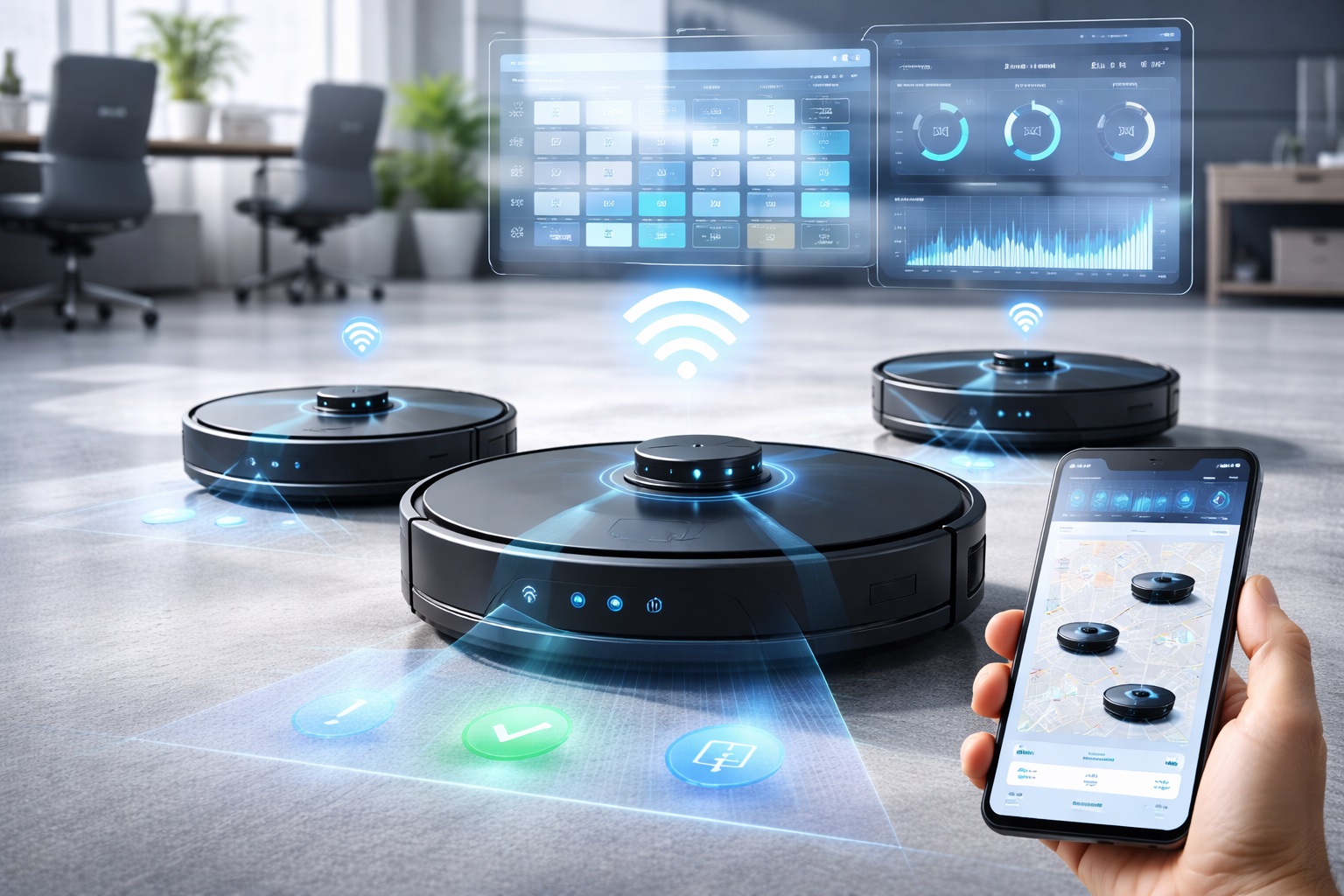
As cleaning operations scale, vacuums stop being “tools” and start becoming assets.
In large facilities, hotels, hospitals, factories, or cleaning service companies, dozens—or even hundreds—of vacuums may be deployed across shifts and locations. Without proper fleet management, this leads to:
This article explains how to manage vacuum fleets strategically and reduce idle time, turning cleaning equipment into a high-efficiency operational system.
🧠 1. Why Idle Time Is the Real Enemy of Cleaning Efficiency
Idle vacuums create three hidden costs:
Capital waste – paid for but not working
Overload elsewhere – fewer machines doing too much
Maintenance imbalance – uneven wear and failures
In many facilities, idle time happens because:
Equipment is locked to departments
No visibility into real usage
One-size-fits-all machines used everywhere
Key Insight:
Idle time is not a staffing issue — it’s a fleet design problem.
🗂 2. Centralize the Vacuum Fleet (Stop Department Ownership)
One of the biggest mistakes in large facilities is letting each department “own” its vacuums.
This causes:
Some units used 10 hours/day
Others used 30 minutes/day
Zero accountability for utilization
A centralized fleet model:
This is especially effective for:
Result:
Higher utilization per unit, fewer total machines required.
🔄 3. Segment the Fleet by Function, Not Brand or Size
Not all vacuums should be treated equally.
High-performing fleets are segmented by job type, such as:
Spill response → Wet Dry Vacuum Cleaners
Daily floor cleaning → Vacuum for Multi-Surface
Sensitive zones → Vacuum Cleaner for Allergies
A Multi-Functional Durable Vacuum Cleaner plays a key role as a bridge unit, reducing the need for multiple specialized machines.
Operational Benefit:
Right tool → right job → less idle waiting, faster task completion.
🧼 4. Use Self-Cleaning Technology to Increase Availability
One of the most overlooked sources of idle time is maintenance waiting.
Filters clogged
Machines “waiting to be cleaned”
Staff unsure if equipment is ready
A Portable Self-Cleaning Vacuum Cleaner reduces idle time by:
Cleaning filters automatically
Maintaining suction without downtime
Reducing dependency on trained maintenance staff
Fleet Impact:
Machines stay “ready-to-deploy” longer, especially across shifts.
⏱ 5. Schedule by Zone Demand, Not Fixed Shifts
Most facilities schedule equipment by shift, not by cleaning demand.
Better approach:
Map zones by dirt load and frequency
Assign vacuums dynamically to high-demand zones
Rotate machines instead of people
For example:
Corridors & entrances → high daily load
Offices → low load, fewer hours
Mixed-use floors → flexible allocation
This dramatically reduces idle time for:
🔋 6. Track Runtime, Not Just Location
Many managers know where vacuums are — but not how much they work.
Effective fleet management tracks:
Runtime per unit
Cleaning cycles per day
Idle-to-active ratio
This helps identify:
Insight:
Two vacuums in the same building may have a 5× difference in real utilization.
🧬 7. Match Vacuum Type to Surface to Avoid Bottlenecks
Using the wrong vacuum causes:
Slower cleaning
Operator fatigue
Equipment damage
For example:
Using one unit across carpet, tile, and hard floors increases idle time between tasks
A Vacuum for Multi-Surface reduces changeover delays
Allergy-sensitive areas require Vacuum Cleaner for Allergies, not shared machines
Fleet Principle:
Surface-appropriate equipment = continuous workflow.
🏢 8. Reduce “Waiting Vacuums” Between Shifts
In many facilities:
This doubles idle time.
Solution:
Quiet-capable wet & dry vacuums and self-cleaning units are especially valuable in 24/7 operations.
📊 9. Measure Fleet ROI by Output, Not Count
Stop asking:
“How many vacuums do we have?”
Start asking:
Well-managed fleets often:
✅ Conclusion: Fleet Management Turns Vacuums into Productive Assets
Reducing idle time is not about buying fewer machines — it’s about using each machine better.
High-efficiency vacuum fleet management depends on:
Centralized asset control
Functional segmentation
Self-cleaning and durable designs
Data-driven allocation
Surface-specific deployment
When managed correctly, a vacuum fleet becomes:
More reliable
Less expensive
Easier to scale
In modern commercial cleaning, equipment utilization is as important as suction power.
📌 Suitable Reading Audience
Facility Operations Managers
Commercial Cleaning Company Owners
Asset & Equipment Managers
B2B Cleaning Equipment Procurement Teams
📌 Hashtags
wet and dry vacuum cleaner, Multi-Functional Durable Vacuum Cleaner, Wet Dry Vacuum Cleaners, Portable Self-Cleaning Vacuum Cleaner, Vacuum Cleaner for Allergies, Vacuum for Multi-Surface, Vacuum Fleet Management, Cleaning Equipment Utilization, Facility Asset Management, Commercial Cleaning Efficiency, Reducing Equipment Idle Time, Centralized Cleaning Equipment, Vacuum Fleet Optimization, Cleaning Operations Strategy, Smart Equipment Allocation, Cleaning Equipment ROI, Predictive Maintenance Cleaning, Large Facility Cleaning, Industrial Cleaning Management, Commercial Vacuum Strategy, Asset Utilization Optimization, Sustainable Cleaning Operations, Cleaning Workflow Optimization, Equipment Downtime Reduction, Professional Cleaning Equipment, Facility Operations Efficiency, Multi-Zone Cleaning Strategy, Cleaning Equipment Lifecycle, Data Driven Facility Management, Cleaning Cost Reduction, Equipment Sharing Model, Commercial Cleaning Best Practices, High Utilization Equipment, Cleaning Fleet Planning, Maintenance Optimization Cleaning, Operational Efficiency Cleaning, Scalable Cleaning Operations, Commercial Cleaning Assets, Smart Facility Cleaning, Cleaning Equipment Performance, Industrial Facility Cleaning, B2B Cleaning Solutions, Facility Management Tools, Professional Cleaning Strategy, Lanxstar