Hi, message us with any questions.
We're happy to help!





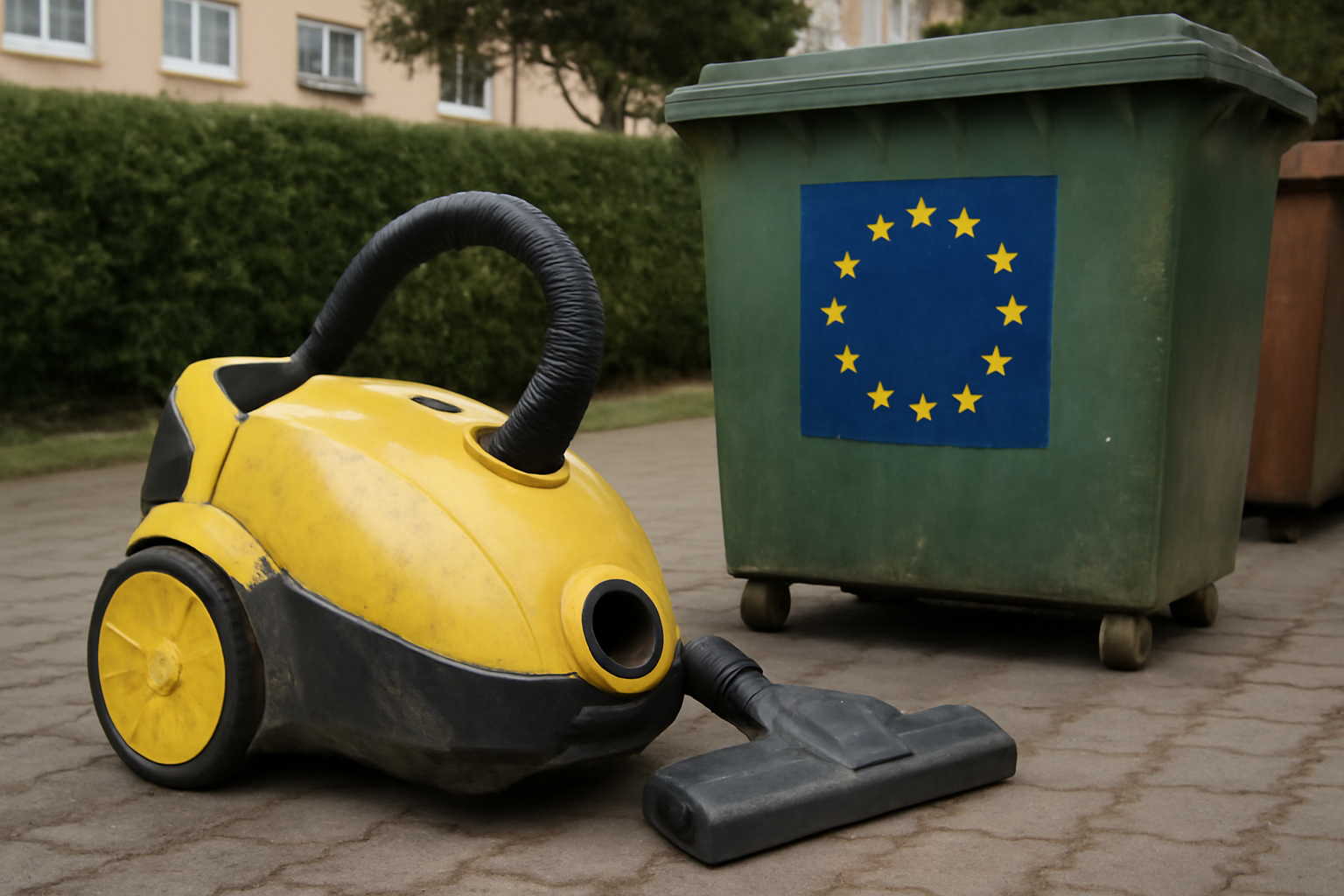
⚡📜 EU Energy Reforms: The Most Disruptive Regulatory Shift in a Decade
The European Union’s new round of appliance regulations has begun phasing out a significant range of vacuum cleaner models — not for safety issues, not for functionality, but for energy efficiency and sustainability violations.
More than 30% of low- and mid-tier SKUs—both corded and cordless—cannot legally enter or remain in the EU market unless re-engineered.
This includes a wide group of “best vacuums on a budget,” older motor designs, and legacy plastic-heavy architectures.
The brands most affected are:
private-label importers
low-cost OEM models
outdated corded vacuums
units with inefficient motors
models lacking sustainable materials
non-updated HEPA Filter Vacuum Cleaner platforms
vacuums using high power draw without efficiency control
If your portfolio targets Europe, this article shows exactly what must change to stay compliant.
🔌⚠️ 1. Power Consumption Limits Are Tightening — Raw Wattage No Longer Allowed
Under previous rules, many brands simply reduced motor wattage and called the product "energy efficient."
Now, compliance requires proof of real energy performance, not theoretical watt reduction.
What fails under the new standard:
motors without optimized airflow efficiency
vacuums losing >20% suction under load
outdated fan designs
high-resistance brushrolls
models consuming excessive power during idle
A conventional 900W–1200W corded vacuum with legacy airflow is no longer viable.
What passes:
Energy-Saving Efficient Powerful Vacuum Cleaner platforms
re-engineered motor fans
sealed airflow paths
low-pressure-loss cyclonic structures
highly efficient brushless motors
Even budget models must integrate modern energy logic.
🌀📉 2. Airflow Efficiency Requirements Remove Old Cyclone Systems from the Market
Cyclonic separation is now regulated under performance-based criteria:
If you have:
old 1-stage cyclone designs
narrow airflow channels
turbulence-heavy separation
weak secondary filtration
Your vacuum will fail both efficiency testing and dust re-emission standards.
The EU now requires measurable, stable dust separation efficiency over time—not just in “golden samples.”
What the new market demands:
multi-stage, low-loss cyclone geometry
improved separation angles
stable airflow tolerance
particle retention that protects HEPA efficiency
This directly impacts older HEPA Filter Vacuum Cleaner systems with outdated internal designs.
🧪💨 3. Re-Emission Limits Are Stricter — HEPA Now Must Be Engineering-Grade, Not Marketing-Grade
Many vacuums marketed as “HEPA” previously used:
low-density filter media
poorly sealed housings
oversized pores that degrade quickly
untested filtration materials
Under the new rules, leakage—even microscopic—fails the test.
Filters must now:
maintain long-term filtration efficiency
resist loading and clogging
stay sealed under pressure
endure continuous airflow stress
This eliminates low-cost HEPA imitations and pushes manufacturers into real filtration engineering.
For distributors, this raises costs but massively reduces returns and boosts product longevity.
🔊🔧 4. Noise Level Caps Force Redesigns — Quiet Engineering Is Now Mandatory
Traditional low-cost vacuums often exceed 78–82dB.
This fails under eco-design noise limits.
Noise is no longer a “comfort metric.”
It is a certification metric.
Models marketed as best value hoover or best vacuums on a budget must now invest in:
motor balancing
acoustic padding
improved housing materials
anti-resonance structure
lower turbulence airflow paths
A legitimate Quiet Vacuum Cleaner architecture must be structurally engineered — not cosmetically marketed.
🏭♻️ 5. Recyclability & Material Restrictions Remove Plastic-Heavy Legacy Designs
EU Green Transition rules require:
reduced plastic mass
higher recycled-material usage
traceable supply chains
modular replaceable parts
recyclable components
This disqualifies older vacuum platforms with:
mixed-plastic housings
non-recyclable rubber
sealed, non-serviceable boards
high-resistance glues
excessive non-detachable parts
New models must support efficient recycling and easier disassembly.
Factories that cannot provide recyclability documentation will lose EU market access.
🔋🚫 6. Cordless Vacuums Without Efficient Battery Logic No Longer Pass Testing
Cordless vacuums are being hit hardest.
The EU now measures:
watt-hour performance
energy per unit of dust pickup
voltage stability under load
battery degradation patterns
charging protection logic
If your cordless model is:
overheating
rapidly losing capacity
unable to stabilize suction
poorly optimized with airflow
unprotected against overcurrent
…it cannot legally enter the EU.
This impacts many older low-cost cordless imports, even those marketed as:
“best affordable vacuum”
“best value hoover”
“high suction budget cordless cleaner”
🧱📦 7. Packaging & Claim Verification: Marketing Language Is Now Audited
EU regulators now verify marketing claims such as:
“high suction”
“HEPA filtration”
“energy efficient”
“low noise”
“eco-friendly materials”
If the vacuum fails to meet ANY claim, the entire SKU is disqualified.
This forces brands to:
remove vague marketing language
prove every spec with lab data
run third-party testing
maintain documentation
For many low-cost products, marketing has been more generous than engineering — and this era is over.
🧭📌 8. Immediate Impact on Distributors & OEM Buyers
Discontinued:
30% of traditional corded models
40% of low-efficiency cordless models
older HEPA Filter Vacuum Cleaner units
motors >900W with low efficiency
untested cyclone architectures
Higher costs:
factories must upgrade motors
buyers must update specs
certification costs rise
packaging audits increase
recycled material requirements add cost
Longer lead times:
retesting
redesign
updated documentation
pilot runs
This is the largest market reset in vacuum regulations since 2017.
💼🔧 9. What Smart Buyers Do IMMEDIATELY
✔ Audit existing product lines
Identify SKUs that are non-compliant.
✔ Switch to updated platforms
Prefer Energy-Saving Efficient Powerful Vacuum Cleaner architectures.
✔ Demand real test data
Include suction-load curve, energy curve, noise curve, filtration retention.
✔ Require recycled-material documentation
Especially for EU tenders and retail.
✔ Work with factories that have in-house R&D
Third-party assemblers cannot adapt fast enough.
✔ Update marketing content
Claims must match engineering performance.
✔ Prepare for higher-quality HEPA systems
Low-cost filters will fail compliance.
✔ Avoid overpromising suction
EU tests punish unrealistic claims.
🧠🏆 10. What the Next 3 Years Look Like for EU Vacuum Markets
More efficient motors
Brushless and high-efficiency brushed platforms will dominate.
Lower noise expectations
Users will demand <69dB units.
Higher filtration standards
EU will likely expand HEPA requirements.
Stronger recycling mandates
Product design must support disassembly.
Cordless becomes majority
But only if energy efficiency is proven.
Value vacuums must evolve
Even the best vacuums on a budget must integrate next-gen engineering.
The era of “cheap, loud, power-hungry vacuums” is officially over in Europe.
🎯 Suitable for:
EU importers
Amazon EU sellers
Middle East distributors supplying to Europe
brand owners
OEM/ODM vacuum buyers
engineers & R&D teams
compliance specialists
🏷 Hashtags
#lanxstar #vacuumcleaner #euenergyrules #energyefficientvacuum #budgetvacuum #bestvaluehoover #hepa #hepaengineering #cleaningtech #vacuumfactory #chinavacuum #chinamanufacturing #productdevelopment #eumarket #compliance2025 #homeappliances #b2bcleaning #sustainability #recyclabledesign #brushlessmotor #lownoisevacuum #quietvacuum #vacuumdistribution #oemodm #qcmanagement #innovation2025 #importexport #retailbuyers #energysavingdesign #filtrationtech #cordlessvacuum #airflowdesign #dustseparation #wetdryvacuum #durabledesign #consumerstandards #greenregulation #ecodesign #applianceengineering #supplychain #vacuumperformance #engineeringupdate #industrialdesign #energyreporting #motorupgrade #cycloneengineering #producttesting #materialcompliance #marketshift



