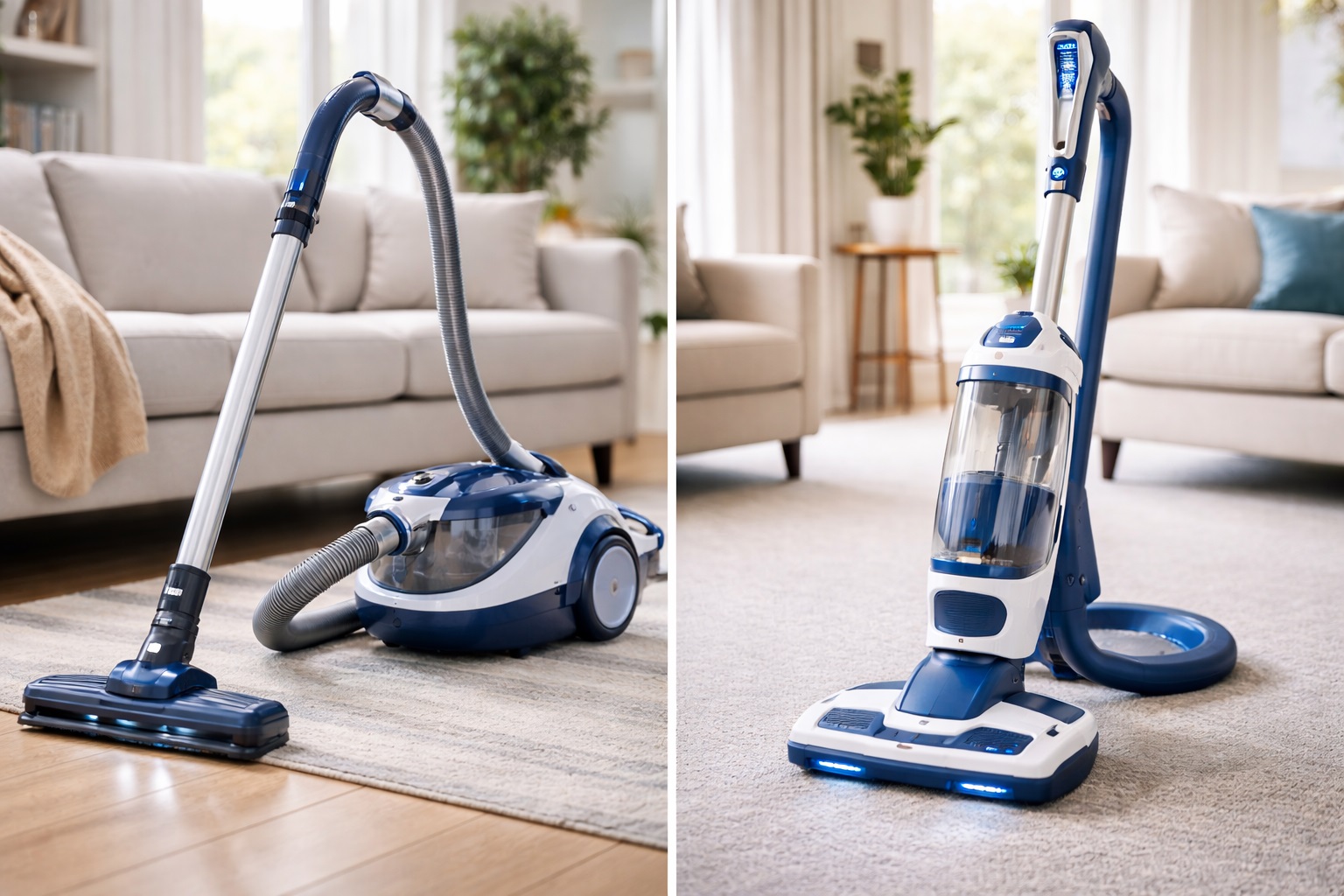
Cultural, Structural, and Engineering Reasons Behind the Divide
Walk into a home in Germany, France, or Italy, and you are likely to find a canister vacuum cleaner.
Visit a suburban home in the United States or Canada, and chances are high you will see an upright vacuum.
This difference is not accidental—and it has very little to do with which type is “better”.
For European and Middle Eastern distributors, product managers, and vacuum cleaner engineers, understanding why Western homes choose differently is essential for correct product positioning, SKU planning, and long-term market success.
🔍 1. The Choice Is About Homes, Not Machines
The biggest mistake in vacuum cleaner marketing is assuming that performance alone drives preference.
In reality, consumer choice is shaped by:
Housing structure
Living density
Noise sensitivity
Storage space
Cleaning habits
These factors explain why canister and upright vacuums dominate different Western markets.
🏢 2. European Homes: Compact Spaces, Flexible Cleaning
Most European households live in:
Why Canister Vacuums Dominate
Lightweight hose and wand for tight spaces
Easier maneuvering around furniture
Better performance on hard floors
Compact storage
This is why the Apartment Vacuum Cleaner category is heavily aligned with canister-style designs in Europe.
🔇 3. Noise Matters More Than You Think
In dense living environments, noise is not a feature—it is a constraint.
European consumers place high value on a Quiet Vacuum Cleaner because:
Canister designs naturally allow:
Upright vacuums struggle here due to motor proximity to the user.
🧹 4. North American Homes: Size, Speed, and Carpet Dominance
In contrast, many North American homes feature:
Why Uprights Make Sense
Uprights are optimized for speed and simplicity, not versatility.
🧠 5. Suction vs Real Cleaning Performance
Marketing often highlights suction power—but suction alone is misleading.
A High Suction Vacuum Cleaner only delivers results if:
Canister vacuums often deliver more consistent suction at the nozzle, especially on hard floors and stairs, even if motor wattage appears lower.
🌬️ 6. HEPA Filtration: A European Expectation, Not a Bonus
In many EU markets, a HEPA Filter Vacuum Cleaner is no longer a premium option—it is expected.
Reasons include:
Canister designs:
Accommodate larger filter surfaces
Maintain airflow with HEPA filtration
Reduce fine dust recirculation
This strongly influences regional preference.
🔄 7. Where Wet and Dry Vacuum Cleaners Enter the Conversation
Interestingly, a new category is blurring the divide.
A wet and dry vacuum cleaner, when designed as a Multi-Functional Durable Vacuum Cleaner, is increasingly used in Western homes for:
This is not replacing canister or upright vacuums—but complementing them.
📍 Usage Scenario: Western Apartment vs Suburban Home
European Apartment
→ Canister or compact wet and dry vacuum cleaner preferred.
North American Suburban Home
Large carpeted areas
Less noise restriction
Storage availability
→ Upright vacuum cleaner preferred.
These are rational choices, not trends.
📊 8. Practical Comparison Overview
| Factor | Canister Vacuum | Upright Vacuum |
|---|
| Best For | Apartments, mixed floors | Large carpeted homes |
| Noise Level | Lower | Higher |
| Maneuverability | High | Medium |
| Storage Flexibility | High | Low |
| Carpet Speed | Medium | High |
| HEPA Integration | Easy | More Limited |
🧩 9. What B2B Buyers and Distributors Should Learn
The key takeaway is not:
“Which vacuum is better?”
But:
“Which housing reality does this vacuum serve?”
Distributors who ignore this:
Face higher return rates
Misposition products
Confuse end users
Those who align product type with regional lifestyle win long-term trust.
🎯 Final Insight
Western homes choose differently because they live differently.
Canister vacuums thrive in compact, noise-sensitive environments
Upright vacuums excel in large, carpet-dominant homes
Wet and dry vacuum cleaners are emerging as cross-category utility solutions
Understanding this distinction is essential for correct product strategy—not just marketing.
📌 Suitable Audience
European & Middle Eastern vacuum cleaner distributors
Residential cleaning equipment buyers
Product managers & sourcing teams
Vacuum cleaner R&D engineers
📌 Hashtags
wet and dry vacuum cleaner, Multi-Functional Durable Vacuum Cleaner, Quiet Vacuum Cleaner, High Suction Vacuum Cleaner, Apartment Vacuum Cleaner, HEPA Filter Vacuum Cleaner, canister vacuum cleaner, upright vacuum cleaner, residential vacuum trends, European home cleaning, North American cleaning habits, apartment cleaning solutions, carpet cleaning vacuum, hard floor vacuum, low noise vacuum, allergy friendly vacuum, indoor air quality cleaning, household cleaning systems, multi surface vacuum, residential cleaning equipment, vacuum cleaner distribution, OEM vacuum cleaner, private label vacuum, EU vacuum regulations, Western home lifestyle, home cleaning technology, suction performance vacuum, durable home vacuum, compact vacuum cleaner, storage friendly vacuum, professional home cleaning, vacuum cleaner engineering, cleaning equipment ROI, residential market insight, home hygiene solutions, smart cleaning design, quiet home appliances, allergy safe cleaning, vacuum cleaner comparison, home cleaning efficiency, Western housing structure, cleaning product strategy, long term value vacuum, Lanxstar