Hi, message us with any questions.
We're happy to help!





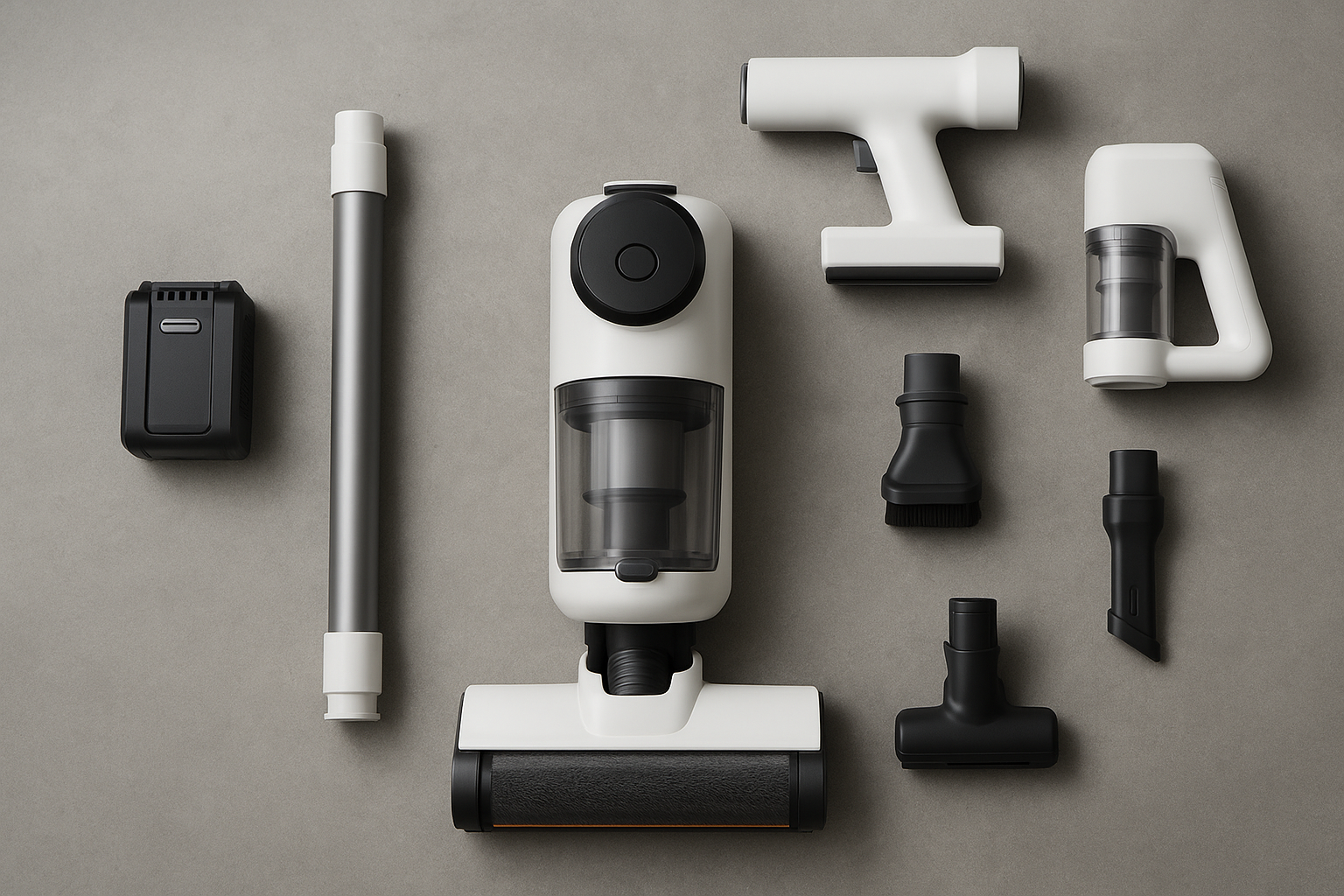
🌍 The global vacuum cleaner industry is shifting from a one-size-fits-all model to a modular platform strategy. This approach allows manufacturers to design flexible product architectures that can serve different verticals—from hotels and hospitals to automotive fleets and household consumers—without reinventing the core machine each time. For exporters and OEM/ODM suppliers, modularity is not just a design philosophy; it is the foundation of cost efficiency, compliance readiness, and customer lock-in.
This article explores how to architect modular vacuum platforms that adapt across verticals, highlighting design principles, real-world applications, and B2B benefits.
📦 1. Why Modularity Matters in Vacuum Platforms
Traditional vacuum designs focus on fixed functions. But global markets are fragmented:
Warehouses demand durability and suction power.
Hotels require quiet, lightweight solutions.
Hospitals prioritize hygiene and compliance.
Automotive fleets need compact, mobile cleaning tools.
Instead of developing separate machines for each, modular platforms allow shared cores with customizable attachments.
The High Suction Vacuum Cleaner serves warehouses when paired with industrial hoses.
A Portable Quiet Vacuum Cleaner adapts to hotels through noise-dampening modules.
The Self-Cleaning Vacuum Cleaner becomes ideal for hospitals with sterile cartridge add-ons.
By reusing common platforms, exporters reduce R&D costs while meeting diverse demands.
🌍 2. Core Design Principles for Modular Platforms
A successful modular vacuum platform relies on:
Shared Core Architecture: Motors, batteries, and main housings remain standardized.
Interchangeable Modules: Filters, tanks, and accessories adapt to vertical-specific needs.
Compliance-Ready Designs: Base units pre-certified for energy, safety, and emissions.
Scalable Ecosystems: Consumables and spare parts standardized across models.
For instance, the Multi-Functional Durable Vacuum Cleaner can be built around a universal chassis, while add-ons adjust it for industrial or hospitality settings.
🚚 3. Applying Modularity Across Verticals
Each vertical requires customization without compromising efficiency:
The Fast Lightweight Vacuum Cleaner suits janitorial services in high-rise offices.
The Energy-Saving Efficient Powerful Vacuum Cleaner appeals to universities and hospitals with eco-certifications.
The Large-Capacity Wet Dry Vacuum Cleaner targets factories and construction companies requiring heavy-duty cleanup.
A Li-ion Cordless Handheld Vacuum Cleaner serves automotive fleets through compact portability.
With modularity, the same core design can meet all these demands, reducing product proliferation while maximizing coverage.
⚙️ 4. Consumables and Spare Parts in Modular Ecosystems
Consumables represent recurring revenue. Standardizing them across platforms simplifies logistics.
Wet Dry Vacuum Cleaners can share filter and bag sizes, reducing inventory complexity.
The 4 in 1 Cordless Smart Wet & Dry Vacuum Cleaner can integrate with universal brush and cartridge systems.
cordless handheld vacuums can adopt battery packs interchangeable with larger models.
Similarly, spare parts such as motors and hoses can be shared across categories, reducing warranty costs and ensuring rapid servicing.
💡 5. IoT Integration as a Modular Feature
IoT transforms vacuums into service platforms. By modularizing IoT integration, exporters can scale smart functions selectively:
The Cordless Vacuum Cleaner can include optional IoT modules for predictive maintenance.
A Car Vacuum Cleaner can provide fleet managers with usage data through plug-in sensors.
The quiet vacuum cleaner can integrate decibel monitoring modules for compliance audits.
A wet dry vacuum can report water usage to sustainability dashboards.
This flexibility allows premium buyers to adopt high-tech versions while cost-sensitive markets stick to standard models.
🔄 6. Manufacturing and Supply Chain Benefits
From an operational perspective, modularity reduces costs and risks:
Bulk sourcing of standardized motors lowers unit costs.
Shared assembly lines produce multiple SKUs with minimal adjustments.
Predictive inventory models simplify spare parts planning.
For exporters, this means faster response to market shifts and resilience against disruptions.
📊 7. Case Studies in Modular Success
Success Example: A European exporter launched the 4 in 1 Cordless Smart Wet & Dry Vacuum Cleaner using a modular chassis. By swapping attachments, it penetrated both the hospitality and healthcare sectors.
Failure Example: A brand over-customized the Car Vacuum Cleaner without reusing parts, driving up costs and limiting after-sales scalability.
These examples show modularity succeeds when balance is maintained between customization and standardization.
🌐 8. Compliance Advantages of Modularity
Pre-certifying a base unit accelerates compliance across markets:
The Energy-Saving Efficient Powerful Vacuum Cleaner base unit can pass EU EcoDesign, enabling faster entry into multiple regions.
The Large-Capacity Wet Dry Vacuum Cleaner chassis can undergo one-time safety testing, while modules adapt to local needs.
The Li-ion Cordless Handheld Vacuum Cleaner core battery system can comply with UN38.3 shipping, allowing multiple derivative models to inherit approval.
This reduces the cost and time of entering regulated markets.
🔧 9. Future Opportunities in Modular Platforms
The future of modular vacuum design lies in combining mechanical adaptability with software flexibility:
The Cordless Vacuum Cleaner can offer app-based customization of suction levels.
The quiet vacuum cleaner can include AI-driven noise control modules.
The wet dry vacuum can evolve into hybrid cleaning robots when paired with autonomous navigation modules.
These evolutions allow brands to compete in both traditional and robotic segments without reinventing their platforms.
🚀 10. Strategic Roadmap for Exporters
To implement modular platforms successfully, exporters should:
Standardize motors, batteries, and chassis across product lines.
Develop modular accessory kits tailored to verticals.
Build ecosystems of consumables and spare parts around standardized sizes.
Create IoT modules that can be added or removed.
Pre-certify base units for compliance efficiency.
By following this roadmap, exporters unlock scalability, reduce costs, and expand international reach.
✅ Conclusion
Modular platforms represent the future of vacuum design. From the High Suction Vacuum Cleaner to the Cordless Vacuum Cleaner, modular architectures allow brands to adapt across verticals, reduce costs, and expand into new markets quickly.
For exporters and manufacturers, modularity is not optional—it is the strategic pathway to long-term competitiveness in a fragmented global industry.
For more insights on modular vacuum strategies, visit www.lxvacuum.com
📌 Suitable Audience
Exporters and manufacturers in the vacuum sector
Product engineers and R&D managers
International distributors seeking adaptable solutions
B2B procurement managers in hotels, hospitals, and factories
📌 SEO TAG
modular vacuum cleaner platforms, adaptable appliance design vacuum, cross-vertical vacuum cleaner strategies, standardized motor appliance platforms, IoT modular vacuum integration, global appliance modular design, vertical-specific vacuum cleaner solutions, OEM ODM vacuum modularity, scalable vacuum manufacturing, appliance ecosystem modular spare parts, universal consumables vacuum cleaners, modular IoT smart vacuums, hybrid robot modular vacuums, compliance-ready modular appliances, multi-vertical vacuum chassis design, industrial modular vacuum platforms, hotel cleaning modular vacuum solutions, hospital hygiene modular vacuum cleaners, fleet modular vacuum strategies, automotive vacuum modularity, smart modular appliance innovation, predictive maintenance modular vacuums, eco-friendly modular vacuum design, sustainable vacuum modular platforms, modular wet dry vacuum systems, modular cordless vacuum solutions, cross-border modular appliance exports, vacuum modular supply chain resilience, appliance modular assembly strategies, universal battery vacuum platforms, modular brush and filter appliances, quiet vacuum modular compliance, self-cleaning modular vacuum design, high suction modular appliance strategy, portable modular vacuum innovation, durable modular vacuum design, lightweight modular appliance solutions, energy-saving modular vacuums, large-capacity modular vacuum design, li-ion modular cordless vacuums, 4 in 1 modular smart vacuum platforms, car fleet modular vacuum design, cordless handheld modular vacuums, vacuum modular spare part logistics, B2B modular appliance procurement, modular appliance storytelling branding, predictive analytics modular vacuum design, modular consumer appliance platforms, smart appliance modular upgrades, modular vacuum cleaner export strategy