Hi, message us with any questions.
We're happy to help!





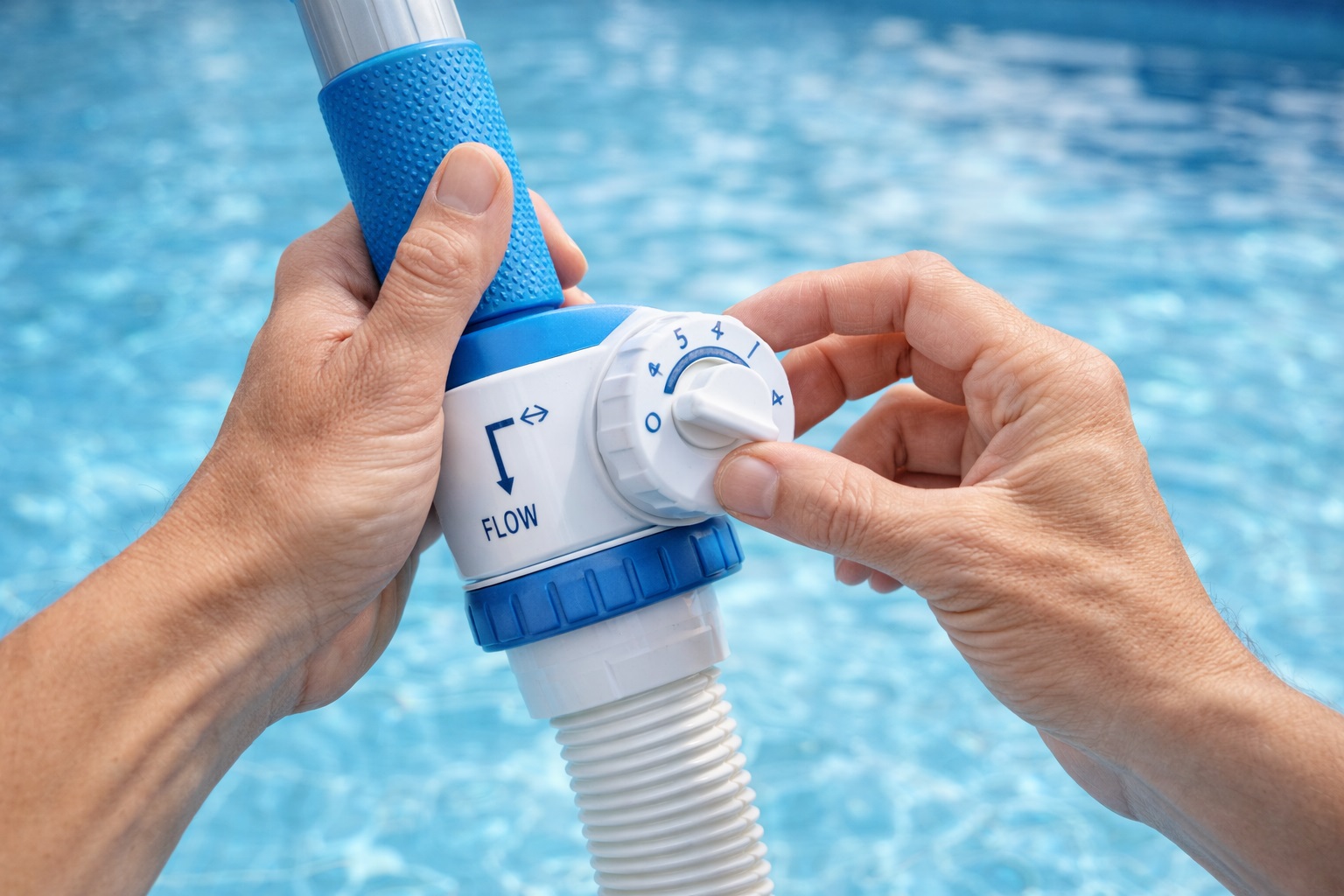
Pool cleaning is not about maximum suction.
It is about controlled suction.
Whether you are supplying a wet and dry vacuum cleaner, a High Suction Vacuum Cleaner, or a portable system for residential pools, improper suction adjustment can lead to:
Inefficient debris removal
Surface damage
Hose collapse
Pump overload
Reduced equipment lifespan
This guide explains how to adjust pool vacuum suction properly for different cleaning scenarios — from light debris maintenance to heavy sediment removal.
🌊 ① Why Suction Control Matters in Pool Cleaning
Many operators believe stronger suction equals better cleaning.
In reality:
Too much suction can damage vinyl liners
Too little suction leaves fine debris behind
Inconsistent suction stresses the filtration system
Even a Wet and Dry Vacuum Cleaner designed for water handling requires calibrated airflow when used in aquatic environments.
Suction must match:
Debris type
Pool surface material
Water depth
Hose length
Filtration resistance
Controlled performance increases cleaning efficiency and protects equipment integrity.
⚙️ ② Understanding Suction Mechanics
Pool vacuum suction depends on:
Pump horsepower
Hose diameter
Airflow resistance
Filter cleanliness
Valve configuration
In a High Suction Vacuum Cleaner, sealed suction pressure (kPa) determines lifting strength.
However, airflow rate (L/s) determines debris transport speed.
Effective suction adjustment balances both.
🧹 ③ Adjusting Suction for Light Debris (Leaves & Surface Dirt)
For routine cleaning:
Use moderate suction
Maintain steady head movement
Avoid full valve opening
High suction in light debris scenarios may:
Cause vacuum head to stick
Reduce maneuverability
Increase pump load unnecessarily
If using a Multi-Functional Durable Vacuum Cleaner with adjustable power control:
Start at 50–60% suction
Gradually increase only if debris remains
Efficiency comes from flow consistency, not peak power.
🏖️ ④ Adjusting Suction for Fine Sand & Sediment
Fine sand requires higher lifting pressure but controlled airflow.
Recommended steps:
Clean or backwash filter before operation
Shorten hose length if possible
Increase suction gradually
Move vacuum slowly to prevent sediment dispersion
In sand-heavy environments (common in Middle Eastern outdoor pools), maintaining filter cleanliness is critical.
A wet and dry vacuum cleaner with strong airflow retention performs better than systems that lose suction under partial tank load.
💧 ⑤ Adjusting Suction for Heavy Debris & Algae Buildup
For heavier contamination:
Increase suction to 70–90%
Use slow overlapping strokes
Monitor hose stability
Warning:
Excess suction can:
Collapse flexible hoses
Overload pump motor
Damage delicate pool surfaces
High-performance systems like a High Suction Vacuum Cleaner should include:
Adjustable airflow control
Thermal protection
Stable sealing system
Never operate at maximum suction continuously unless required.
🔋 ⑥ Cordless & Portable Pool Vacuum Systems
Smaller pools, spas, and portable maintenance scenarios often use:
Cordless Handheld Vacuum Cleaner
Portable Vacuum for Travel
These systems:
Operate with lower suction power
Are ideal for spot cleaning
Require frequent debris emptying
Because they rely on battery output:
Avoid continuous high-power mode
Clean filters after every session
Fully charge before deep cleaning
Portable systems improve convenience but are not substitutes for large-scale Wet and Dry Vacuum Cleaner systems.
📊 ⑦ Suction Adjustment Based on Pool Surface Type
| Pool Surface | Recommended Suction Level | Risk if Too High |
|---|---|---|
| Vinyl Liner | Low–Moderate | Surface damage, liner lift |
| Fiberglass | Moderate | Minor stress |
| Concrete | Moderate–High | Safe under control |
| Tile | Moderate | Debris scattering |
Surface compatibility must be part of suction calibration.
🔬 ⑧ Technical Insight: Airflow vs Negative Pressure
Negative pressure lifts debris.
Airflow transports debris.
If suction is high but airflow is restricted (due to dirty filters or narrow hoses):
Debris transport slows
Motor strain increases
Energy efficiency drops
This is why professional-grade Multi-Functional Durable Vacuum Cleaner systems prioritize airflow optimization over raw suction claims.
🧰 ⑨ Common Suction Adjustment Mistakes
Operating at maximum suction at all times
Ignoring filter condition
Using hoses longer than recommended
Not checking valve configuration
Switching debris type without recalibration
These mistakes shorten equipment lifespan and increase energy consumption.
❓ FAQ: Pool Vacuum Suction Adjustment
Q1: How do I know if suction is too high?
If the vacuum head sticks to the pool floor or movement becomes difficult, suction is excessive.
Q2: Does higher suction clean faster?
Not always. Excess suction can reduce debris transport efficiency and increase strain on the pump.
Q3: Can a wet and dry vacuum cleaner be used for pool cleaning?
Yes, if designed for liquid handling. Ensure proper filtration and airflow management to avoid motor damage.
Q4: Are cordless pool vacuums powerful enough?
A Cordless Handheld Vacuum Cleaner is ideal for small pools and spot cleaning but not suitable for heavy sediment removal in large commercial pools.
Strategic Conclusion
Adjusting suction properly improves:
Cleaning efficiency
Equipment lifespan
Energy performance
Surface protection
Operational safety
Whether operating a large Wet and Dry Vacuum Cleaner, a High Suction Vacuum Cleaner, or a Portable Vacuum for Travel, suction control is a precision task — not a power competition.
Optimal suction is the balance between lift and flow.
That balance defines professional pool maintenance.
Suitable Audience
Pool equipment distributors
Commercial pool maintenance contractors
B2B vacuum equipment buyers
Facility maintenance managers
European & Middle East cleaning system suppliers
Hashtags
Lanxstar, wet and dry vacuum cleaner, Multi-Functional Durable Vacuum Cleaner, High Suction Vacuum Cleaner, Cordless Handheld Vacuum Cleaner, Portable Vacuum for Travel, Wet and Dry Vacuum Cleaner, pool vacuum suction control, commercial pool cleaning equipment, industrial pool maintenance system, sand removal pool vacuum, heavy debris pool vacuum machine, professional pool vacuum supplier, European pool equipment distributor, Middle East pool cleaning supplier, OEM pool vacuum manufacturer, portable spa vacuum cleaner, cordless pool vacuum system, pool suction adjustment guide, energy efficient pool vacuum, high airflow pool vacuum, wet debris extraction machine, industrial filtration vacuum system, pool liner safe vacuum cleaner, fiberglass pool cleaning machine, concrete pool vacuum solution, adjustable suction vacuum technology, low noise pool vacuum cleaner, durable pool maintenance equipment, HEPA filtration vacuum system, vacuum motor protection design, commercial swimming pool cleaning tools, B2B pool equipment supplier, export pool vacuum factory, battery powered pool vacuum system, heavy duty suction equipment, professional maintenance vacuum machine, energy saving cleaning equipment, smart airflow vacuum system, pool debris removal technology, large capacity wet dry vacuum, continuous duty vacuum cleaner, facility management cleaning equipment, commercial janitorial equipment supplier, portable maintenance vacuum tool, industrial suction technology, swimming pool efficiency solution, vacuum cleaner wholesale supplier, powerful pool cleaning machine, advanced suction control vacuum



