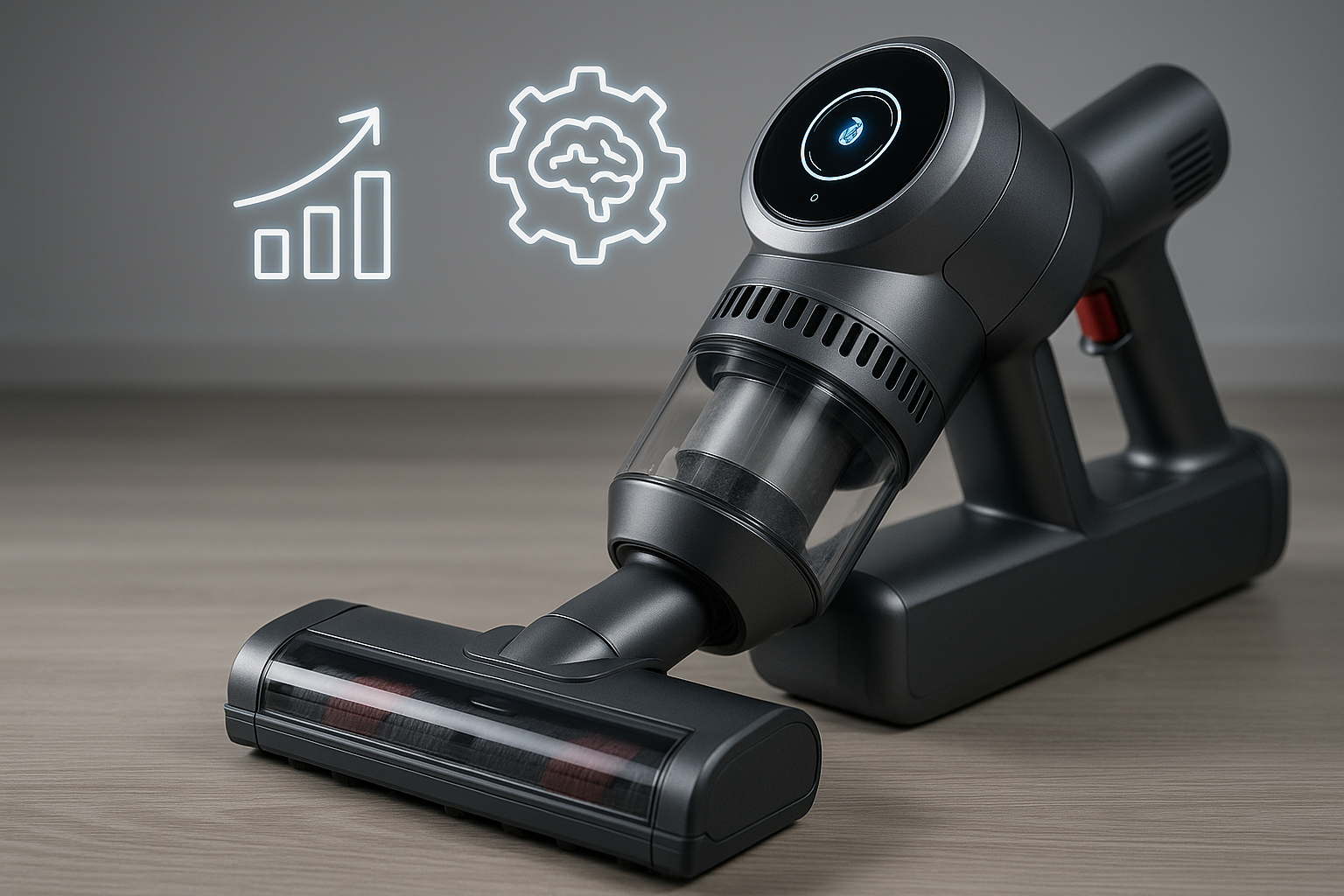
The cleaning industry is undergoing a technological shift, and vacuum systems are at the center of this transformation. For vacuum cleaner R&D engineers in Europe and the Middle East, artificial intelligence (AI) and predictive maintenance are no longer futuristic concepts—they are fast becoming essential features of product development. Together, these technologies promise smarter, more reliable, and more sustainable cleaning solutions.
1. AI in Vacuum Systems: From Smart Sensors to Intelligent Automation
AI allows vacuums to evolve from basic machines into adaptive cleaning systems. With smart sensors and real-time analytics, vacuums can recognize floor types, detect obstacles, and adjust their performance automatically.
For instance, integrating AI into a High Suction Vacuum Cleaner ensures suction levels adapt to dust density or carpet thickness. Likewise, a Quiet Vacuum Cleaner equipped with machine learning algorithms can balance motor speed for reduced noise, making it ideal for offices, hotels, and hospitals.
👉 MIT CSAIL Research on AI in Robotics
2. Predictive Maintenance: Reducing Downtime and Extending Lifespan
In traditional systems, maintenance happens after failure. Predictive maintenance changes that by using IoT sensors and AI diagnostics to spot problems before they escalate. This not only reduces downtime but also extends product lifespan.
A Portable Self-Cleaning Vacuum Cleaner can alert engineers when filters are clogged, while a Multi-Functional Durable Vacuum Cleaner with predictive analytics helps facility managers schedule servicing at the right time. Instead of reacting to breakdowns, engineers can now plan ahead.
👉 Siemens Predictive Maintenance Solutions
3. AI and Energy Optimization
AI doesn’t just enhance cleaning—it also makes vacuums more energy efficient. By analyzing usage data and optimizing power distribution, AI helps reduce unnecessary energy consumption.
For example, an Energy-Saving Efficient Powerful Vacuum Cleaner can dynamically adjust power settings, delivering maximum performance only when required. A Fast Lightweight Vacuum Cleaner can prioritize efficiency in lighter tasks, balancing cleaning results with sustainability goals.
This combination of intelligence and efficiency is especially valuable in large commercial facilities where energy costs are significant.
4. Real-Time Performance Monitoring
Another advantage of AI is continuous performance monitoring. Instead of guessing how a vacuum performs, engineers now have access to live data.
A Large-Capacity Wet Dry Vacuum Cleaner can log motor strain, airflow efficiency, and fluid capacity during operation. Meanwhile, data collected from Wet Dry Vacuum Cleaners in industrial environments provides engineers with valuable insights into long-term wear and tear, guiding future design improvements.
👉 IBM Maximo Predictive Maintenance Insights
5. Enhancing User Experience through AI
Smarter vacuums don’t just help engineers—they also improve everyday usability. AI-driven features make cleaning easier, more intuitive, and less time-consuming.
A 4 in 1 Cordless Smart Wet & Dry Vacuum Cleaner can automatically switch cleaning modes depending on floor type.
A Cordless Vacuum Cleaner can connect to a mobile app for remote monitoring and diagnostics.
A Cordless Handheld Vacuum Cleaner can optimize battery usage with AI, extending operational time.
A Car Vacuum Cleaner can adapt suction levels for both upholstery and hard surfaces inside vehicles.
These features enhance user satisfaction while giving engineers data to refine future models.
6. Implications for R&D Engineers
For R&D engineers, AI and predictive maintenance open new directions in product design. The future lies in modular hardware, standardized IoT components, and cloud-based analytics platforms.
The challenge is balancing smart features with durability and sustainability. For example, AI-enabled Multi-Functional Durable Vacuum Cleaner models must remain repairable and recyclable to align with global circular economy principles.
This means engineers must think not just about functionality, but also about lifecycle impact.
Conclusion
The future of vacuum systems will be shaped by artificial intelligence and predictive maintenance. Together, they create machines that are smarter, more energy-efficient, and capable of diagnosing their own needs. For R&D engineers in Europe and the Middle East, these innovations offer an opportunity to design products that are not only technologically advanced but also environmentally responsible.
🌐 Learn more: www.lxvacuum.com
📌 Hashtags
High Suction Vacuum Cleaner, Quiet Vacuum Cleaner, Portable Self-Cleaning Vacuum Cleaner, Multi-Functional Durable Vacuum Cleaner, Fast Lightweight Vacuum Cleaner, Energy-Saving Efficient Powerful Vacuum Cleaner, Large-Capacity Wet Dry Vacuum Cleaner, Cordless Handheld Vacuum Cleaner, Wet Dry Vacuum Cleaners, 4 in 1 Cordless Smart Wet & Dry Vacuum Cleaner, Cordless Vacuum Cleaner, Car Vacuum Cleaner, AI vacuum cleaner innovation, predictive maintenance vacuum systems, smart cleaning technology, IoT-enabled vacuum cleaners, industrial vacuum R&D, sustainable vacuum system design, modular vacuum cleaner architecture, vacuum cleaner lifecycle management, vacuum data analytics, energy-efficient vacuum engineering, smart home cleaning appliances, robotic vacuum development, industrial predictive cleaning equipment, low-noise AI vacuum cleaners, intelligent suction control systems, adaptive cleaning algorithms, machine learning in vacuums, vacuum performance monitoring, cloud-connected cleaning systems, self-diagnosing vacuum cleaners, predictive filter replacement systems, vacuum cleaner digital twins, AI-driven maintenance alerts, eco-friendly smart vacuums, predictive analytics in cleaning, autonomous vacuum cleaner systems, AI-based energy optimization, intelligent vacuum sensors, R&D innovation in cleaning industry, smart handheld vacuum design, automotive AI vacuum solutions, predictive service for cleaning appliances, connected industrial vacuums, next-gen vacuum cleaner engineering, AI-powered cleaning performance, vacuum cleaner IoT platforms, predictive fault detection in vacuums, sustainable AI cleaning solutions, future of vacuum cleaner technology