Hi, message us with any questions.
We're happy to help!





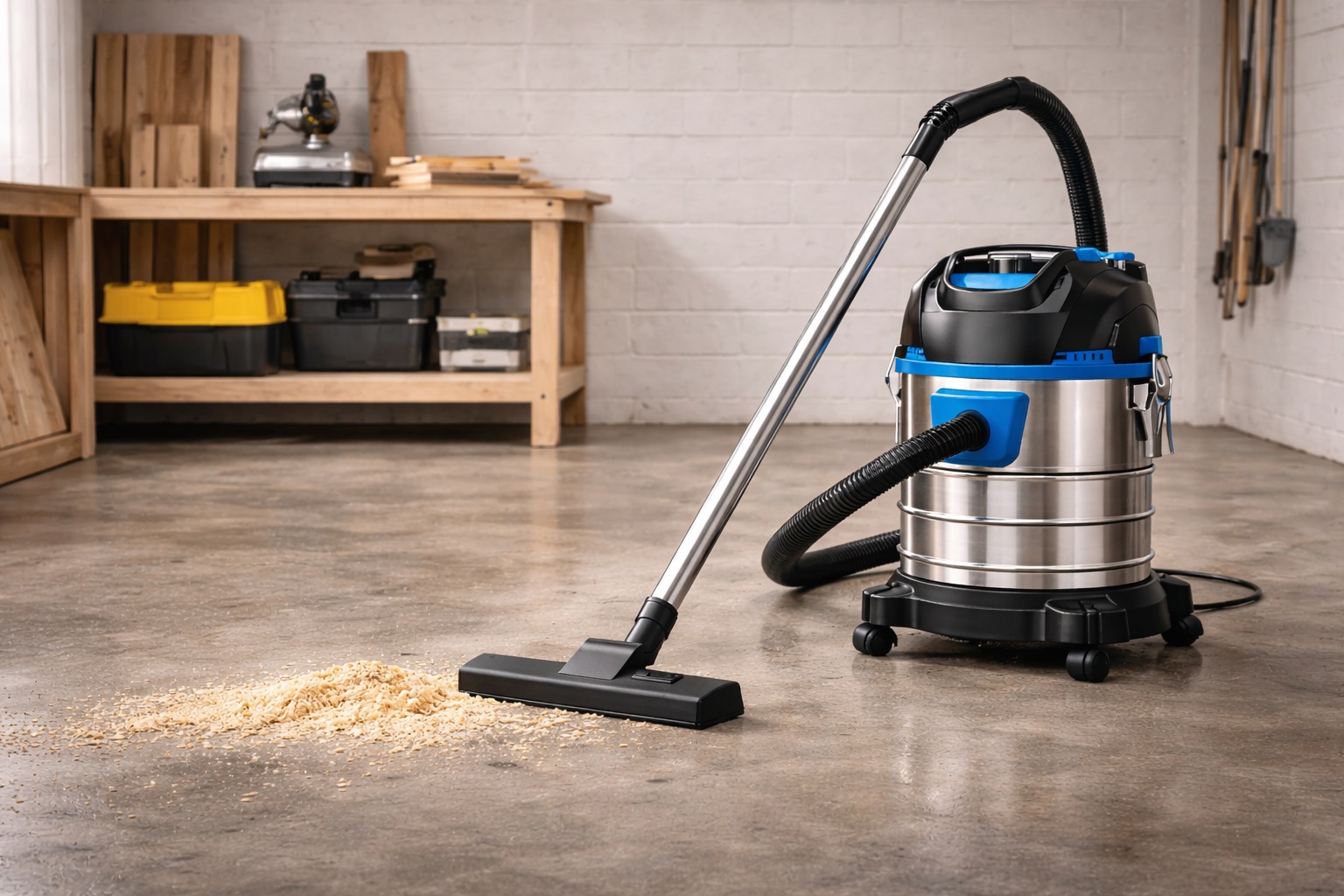
Dust management is essential in workshops, garages, and manufacturing environments. Two common solutions used to control debris and dust are workshop vacuums (wet dry vacuums) and dust collector systems.
Although both systems are designed to remove dust and debris, they operate very differently and serve distinct purposes. Choosing the right equipment depends on the type of dust produced, the size of the workspace, and the cleaning requirements.
This guide compares workshop vacuum vs dust collector systems, explains the difference between wet dry vs regular vacuum machines, and highlights how many professional cleaning machines are produced by experienced wet dry vacuum manufacturers and industrial vacuum OEM suppliers.
⚡ Workshop Vacuum vs Dust Collector: Quick Answer
For buyers looking for a quick decision:
Workshop vacuums are best for cleaning floors, machines, and debris in garages or small workshops.
Dust collectors are designed for continuous airborne dust extraction during manufacturing processes.
In short:
Workshop vacuums are used for cleaning, while dust collectors are used for dust control during production.
🔍 What Is a Workshop Vacuum?
A workshop vacuum—often called a wet dry vacuum—is a portable cleaning machine designed to remove debris, dust, and liquids from workshop environments.
These machines are commonly used for:
garage cleaning
woodworking debris removal
metal chip cleanup
maintenance cleaning tasks
small factory cleaning vacuum operations
Most workshop vacuums are produced by professional wet dry vacuum manufacturers and sold through global hardware brands or cleaning equipment distributors.
Key Features of Workshop Vacuums
Typical characteristics include:
powerful suction motors
portable wheels and handles
medium-sized debris tanks
ability to vacuum liquids and solids
Because of these advantages, workshop vacuums are widely used in maintenance cleaning tasks and mobile cleaning operations.
Many international brands cooperate with experienced wet dry vacuum suppliers to develop these machines through OEM wet dry vacuum manufacturing partnerships.
🔍 What Is a Dust Collector?
A dust collector is a stationary industrial system designed to remove fine airborne dust particles produced during industrial processes.
Dust collectors are commonly used in industries such as:
woodworking factories
metal fabrication workshops
cement and construction facilities
grain and food processing plants
Unlike portable vacuums, dust collectors are typically connected to machines through duct systems that continuously remove dust during operation.
Key Features of Dust Collectors
Dust collectors usually include:
large filtration systems
centralized ductwork
high airflow capacity
continuous dust collection capability
These systems are essential for maintaining air quality and meeting workplace safety regulations.
⚖ Workshop Vacuum vs Dust Collector: Key Differences
Although both systems remove dust and debris, they serve different functions.
| Feature | Workshop Vacuum | Dust Collector |
|---|---|---|
| Mobility | Portable | Stationary |
| Primary Purpose | Cleaning debris and spills | Continuous dust extraction |
| Airflow | Moderate suction | Very high airflow |
| Tank Capacity | 20L – 80L | Large collection bags or bins |
| Best Use | Garage and workshop cleaning | Industrial dust control |
Workshop vacuums are ideal for cleaning floors and equipment, while dust collectors focus on capturing airborne dust during production.
🏭 When Should You Choose a Workshop Vacuum?
Workshop vacuums are suitable for many maintenance cleaning tasks.
Typical applications include:
cleaning metal chips and debris
removing dust from machines
cleaning workshop floors
collecting liquid spills
These machines are often used as factory cleaning vacuum equipment for maintenance operations.
Because they can handle both liquids and solids, wet dry vacuums provide excellent flexibility in workshops.
🏭 When Should You Choose a Dust Collector?
Dust collectors are better suited for environments where dust is produced continuously.
Typical applications include:
woodworking machines
sanding equipment
powder processing lines
grain and food production facilities
These systems remove airborne dust directly from machines before it spreads through the workshop.
💰 Cost Comparison: Workshop Vacuum vs Dust Collector
Cost is another important factor when choosing cleaning equipment.
| Equipment Type | Typical Price Range |
|---|---|
| Workshop vacuum | $80 – $300 |
| Industrial wet dry vacuum | $300 – $1200 |
| Dust collector system | $800 – $5000 |
For small workshops and garages, workshop vacuums offer a more affordable and flexible cleaning solution.
Dust collectors usually require larger investments and installation.
⚙ Workshop Vacuum vs Industrial Vacuum Systems
Some factories also compare workshop vacuums with larger industrial vacuum systems.
Industrial vacuum systems typically offer:
stronger suction motors
larger debris tanks
heavy-duty industrial components
These machines are often produced by specialized industrial vacuum OEM manufacturers.
However, for many small workshops and maintenance tasks, a wet dry vacuum supplied by a reliable wet dry vacuum supplier provides sufficient cleaning power.
📊 Typical Workshop Vacuum Specifications
Most workshop vacuums fall within the following technical range.
| Feature | Typical Range |
|---|---|
| Motor Power | 1200W – 2000W |
| Tank Capacity | 20L – 60L |
| Airflow | 50 – 80 CFM |
| Weight | 6 – 15 kg |
Many machines within this range are produced through OEM wet dry vacuum manufacturing partnerships.
📦 Case Study: Woodworking Workshop Dust Management
A small woodworking workshop struggled with dust buildup around cutting machines.
Instead of installing a large dust collector system, the workshop chose a portable wet dry vacuum supplied by a professional wet dry vacuum manufacturer.
Benefits included:
lower equipment cost
easy mobility between machines
effective debris cleanup
For small workshops, portable vacuums often provide a practical solution.
📦 Case Study: Furniture Factory Installing a Dust Collector
A large furniture manufacturing factory required continuous dust removal from multiple woodworking machines.
The company installed a centralized dust collector system connected to production equipment.
Advantages included:
continuous dust extraction
improved air quality
compliance with workplace safety standards
For large production environments, dust collectors are often the better solution.
✔ Which One Should You Choose?
Choosing between these systems depends on the cleaning requirements of the workspace.
Choose a workshop vacuum if:
you need portable cleaning equipment
you clean floors and machines regularly
your workshop is small or medium-sized
Choose a dust collector if:
machines generate large amounts of airborne dust
continuous dust extraction is required
the facility is large and production runs continuously
🔮 Future Trends in Workshop Cleaning Equipment
Industrial cleaning equipment continues to evolve with several trends.
Higher Efficiency Motors
Modern motors deliver stronger suction while reducing energy consumption.
Advanced Filtration Technology
Improved filtration systems provide better dust containment and air quality.
Multi-Function Cleaning Equipment
Some modern workshop vacuums combine:
vacuum cleaning
blower functions
advanced filtration systems
Many innovations originate from industrial vacuum OEM manufacturers developing equipment for global markets.
🚀 Final Advice
Choosing between a workshop vacuum and a dust collector depends on the type of cleaning required.
Workshop vacuums are ideal for:
maintenance cleaning
mobile cleaning tasks
garages and small workshops
Dust collectors are better suited for:
continuous dust extraction
large industrial facilities
production-line dust control
Many modern workshop vacuums are produced by experienced wet dry vacuum manufacturers and wet dry vacuum suppliers, enabling businesses to obtain reliable factory cleaning vacuum equipment for workshop environments.
Hashtags
wet dry vacuum manufacturer, wet dry vacuum supplier, OEM wet dry vacuum, wet dry vs regular vacuum, factory cleaning vacuum, industrial vacuum OEM, workshop vacuum cleaner, industrial dust collector, woodworking dust collector, shop vacuum cleaner, factory maintenance vacuum, heavy duty shop vacuum, commercial cleaning vacuum machine, vacuum cleaner manufacturers China, industrial cleaning equipment supplier, cleaning equipment manufacturer China, workshop cleaning equipment, industrial debris vacuum, contractor vacuum cleaner supplier, factory dust cleaning vacuum, workshop maintenance vacuum cleaner, professional cleaning vacuum supplier, vacuum cleaner OEM factory, industrial cleaning vacuum system, durable shop vacuum manufacturer, vacuum cleaner distributor Europe, industrial cleaning equipment wholesaler, heavy duty suction vacuum, woodworking shop vacuum, commercial workshop vacuum, industrial suction vacuum supplier, cleaning equipment factory China, vacuum cleaner sourcing China, portable industrial vacuum cleaner, high suction industrial vacuum, heavy duty cleaning equipment supplier, commercial cleaning equipment manufacturer, vacuum cleaner export factory, industrial cleaning vacuum system supplier, professional cleaning equipment manufacturer, workshop dust vacuum machine, factory floor cleaning vacuum, industrial debris vacuum cleaner, commercial maintenance vacuum cleaner, Lanxstar



