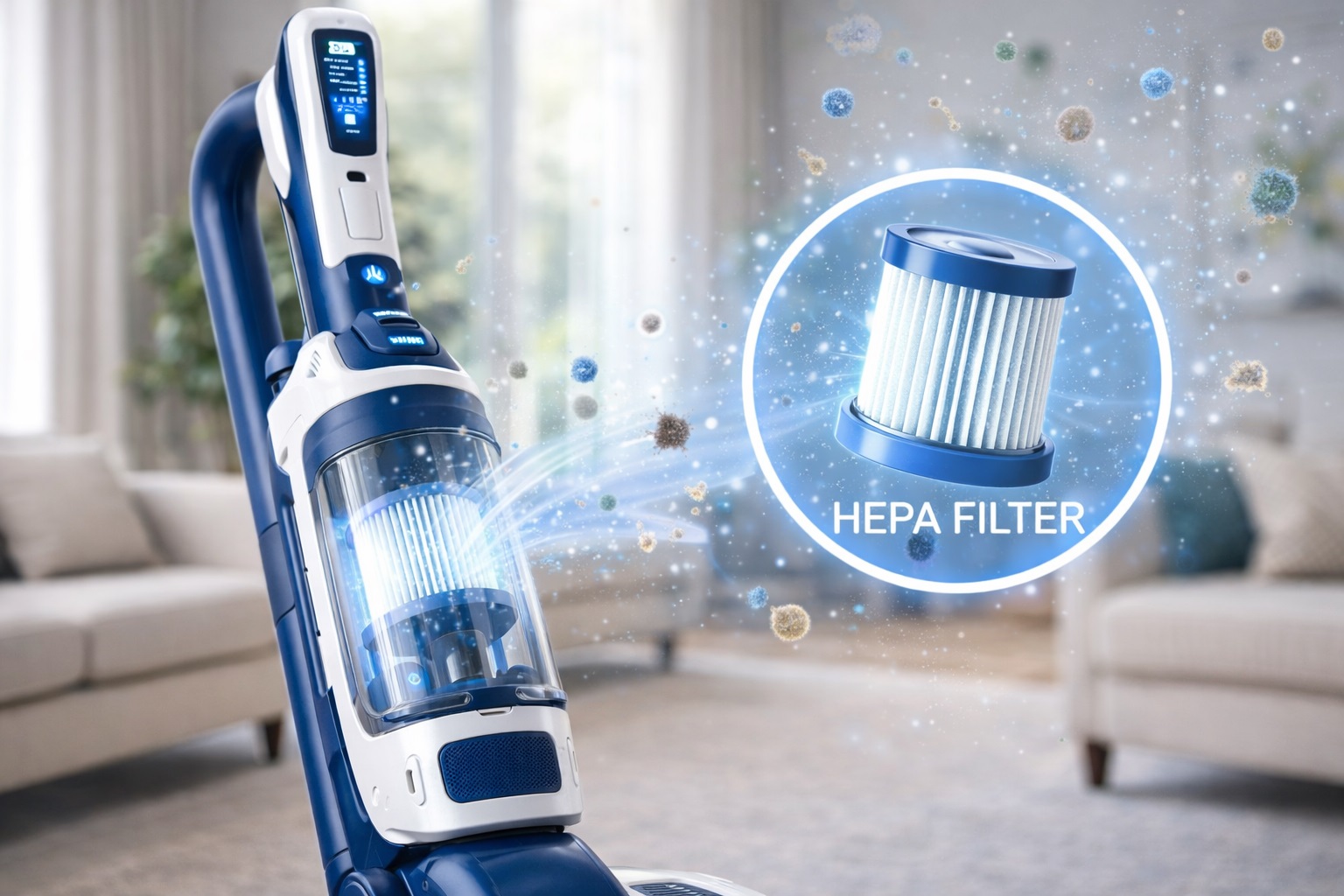
Rethinking “Clean” in Modern Homes and Small Businesses
For years, vacuum cleaner marketing has revolved around one promise:
“More suction equals better cleaning.”
But in real homes—especially modern apartments, shared living spaces, and small businesses—this assumption is increasingly outdated.
For European and Middle Eastern distributors, product managers, and vacuum cleaner engineers, the more important question today is not:
How strong is the suction?
But rather:
What happens to the dust you don’t see?
This article explains why HEPA filtration often matters more than raw suction power, and how wet and dry vacuum cleaner systems are redefining what “clean” actually means.
🔍 1. Suction Power Only Solves Half the Problem
A High Suction Vacuum Cleaner excels at one thing:
But cleaning does not end at debris pickup.
If fine dust, allergens, and micro-particles are:
Then higher suction can actually make indoor air quality worse.
In this sense, suction without filtration is incomplete cleaning.
🌫️ 2. The Invisible Dust Problem in Daily Life
Most problematic particles are:
These particles:
This is why many users report:
“It looks clean, but the air feels dusty.”
🏢 3. Why Apartments Amplify the Filtration Issue
An Apartment Vacuum Cleaner operates in a very different environment than a detached house.
Apartments typically have:
In such spaces, poor filtration has a stronger impact.
A HEPA Filter Vacuum Cleaner prevents fine dust from cycling endlessly through the living space—something suction alone can never achieve.
🧠 4. HEPA Filtration: What It Actually Does
HEPA filtration is not about marketing labels—it is about particle control.
A true HEPA system:
Captures ≥99.97% of particles down to 0.3 microns
Prevents fine dust from escaping through exhaust
Protects both users and internal motor components
This directly improves:
🔄 5. Why High Suction Without HEPA Can Be Counterproductive
Here is the paradox:
Higher suction:
Without proper HEPA filtration:
In other words, strong suction + weak filtration = stronger dust circulation.
This is why suction power alone is a misleading performance indicator.
🚀 6. Wet and Dry Vacuum Cleaners: A Different Filtration Challenge
Wet dry vacuum cleaners are often assumed to prioritize power over filtration—but this is changing.
A modern wet and dry vacuum cleaner, when engineered as a Multi-Functional Durable Vacuum Cleaner, can:
Separate wet debris from airflow
Reduce airborne dust during pickup
Support HEPA filtration for dry cleaning modes
This makes them suitable not only for utility tasks, but also for health-conscious homes and small businesses.
📍 Usage Scenario: Urban Apartment (EU Market)
In European cities, apartment dwellers often clean:
Users who switched from:
to:
reported:
🌱 7. Health Is Becoming a Purchase Driver, Not a Bonus
Across Europe and the Middle East, buyers increasingly prioritize:
In these markets, HEPA Filter Vacuum Cleaners are no longer niche—they are becoming baseline expectations, especially in apartments.
📊 8. Suction vs Filtration: Reality Comparison
| Aspect | High Suction Focus | HEPA Filtration Focus |
|---|
| Visible Dirt | Excellent | Good |
| Fine Dust Control | Weak | Excellent |
| Air Quality | Often Worse | Significantly Better |
| Allergy Impact | Limited | Strong |
| Long-Term Comfort | Medium | High |
| User Trust | Short-Term | Long-Term |
🧩 9. What Professionals Understand (and Consumers Are Learning)
Experienced product managers and distributors know:
Cleaning is not only surface-level
Health perception drives repeat purchase
Complaints often relate to dust and smell—not suction
This is why many successful brands are now rebalancing performance toward filtration, not chasing ever-higher suction numbers.
🎯 Final Takeaway
Suction power determines how fast dirt is picked up.
HEPA filtration determines what stays in your home.
In modern apartments and shared spaces:
This is why HEPA filtration increasingly matters more than suction power, and why wet and dry vacuum cleaner systems with proper filtration are becoming the smarter choice for daily cleaning.
📌 Suitable Audience
European & Middle Eastern vacuum cleaner distributors
Apartment-focused residential buyers
Product managers & sourcing teams
Vacuum cleaner R&D engineers
📌 Hashtags
wet and dry vacuum cleaner, Multi-Functional Durable Vacuum Cleaner, High Suction Vacuum Cleaner, Wet Dry Vacuum Cleaners, HEPA Filter Vacuum Cleaner, Apartment Vacuum Cleaner, indoor air quality cleaning, allergy friendly vacuum, fine dust filtration, residential vacuum health, urban apartment cleaning, modern home hygiene, dust control vacuum, air quality appliances, sustainable home cleaning, vacuum cleaner engineering, household cleaning systems, low dust vacuum, clean air solutions, residential cleaning habits, EU apartment living, health focused appliances, smart cleaning design, vacuum filtration technology, long lifespan vacuum, low maintenance vacuum, balanced power vacuum, efficient home vacuum, vacuum cleaner distribution, OEM vacuum cleaner, private label vacuum, residential market insight, allergy safe cleaning, daily cleaning solutions, apartment hygiene tools, professional home cleaning, filtration vs suction, vacuum cleaner ROI, clean air living, health driven purchasing, modern vacuum trends, indoor pollution control, fine particle vacuum, Lanxstar