Hi, message us with any questions.
We're happy to help!





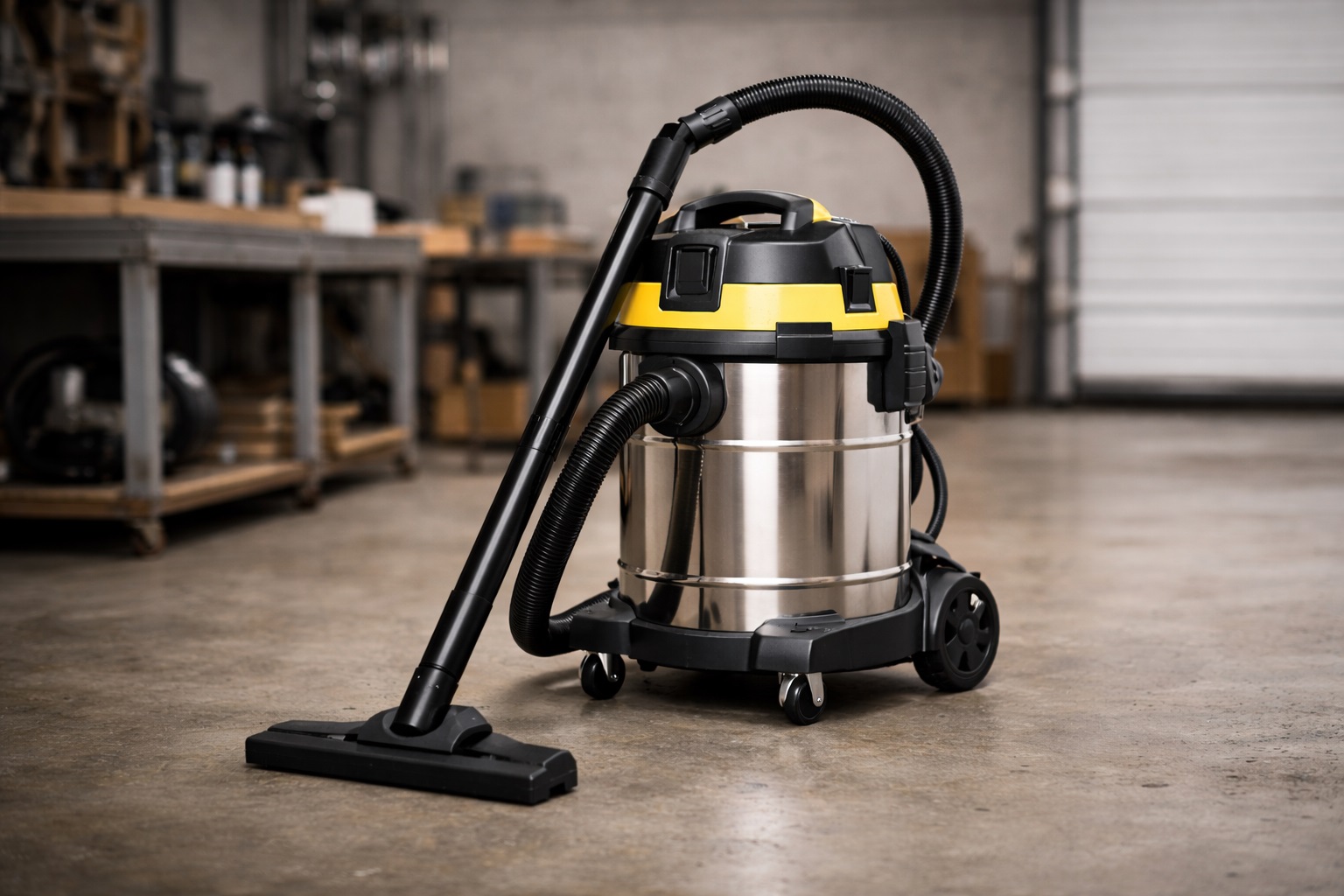 In Europe’s professional equipment market—especially in Germany and Poland—wet dry vacuum cleaners are no longer considered simple cleaning appliances. Instead, they are widely categorized as professional workshop tools used in automotive repair, construction, woodworking, and industrial maintenance.
For tool distributors, hardware wholesalers, and industrial supplies importers, wet dry vacuum cleaners represent an important category within the professional equipment ecosystem. They help workshops and factories efficiently remove both solid debris and liquid waste, making them indispensable in demanding working environments.
Understanding how these machines work, where they are used, and what features matter most to European buyers can help distributors choose the right products and build competitive product portfolios.
🔧 What Is a Wet Dry Vacuum Cleaner?
A wet dry vacuum cleaner is a versatile cleaning machine designed to collect both dry debris and liquid spills using a powerful suction system.
In the European tool distribution market, these machines are often marketed as:
workshop vacuum cleaner
shop vacuum
industrial vacuum cleaner
dust extractor for workshops
Because of their versatility, wet dry vacuums are widely used in environments where dust, debris, and liquids occur simultaneously during daily operations.
Typical materials they collect include:
sawdust and wood particles
metal chips and grinding dust
construction debris
water spills
mud and sludge
This versatility makes wet dry vacuums a highly attractive product category for industrial vacuum distributors and tool wholesalers.
⚙️ Key Components of an Industrial Wet Dry Vacuum Cleaner
Understanding the structure of a wet dry vacuum cleaner helps distributors evaluate product quality and reliability.
High-Performance Motor System
The motor generates suction power.
Industrial machines typically use high-performance bypass motors, designed for longer operating hours and stable airflow.
Configurations may include:
single motor systems
dual motor systems
triple motor industrial machines
European buyers often focus more on motor durability and airflow stability than simple wattage numbers.
Large Capacity Collection Tank
The collection tank stores debris and liquid waste.
Common tank materials include:
stainless steel
reinforced plastic
corrosion-resistant metal
Typical capacities range between 20L and 80L.
Larger tanks reduce interruptions during cleaning tasks in busy workshops.
Multi-Stage Filtration System
Filtration protects the motor and improves air quality.
Common filtration components include:
cartridge filters
HEPA filters
sponge filters for liquid pickup
Multi-stage filtration systems ensure fine dust particles are captured before air exits the machine.
This feature is particularly important for woodworking and construction industries.
Float Valve Protection System
A key feature of a wet dry vacuum cleaner is the float valve safety mechanism.
When liquid inside the tank reaches maximum level, the float rises and blocks airflow, preventing water from entering the motor.
This greatly extends the lifespan of the machine.
Hose and Accessory System
Professional vacuum cleaners include several accessories:
floor nozzles
crevice tools
round brushes
water suction tools
Wide floor nozzles are especially useful in workshops where debris covers large surfaces.
🌀 How a Wet Dry Vacuum Cleaner Works
The working principle of a wet dry vacuum cleaner is based on air pressure differences and controlled airflow.
Step 1: Motor Creates Negative Pressure
When the motor starts, a fan rotates at high speed and creates negative pressure inside the tank, drawing air into the machine.
Step 2: Debris and Liquids Enter the Tank
Dust, debris, and liquids are carried through the hose and deposited inside the collection tank.
Heavier particles settle at the bottom.
Step 3: Air Passes Through Filters
Air then passes through the filtration system where fine particles are captured.
Clean air exits the machine.
Step 4: Float Valve Stops Liquid Overflow
When the tank fills with liquid, the float valve rises and blocks airflow, protecting the motor from damage.
🔍 Case Example: Automotive Workshop Cleaning
A mid-sized automotive repair workshop in Central Europe typically deals with oil spills, brake dust, and metal debris every day.
Traditional household vacuum cleaners cannot handle liquid waste and heavy particles.
After switching to a 30L industrial wet dry vacuum cleaner with dual motors, technicians were able to clean both oil spills and workshop dust using one machine.
The result was a 30–40% reduction in daily cleaning time, while improving safety and cleanliness in the workspace.
🔍 Case Example: Woodworking Dust Control
Woodworking workshops generate large amounts of sawdust and fine dust particles during cutting and sanding.
Many workshops in Germany and Poland use industrial wet dry vacuum cleaners as portable dust extractors connected to power tools.
With strong suction power and HEPA filtration, these machines significantly reduce airborne dust and help maintain a healthier working environment.
🏭 Why Wet Dry Vacuums Are Popular in Germany and Poland
Several industries rely heavily on wet dry vacuum cleaners.
Automotive Workshops
Cleaning oil, dust, and metal particles is part of daily operations.
A workshop vacuum cleaner helps keep the environment safe and organized.
Construction Sites
Construction projects generate both dust and water residue.
Wet dry vacuums can quickly remove cement dust and liquid spills.
Manufacturing Facilities
Factories use industrial vacuum cleaners to remove metal fragments and production debris, improving safety and maintenance efficiency.
Studies in industrial cleaning environments show that industrial vacuum systems can improve cleaning efficiency by up to 40–50% compared with manual cleaning methods.
📜 European Certification and Compliance
For distributors targeting Germany and Poland, compliance with European standards is essential.
Important certifications include:
CE certification for EU market entry
RoHS compliance for environmental safety
GS certification (Germany Safety Standard)
EMC testing for electrical compatibility
Products meeting these standards integrate more easily into European tool distribution networks and industrial supply chains.
💰 Opportunities for Tool Distributors and Importers
Wet dry vacuum cleaners offer strong opportunities for distributors expanding their product portfolio.
Many distributors partner with an OEM vacuum cleaner manufacturer to create private-label products.
Advantages include:
custom branding
exclusive product lines
specification customization
higher profit margins
Private label strategies allow distributors to compete with established brands while maintaining pricing flexibility.
🚀 Future Trends in Workshop Vacuum Technology
The industrial vacuum cleaner industry continues to evolve.
Key technological trends include:
brushless motor technology
automatic filter cleaning systems
smart monitoring features
energy-efficient motors
These innovations are shaping the next generation of professional workshop cleaning tools.
❓ FAQ for Tool Distributors
What is the difference between a shop vacuum and an industrial vacuum cleaner?
A shop vacuum is typically designed for workshops and small businesses, while an industrial vacuum cleaner is built for heavier continuous use in factories and large facilities.
Can wet dry vacuum cleaners be used as dust extractors?
Yes. Many workshops connect wet dry vacuum cleaners to power tools to capture sawdust and fine particles during cutting and sanding operations.
What tank size is best for workshops?
For most workshops, tanks between 30L and 60L provide the best balance between capacity and portability.
Conclusion
For tool distributors and industrial supplies importers in Germany and Poland, wet dry vacuum cleaners represent an essential category within the professional equipment market.
Their ability to handle both liquids and solid debris makes them indispensable in workshops, factories, and construction environments.
By understanding the technology, certification requirements, and OEM opportunities, distributors can select reliable products and build competitive offerings in the European industrial tools market.
📌 Hashtags
wet dry vacuum cleaner, industrial vacuum cleaner, workshop vacuum cleaner, shop vacuum, dust extractor, industrial cleaning equipment, commercial vacuum cleaner, heavy duty vacuum cleaner, factory cleaning vacuum, workshop cleaning machine, wet vacuum machine, dry vacuum cleaner, industrial dust collector, construction vacuum cleaner, professional cleaning equipment, high power vacuum cleaner, industrial floor cleaning vacuum, large capacity vacuum cleaner, industrial cleaning machine supplier, commercial cleaning vacuum system, factory maintenance equipment, industrial suction vacuum, workshop dust vacuum, industrial debris vacuum, heavy duty cleaning machine, industrial vacuum technology, commercial wet dry vacuum, industrial vacuum solution, workshop cleaning equipment, industrial cleaning system, vacuum cleaner supplier Europe, industrial vacuum distributor, wet dry vacuum importer, OEM vacuum cleaner manufacturer, private label vacuum cleaner, vacuum cleaner factory China, industrial cleaning equipment supplier, commercial vacuum machine, industrial cleaning solutions, professional vacuum supplier, industrial vacuum technology supplier, cleaning equipment distributor, heavy duty vacuum supplier, industrial workshop vacuum system, commercial cleaning equipment supplier, vacuum cleaner wholesale supplier, industrial vacuum brand, industrial cleaning equipment manufacturer, professional cleaning machines, industrial vacuum innovation, Lanxstar



