Hi, message us with any questions.
We're happy to help!





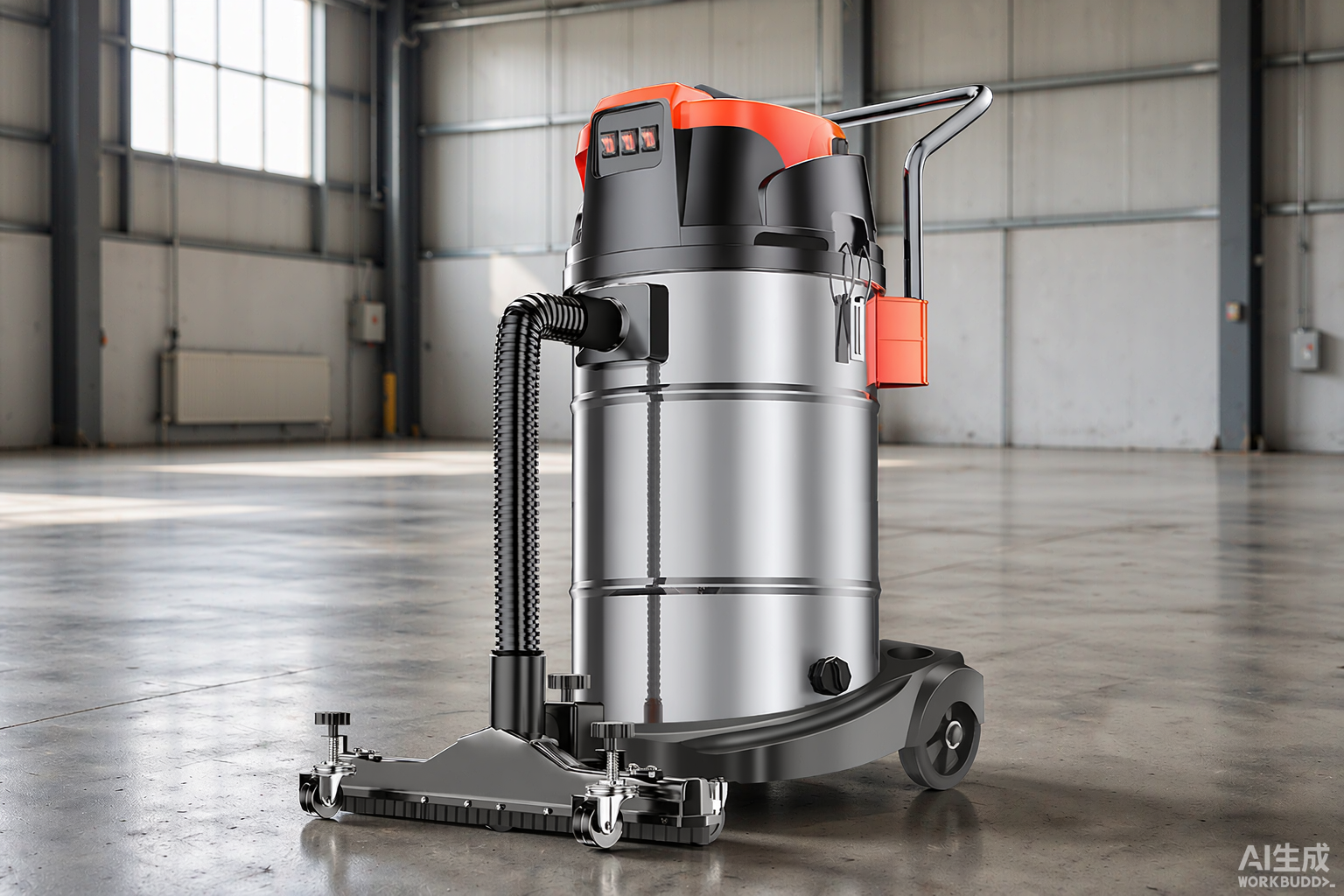
A construction site is the most hostile environment a vacuum cleaner will ever enter. In a single shift the same machine may be asked to swallow concrete slurry from wet cutting, fine silica dust from grinding, chunks of plasterboard, screws, and rainwater pooled in an excavation edge — then be carried down two flights of temporary stairs and dropped into a wheelbarrow.
Most vacuums are not built for this. Many that are marketed for this are not built for it either. This buyer guide breaks down what a wet dry vacuum cleaner must actually deliver on a construction site, how to read the spec sheet like an engineer, and how to buy in quantities without buying problems. 🧰
1. The Four Jobs a Site Vacuum Actually Does 📋
On a live site, a wet-dry machine earns its place by covering four distinct tasks:
Slurry control — wet cutting of concrete, tile and stone produces a slurry that must be removed before it sets or clogs drains
Dust extraction — grinding, sanding and demolition create airborne fine dust that regulation increasingly treats as a health hazard
Debris cleanup — plasterboard shards, packing straps, screws and gravel that destroy household machines
Water removal — rainwater, hydro-scarification residue and pipe-test discharge from pits and trenches
A machine that can only do two of the four is not a site machine. A genuine industrial vacuum cleaner for construction handles all four within one shift without changing architecture — and that capability lives in specific, verifiable features rather than in brand styling. 🎯
2. Filtration Class: The Line Between Compliance and Fine 🫁
This is the most important paragraph in this guide. Construction dust — particularly crystalline silica from concrete, mortar and stone — is regulated in most developed markets. In Europe, that regulation is expressed as dust classes:
L (Low): max 1% leakage — suitable for soft household dust; not acceptable for concrete work
M (Medium): max 0.1% leakage — the legal minimum for concrete, mortar and most mineral dust on EU sites
H (High): max 0.005% leakage — required for hazardous dusts including asbestos-adjacent work, carcinogenic particles and mold remediation
For North American buyers, look for machines meeting OSHA Table 1 silica-control expectations with HEPA filtration of 99.97% at 0.3 microns, fully sealed. "HEPA-style" or "HEPA-like" filters on the accessories list are marketing; a sealed path with a gasketed cartridge is engineering.
Also check for a semi-automatic or manual filter cleaning system. Fine mineral dust clogs a pleated filter within minutes at full airflow; a machine with a shaker or pulse-clean mechanism maintains suction across a whole shift, while a machine without it loses half its airflow by lunchtime. This single feature often decides whether a crew actually uses the vacuum or parks it in a corner. ⏱️
3. The Motor: Continuous Duty or Continuous Disappointment ⚙️
Site vacuums run for hours, often in hot, dust-laden air. Two requirements separate survivors from casualties:
Bypass motor architecture — the working airflow never passes through the motor windings, so damp, dusty air cannot degrade the electrical heart of the machine
Continuous-duty rating — ask for the rated runtime in writing; a machine engineered for 240+ minutes of continuous operation has different bearings, windings and cooling than a retail unit rated for short bursts
For high-demand phases — polishing, scarifying, continuous slurry removal — consider a dual motor vacuum cleaner: two bypass motors double the airflow for large-floor machines, and the redundancy keeps a bay productive even when one motor eventually needs service.
A genuinely useful site feature on modern machines is a power take-off socket — the vacuum starts automatically when the connected grinder or saw starts, so extraction happens by default instead of by discipline. Compliance that requires workers to remember things fails; compliance that happens automatically succeeds. ✅
4. Tank and Chassis: Built for the Truck, Not the Showroom 🛡️
Site equipment lives in the back of a van or pickup between jobs. The tank and chassis must survive that life:
Stainless steel tank (real grade, 0.6–0.8mm): survives slurry chemistry, dropped wrenches and the vibration of a truck bed. A stainless steel vacuum tank also rinses clean after concrete slurry, where plastic micro-scratches permanently hold residue.
Structural foam or thick PE tank: acceptable for lighter renovation work, but check UV stability and impact rating before committing a fleet.
Large-diameter drain port: slurry sets like stone. A tank that cannot be emptied through a wide, tool-free drain becomes a 40kg concrete ingot by Monday. This is the single most common complaint in site-vacuum post-mortems. ⚠️
Steel or reinforced trolley with 200mm+ castors: narrow plastic wheels block on rubble within minutes; large wheels and a low center of gravity keep a full 60–80L tank moving across cable runs and debris.
Impact-rated fittings: metal hose cuffs and a crushproof, anti-static hose. A hose that kinks at the first stair edge throttles suction for the rest of the job.
Tank sizing follows the task: 25–35L covers interior fit-out and spot slurry work; 60–100L large-capacity wet dry vacuum cleaner models with powered drains make sense for continuous cutting stations and floor-prep crews. At the large end, weigh the tank empty — it will still be carried up temporary stairs.
5. Noise and Power on Occupied Sites 🔇
Renovation increasingly happens inside occupied offices, hotels and hospitals. In those environments, a low noise vacuum cleaner in the 62–68dB range lets dust extraction run during business hours instead of in expensive night shifts. Some manufacturers achieve this with acoustic lining and dual-stage intake design — verify the measured figure and at what distance.
Power draw matters on sites fed by temporary generators. An energy efficient vacuum cleaner with optimized airflow does the same job at lower wattage — which on a generator-fed site can be the difference between running extraction and tripping the whole distribution board. 💡
6. The Construction Buyer's Checklist ✅
Score every candidate against these twelve points:
M-class or OSHA-Table-1-compliant sealed filtration ✅
Filter cleaning system (shaker or pulse) for fine mineral dust ✅
Bypass motor, continuous-duty rated ✅
Float valve with honest wet-capacity rating for slurry pickup ✅
Stainless steel tank, grade documented ✅
Wide, tool-free drain port sized for slurry ✅
Power take-off socket for automatic tool extraction ✅
Crushproof anti-static hose, metal cuffs ✅
Large castors, steel trolley, van-transportable footprint ✅
Noise ≤68dB for occupied-building work ✅
Certifications — CE, GS; ETL/UL for North America ✅
Spare parts SLA and site-serviceable wear items ✅
Any machine failing items 1–4 will either fail compliance, lose suction by mid-shift, or burn its motor out within a season. Machines passing all twelve justify their price premium on the first concrete pour. 🏆
Real Site Cases 📊
Case 1 — Commercial tower fit-out, Riyadh, Saudi Arabia 🇸🇦: A fit-out contractor working through occupied floors needed dust control without disrupting tenants. They deployed M-class machines at 65dB(A) with power take-off for grinders, running daytime extraction instead of night shifts. The project finished 11 days ahead of schedule, and night-shift premiums — previously a fixed line item for dust work — were eliminated from the final two months of budget.
Case 2 — Renovation fleet, Hamburg, Germany 🇩🇪: A renovation company standardized its fleet on M-class machines with stainless tanks and powered drain ports after an audit showed their old machines were being scrapped mainly for two reasons: motors burned by fine dust, and tanks ruined by set slurry. The new standard reduced machine replacement from 30% of fleet per year to under 10%, and the drain-port spec alone paid for the upgrade within the first quarter.
Case 3 — Bridge repair contractor, Texas, USA 🇺🇸: Hydro-scarification on a deck rehabilitation project produced standing water with fine debris in wind-exposed conditions. The contractor ran two dual-motor 80L wet-dry machines with wide drains alongside scarifiers, cutting surface-drying delays between passes from 45 minutes to 12 and keeping the schedule through a compressed weekend window.
Case 4 — Interior demolition firm, Manchester, UK 🇬🇧: A demolition firm tendering for occupied-building hospital work was rejected twice for dust-control plans that relied on "HEPA vacuums" without class documentation. They rebuilt their method statement around H-class machines with documented leakage rates and filter certificates — and won the tender at a 15% higher equipment line than the losing bid, because the evaluation scored compliance, not price. 📋
Buying for a Site Fleet vs. a Single Project 🤝
A single-project purchase should prioritize the checklist items matching that project's dust class and wet load — and rent rather than buy for one-off hazardous-material jobs. But contractors and rental fleets buying in volume should think in platforms:
Validate one sample per project type — one slurry-heavy week and one dry-dust week tell you more than any catalog
Standardize one chassis across tank sizes so hoses, filters and drains share a single SKU set across the fleet
Negotiate consumables up front — filters are the toner-cartridge economics of site vacuums; fix filter pricing with the machine contract, not after
For fleets, rental companies and private labels, discuss configurations directly with an industrial vacuum cleaner factory — tank size, hose class, cord length and socket standards can be matched to your market while the certified core stays unchanged
A vertically integrated vacuum cleaner manufacturer in China can document filtration classes, motor duty ratings and steel specifications in writing — and should offer sample units for your own site testing before a fleet commitment. If a supplier hesitates at either request, that hesitation is your answer.
The Bottom Line 🎯
A construction-grade wet dry vacuum is defined by five verifiable facts: filtration class with documents, a filter cleaning system that keeps suction through a shift, a bypass motor rated for continuous duty, a stainless tank with a drain you can actually use, and a chassis that survives the van ride. Everything else is convenience. Buy those five correctly and the machine becomes part of the site's productivity; skip them and you are buying consumable disappointment.
If you are interested, please feel free to contact us anytime. And when you are ready to specify machines built for real site conditions, explore the range at www.lxvacuum.com
50 Related Keywords
wet dry vacuum cleaner, wet and dry vacuum cleaner, industrial vacuum cleaner, commercial vacuum cleaner, construction site cleaning equipment, heavy duty vacuum cleaner, industrial dust extractor, HEPA filter vacuum cleaner, M-class vacuum, silica dust extraction, concrete slurry vacuum, dual motor vacuum cleaner, stainless steel vacuum tank, large-capacity wet dry vacuum cleaner, low noise vacuum cleaner, energy efficient vacuum cleaner, high suction power vacuum cleaner, wet and dry suction system, commercial grade vacuum cleaner, industrial cleaning equipment, commercial cleaning equipment, workshop vacuum cleaner, warehouse cleaning solution, factory floor cleaning, hotel cleaning equipment, hospital cleaning equipment, facility management cleaning equipment, retail cleaning equipment, best budget vacuum, best vacuum on a budget, good budget vacuum cleaner, vacuum cleaner supplier, vacuum cleaner manufacturer, vacuum cleaner manufacturer in China, vacuum cleaner maker, vacuum manufacturer, industrial vacuum cleaner supplier, industrial vacuum cleaner factory, cleaning equipment supplier, industrial equipment supplier, wholesale vacuum cleaner, bulk vacuum cleaner purchase, bulk order vacuum cleaner, factory direct vacuum cleaner, OEM vacuum cleaner, ODM vacuum cleaner, private label vacuum cleaner, import vacuum cleaner from China, vacuum cleaner distri