Hi, message us with any questions.
We're happy to help!





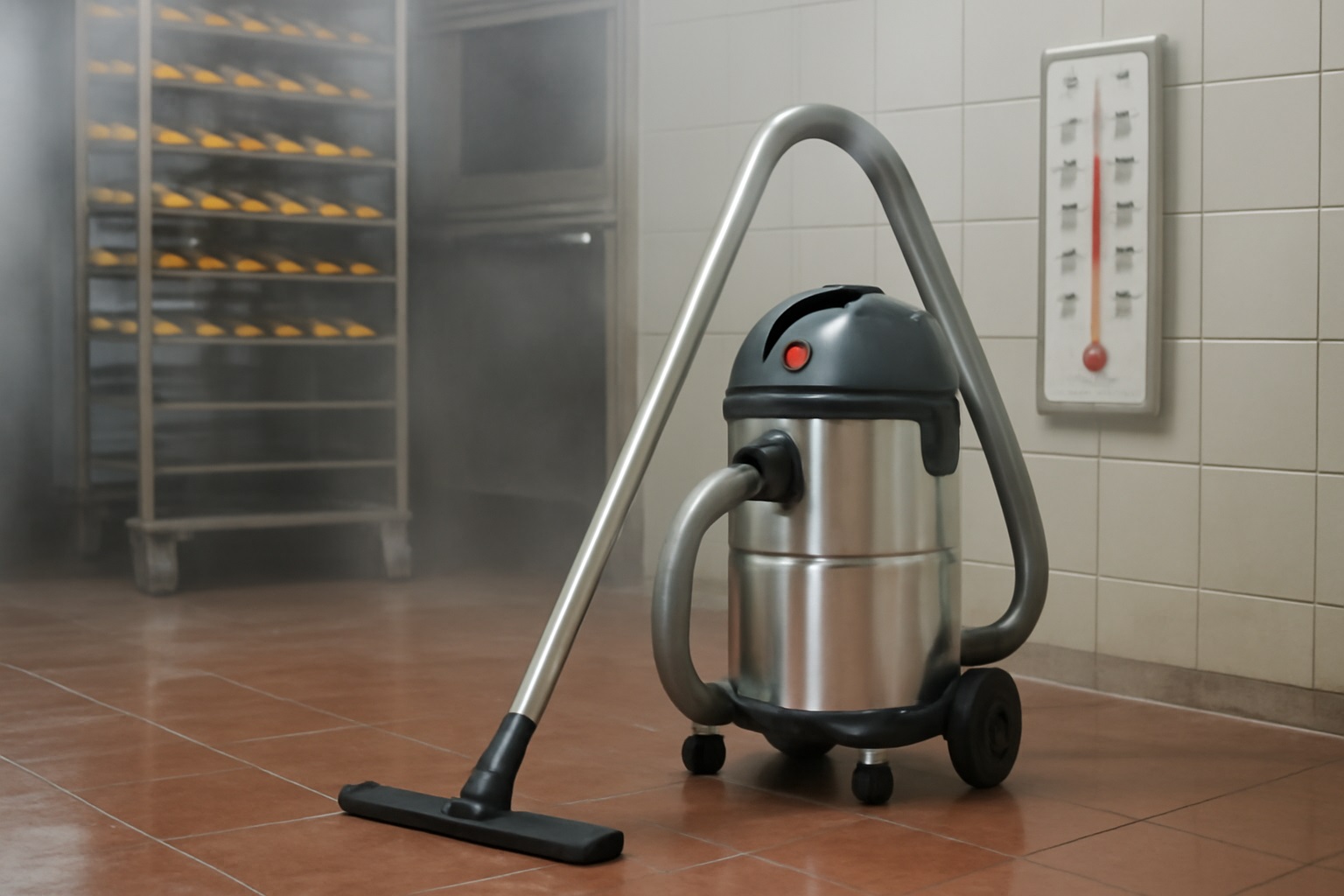
Food production facilities such as bakeries, seafood plants, beverage factories, dairy rooms, and steam-heavy processing areas face extreme environmental conditions. Vacuum systems used in these settings must endure high temperatures, moisture exposure, aggressive cleaning chemicals, and continuous sanitation cycles. Standard industrial vacuums often fail under these conditions, making specialized solutions essential.
This guide explains the engineering principles, materials, filtration design, and compliance requirements for vacuum systems developed for high-temperature and high-humidity food environments.
1. Challenges in High-Temperature & Humidity Food Production
Food factories with elevated heat and moisture levels create harsh operational conditions. Common challenges include:
Rapid corrosion
Mold and microbial growth
Condensation inside equipment
Electrical safety hazards
Reduced motor life
Moisture clogging filters
Warping of polymer components
Allergen and powder adhesion
Vacuum systems must be specially engineered to withstand these stressors.
2. Hygienic Materials Required for Harsh Food Environments
Materials must resist heat, moisture, chemicals, and biological contamination.
Stainless Steel 316 (Preferred)
High corrosion resistance
Chloride- and salt-resistant
Ideal for seafood, dairy, and acidic environments
Stainless Steel 304
Suitable for general high-moisture environments.
High-Temperature Polymers
Heat-stable
Non-shedding
Resistant to steam and hot washing
Food-Grade Seals (EPDM, Viton, Silicone)
Maintain elasticity in hot and wet conditions
Resist caustic cleaning agents
These materials ensure long-term structural and hygienic performance.
3. Waterproof & Moisture-Control Engineering
Vacuum systems must be designed to resist water ingress and internal condensation.
Essential waterproofing features:
Sealed motor housing
IP65 or higher protection
Moisture-resistant electrical components
Anti-condensation air channels
Drainable dust containers
Non-porous surfaces
Waterproof gaskets and connectors
These features prevent short circuits, microbial growth, and system failure.
4. Thermal-Resistant Motor & Electrical Safety
High temperatures can degrade insulation and overload motors.
Thermal-protected vacuums must include:
Overheat protection
Heat-resistant wiring
Temperature-controlled motor systems
High-temperature bearings
Brushless motors with lower heat generation
Airflow channels designed for thermal dissipation
These systems ensure stable suction performance even in hot environments such as ovens, roasting rooms, or frying stations.
5. Filtration Systems for Moisture & Heat Conditions
Filters must handle:
Steam
Hot particles
Condensation
Sticky powders
Fine food dust
Recommended filtration configuration:
Heat-resistant pre-filter
Moisture-resistant fine filter
HEPA H13/H14 filter
Features required:
Anti-microbial surfaces
Anti-clogging design
Washable filter materials
These filtration systems prevent blockage and ensure safe operation.
6. Anti-Corrosion Engineering & Chemical Resistance
Food factories often use aggressive cleaning chemicals such as:
Chlorinated caustics
Acidic foams
Alcohol-based sanitizers
Quaternary disinfectants
Steam cleaning
Vacuum systems must resist:
✔ Corrosion
✔ Rust
✔ Chemical degradation
✔ Pitting
✔ Structural weakening
Stainless steel and coated components ensure long-term durability.
7. Hygienic Design for High-Humidity Conditions
Hygienic construction principles ensure easy cleaning and sanitation:
Smooth stainless-steel surfaces
Seamless housings
Rounded edges
Welded joints
Zero crevice design
Quick-access interior cleaning
Drainable collection tanks
These features reduce microbial growth in humid environments.
8. Contamination Control in Hot & Wet Food Zones
High humidity can increase contamination risks by:
Allowing bacterial growth
Making powders sticky
Encouraging allergen adhesion
Vacuum systems must prevent contamination by:
Using HEPA filtration
Maintaining dry collection chambers
Preventing mold accumulation
Ensuring sealed airflow pathways
Clean and dry vacuum systems reduce food safety hazards.
9. Integration Into High-Humidity Food Industry Workflows
Specialized vacuums are used in:
Seafood processing plants
Dairy rooms
Beverage factories
Breweries
Canning lines
Steam-cooking areas
Bakeries and oven rooms
High-moisture spice or sauce preparation
Integration ensures clean, compliant workflows.
10. Compliance With Global Food Safety Standards
Vacuum systems in high-temperature and humidity zones must comply with:
GMP hygiene requirements
HACCP risk management
ISO 22000 food safety management
FDA cleaning expectations
BRCGS food safety standards
National hygiene regulations
Documentation is essential for regulatory audits.
Conclusion
High-temperature and humidity food environments require vacuum systems engineered with robust materials, waterproof design, anti-corrosion features, and heat-resistant components. With proper filtration, hygienic construction, and GMP-compliant engineering, these vacuum systems ensure safe, efficient, and reliable cleaning even in the harshest food production conditions.
👉 Learn more: www.lxvacuum.com
Target Readers
Food factory cleaning managers
Food production engineers
HACCP coordinators
Seafood and dairy plant managers
Industrial vacuum system manufacturers
QA/QC specialists
Sanitation supervisors
Facility maintenance teams
Food automation integrators
Procurement departments
50 Keywords
high-temperature vacuum system, humidity-resistant vacuum cleaner, food factory vacuum, stainless steel food vacuum, waterproof industrial vacuum, thermal-protected vacuum, heat-resistant vacuum motor, corrosion-proof vacuum cleaner, steam-area vacuum, beverage plant vacuum system, dairy room vacuum, seafood processing vacuum, GMP hygiene vacuum, HACCP cleaning vacuum, IP65 vacuum cleaner, moisture control vacuum, anti-microbial filtration vacuum, HEPA food vacuum system, washable food vacuum, safe material vacuum cleaner, contamination control vacuum, vacuum for high-moisture zones, vacuum for hot food production, vacuum for steam rooms, vacuum for bakeries, vacuum for roasting areas, vacuum for beverage factories, industrial hygiene vacuum cleaner, vacuum for sauce processing areas, anti-corrosion industrial vacuum, durable food vacuum, vacuum for seafood plants, vacuum for dairy environments, vacuum for breweries, vacuum for canning lines, humidity-stable vacuum system, vacuum for hot production zones, safe-airflow industrial vacuum, vacuum for controlled food environments, hygienic design vacuum, food-grade waterproof vacuum, high-efficiency food vacuum, steam-resistant vacuum, hygienic filtration vacuum, washable filter industrial vacuum, vacuum for wet heat areas.