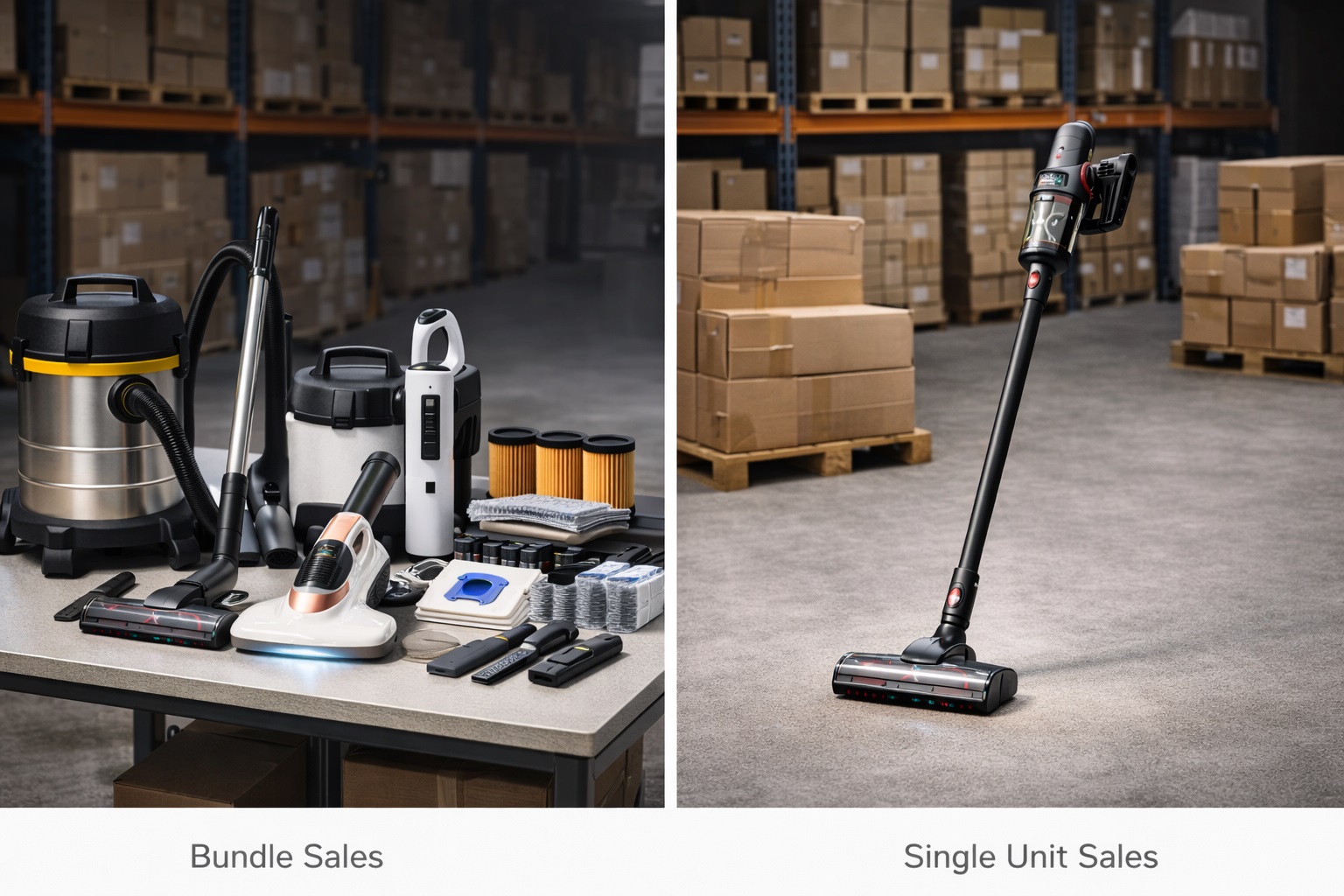
In competitive vacuum cleaner markets, distributors constantly face the same question: should they focus on selling individual vacuum units, or invest in building bundled solutions?
While single unit sales may appear simpler and faster, vacuum bundle sales often deliver deeper, more sustainable profitability. Understanding the differences between these two approaches is essential for distributors aiming to improve margins and long-term growth.
1. Understanding Single Unit Vacuum Sales
Single unit sales involve selling one vacuum cleaner at a time, usually based on price, brand, or a specific feature.
Advantages of single unit sales include:
Simple inventory structure
Easy pricing communication
Faster decision-making for price-driven buyers
However, this model often exposes distributors to intense price competition and margin pressure.
2. What Defines Vacuum Bundle Sales
Vacuum bundle sales combine a primary vacuum cleaner with complementary products such as:
Accessories and tool kits
Consumables like filters and dust bags
Secondary vacuums for specific use cases
Bundles are typically designed around application scenarios rather than individual products.
3. Margin Comparison Between Bundles and Single Units 💰
From a margin perspective, bundle sales usually outperform single unit sales.
Single unit sales:
Are highly price-transparent
Invite direct comparison across suppliers
Often lead to discount-driven negotiations
Vacuum bundles:
As a result, bundles tend to protect and enhance overall profit margins.
4. Impact on Average Order Value
One of the most immediate benefits of bundle sales is higher average order value.
Single unit transactions are limited by the price of one machine. Bundles, on the other hand, naturally increase order size by including accessories, consumables, or additional units that solve related problems.
Higher order value improves logistics efficiency and revenue per customer.
5. Customer Decision Psychology 🧠
Buyers often prefer solutions over components.
Single unit sales require customers to:
Bundles simplify the process by offering ready-made solutions, reducing decision fatigue and increasing conversion rates.
6. Effects on Customer Retention and Repeat Orders 🔄
Single unit sales often end once the machine is delivered.
Bundle-based customers are more likely to:
This creates stronger customer retention and higher lifetime value.
7. Inventory and Operational Considerations
Single unit sales simplify warehousing but can increase SKU competition and slow-moving stock.
Bundle strategies:
Help move accessories and consumables consistently
Balance inventory turnover
Reduce overstock of low-demand items
Well-designed bundles improve inventory efficiency across the product range.
8. Strategic Fit for Distributors and Wholesalers 🌍
From a vacuums procurement and vacuum cleaner distribution standpoint, bundle sales support:
More differentiated market positioning
Stronger B2B relationships
Reduced dependency on price wars
This is especially valuable for Distributor and wholesale channels serving competitive regions.
9. When Single Unit Sales Still Make Sense
Single unit sales are not obsolete.
They remain effective for:
However, even in these cases, single unit sales can serve as an entry point to future bundle upgrades.
10. Long-Term Profitability and Brand Strategy
Brands that support bundling strategies enable distributors to:
Companies like Lanxstar focus on ecosystem-based product development to support long-term distributor profitability.
Conclusion
Vacuum bundle sales consistently outperform single unit sales in terms of margin protection, order value, and customer retention. While single unit sales remain useful for market entry, bundle strategies offer a more powerful path to sustainable growth for distributors.
For distributors seeking stronger profitability and differentiation in vacuum cleaner distribution, bundling is not just an option—it is a competitive advantage.
For more insights into bundle strategies and professional cooperation, visit www.lxvacuum.com.
Target Readers
Vacuum cleaner distributors and wholesalers
B2B sales and channel managers
Commercial cleaning equipment buyers
Procurement and sourcing professionals
OEM and private-label vacuum brands
50 Related Keyword Groups
Lanxstar vacuum cleaner, vacuum bundle sales, single unit vacuum sales, distributor profit strategy, B2B vacuum sales, vacuum cleaner wholesale, vacuum cleaner distributor, Distributor vacuum strategy, wholesale vacuum cleaner, vacuums procurement, vacuum cleaner distribution, vacuum bundle pricing, vacuum sales margin optimization, vacuum bundle vs single sale, cleaning equipment bundle strategy, commercial vacuum bundles, vacuum accessory bundles, vacuum consumables packs, vacuum after-sales strategy, recurring vacuum revenue, vacuum customer lifetime value, B2B cleaning equipment sales, vacuum portfolio strategy, solution-based vacuum selling, vacuum upselling strategy, bundle pricing advantage, vacuum order value increase, distributor margin protection, vacuum inventory optimization, vacuum channel strategy, OEM vacuum bundling, private label vacuum bundles, vacuum sales differentiation, professional vacuum solutions, cleaning equipment distribution strategy, vacuum sales conversion improvement, bundle-based selling model, wholesale vacuum profitability, vacuum sales ecosystem, vacuum aftermarket strategy, vacuum platform products, long-term vacuum partnerships