Hi, message us with any questions.
We're happy to help!





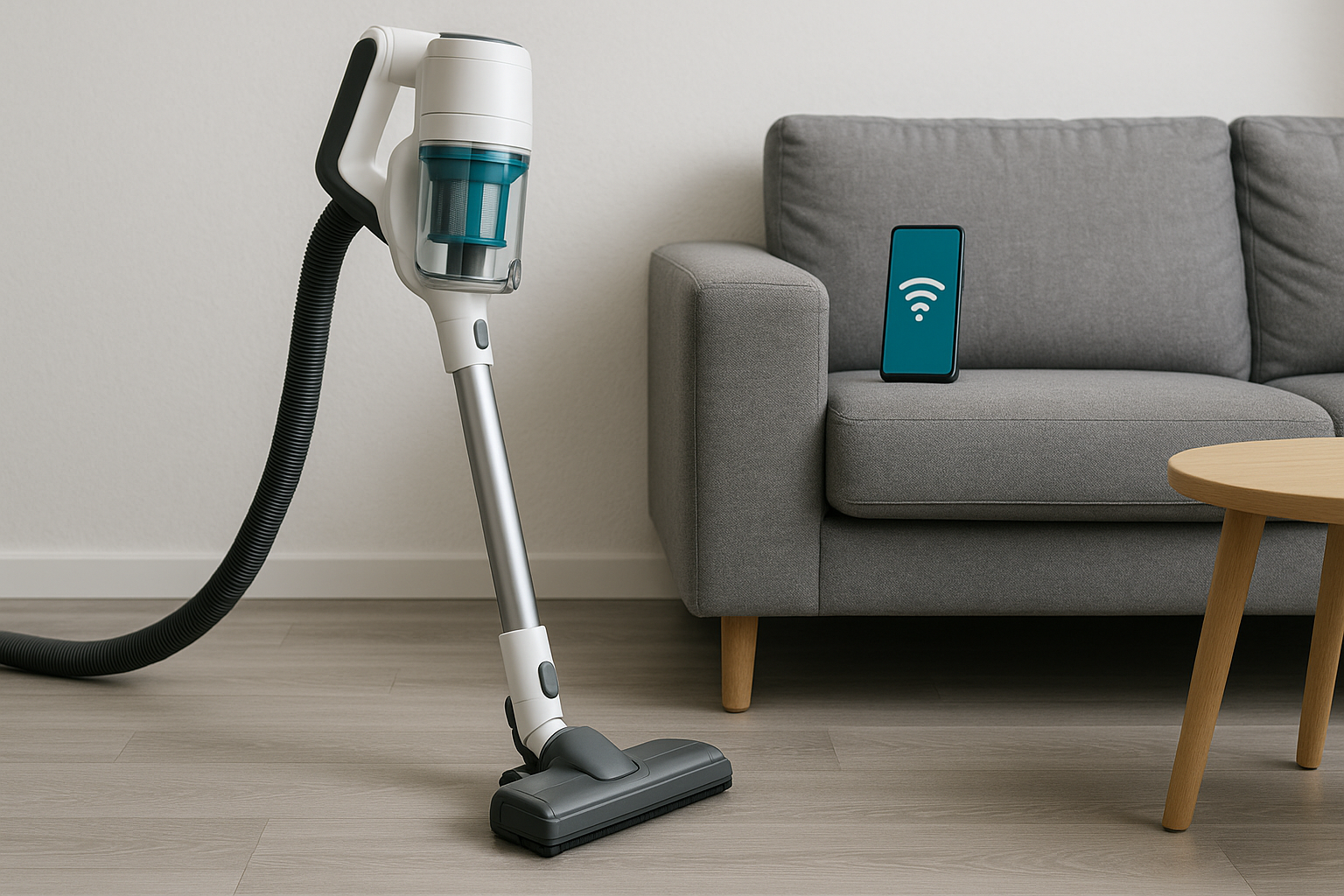
The cleaning industry is rapidly modernizing, shifting from manual processes to fully digital, intelligent workflows powered by IoT (Internet of Things). IoT technology connects smart vacuums, cleaning robots, wet–dry devices, and facility management platforms—creating a more efficient, automated, and hygienic cleaning ecosystem.
Today’s most advanced cleaning machines integrate IoT with HEPA Filter Vacuum Cleaner systems, High Suction Vacuum Cleaner motors, cordless technology, and automated wet–dry cleaning. These innovations redefine how commercial facilities maintain cleanliness, safety, and operational efficiency.
This article explores the practical IoT applications reshaping the cleaning industry and their impact on modern facility management.
1. IoT Enables Real-Time Monitoring of Cleaning Equipment 📡📊
IoT-connected vacuum systems allow facility managers to monitor equipment performance in real time.
Key real-time data includes:
📍 Battery status
📍 Suction performance
📍 Filter condition (HEPA alerts)
📍 Water tank levels (wet–dry models)
📍 Cleaning duration
📍 Device location tracking
📍 Maintenance notifications
Devices like:
4 in 1 Cordless Smart Wet & Dry Vacuum Cleaner
Self-Cleaning Vacuum Cleaner
Multi-Functional Durable Vacuum Cleaner
send updates directly to dashboards or mobile apps.
This eliminates guesswork and ensures machines stay operational at peak performance.
2. Smart Scheduling and Automated Cleaning Cycles 🤖🕒
Traditional cleaning schedules rely on human planning, often resulting in over-cleaned or under-cleaned areas.
IoT solves this by enabling:
✔ Automated cleaning schedules
✔ Zone-based task assignment
✔ Usage-driven cleaning routines
✔ Trigger-based cleaning (motion or dirt sensor alerts)
Robotic vacuums equipped with:
High Suction Vacuum Cleaner modules
quiet vacuum cleaner technology
can clean during off-hours, minimizing disruption in corporate offices, hotels, and hospitals.
3. Predictive Maintenance Reduces Downtime 🛠️📈
IoT empowers predictive maintenance—an essential upgrade for busy commercial environments.
Predictive maintenance provides:
🔧 Early detection of part wear
🔧 Battery performance analysis
🔧 Suction loss alerts
🔧 Filter clogging warnings
🔧 Motor temperature monitoring
This prevents sudden failures in devices such as:
Wet Dry Vacuum Cleaners
Large-Capacity Wet Dry Vacuum Cleaner
Cordless Vacuum Cleaner
Reducing downtime improves reliability and reduces repair costs.
4. IoT Improves Hygiene Compliance and Audit Reporting 🧼📑
Hospitals, airports, warehouses, and public facilities require strict hygiene validation.
IoT helps by generating:
📍 Time-stamped cleaning logs
📍 Digital audit trails
📍 Proof-of-cleaning records
📍 Compliance reports
📍 Sensor-based cleanliness verification
These capabilities are essential for industries with strict compliance rules:
Healthcare
Food production
Government buildings
Education facilities
Smart devices help organizations pass audits with confidence.
5. Energy Optimization and Power-Saving Intelligence ⚡🌱
Energy efficiency is a growing priority for commercial cleaning operations.
IoT helps reduce energy consumption by:
✔ Auto-switching devices to low-power mode
✔ Optimizing suction according to dirt levels
✔ Tracking energy usage for reporting
✔ Smart charging cycles for cordless vacuums
Energy-saving models like:
Energy-Saving Efficient Powerful Vacuum Cleaner
Fast Lightweight Vacuum Cleaner
benefit significantly from IoT-powered optimization.
6. Asset Tracking for Cleaning Equipment 📍🔍
Large facilities often lose track of cleaning machines due to frequent movement.
IoT allows:
📍 GPS or indoor-position tracking
📍 Anti-loss alerts
📍 Route optimization
📍 Area cleaning coverage heatmaps
This is especially useful for:
Cordless Vacuum Cleaner fleets
commercial wet dry vac units
Robotic cleaners
Asset visibility improves accountability and operational efficiency.
7. IoT Enables Smart Wet–Dry Cleaning 💧🤖
Smart wet–dry vacuums improve hygiene by automating water and tank management.
Systems such as:
Wet and Dry Vacuum Cleaner
dual-tank wet dry cleaner
Wet Dry Vacuum Cleaners
use IoT to:
✔ Track water tank levels
✔ Auto-clean water pathways
✔ Prevent cross-contamination
✔ Disable operation when tanks are improperly installed
This ensures sanitation standards remain consistently high.
8. Enhanced Safety and Risk Reduction ⚠️🛡️
IoT contributes to safer cleaning workflows through:
✔ Overheat protection alerts
✔ Spillage detection
✔ Slip hazard notifications
✔ Smart-lock safety controls
✔ Device misuse alerts
Hospital and public-facility cleaning teams benefit from improved safety compliance.
9. Integrated Fleet Management for Large Facilities 🏢📈
IoT consolidates all cleaning equipment into a single fleet management system.
Facility managers can:
📍 View every device in one dashboard
📍 Assign zones to workers or robots
📍 Monitor cleaning performance per area
📍 Receive alerts for maintenance needs
📍 Compare energy usage across devices
This transforms cleaning from manual management to digital command centers.
10. IoT Creates a Foundation for Autonomous Cleaning Ecosystems 🚀🌐
The integration of IoT with smart vacuum technologies is paving the way for fully autonomous cleaning operations.
Future possibilities include:
🤖 Multi-robot coordination
🌐 Cloud-based facility optimization
🧠 AI-driven cleanliness prediction
🔋 Ultra-efficient power management
🌿 Sustainability tracking
IoT will continue to evolve, creating more connected, intelligent, and eco-friendly cleaning environments.
Conclusion: IoT Is the Future Backbone of the Cleaning Industry ✨📡
IoT technology is transforming manual cleaning workflows into intelligent, automated, and measurable operations. From real-time monitoring and predictive maintenance to smart suction control and facility-wide fleet management, IoT enhances performance and sustainability across all commercial sectors.
Smart vacuums—HEPA-enabled, cordless, wet–dry, multi-functional—will lead the next wave of digital cleaning innovation. The more connected cleaning equipment becomes, the more efficient and hygienic modern facilities will be.
50 Tags
High Suction Vacuum Cleaner, Portable Quiet Vacuum Cleaner, Self-Cleaning Vacuum Cleaner, Multi-Functional Durable Vacuum Cleaner, Fast Lightweight Vacuum Cleaner, Energy-Saving Efficient Powerful Vacuum Cleaner, Large-Capacity Wet Dry Vacuum Cleaner, Li-ion Cordless Handheld Vacuum Cleaner, Wet Dry Vacuum Cleaners, 4 in 1 Cordless Smart Wet & Dry Vacuum Cleaner, cordless handheld vacuums, Cordless Vacuum Cleaner, Car Vacuum Cleaner, quiet vacuum cleaner, wet dry vacuum, Portable Vacuum for Travel, HEPA Filter Vacuum Cleaner, Apartment Vacuum Cleaner, Wet and Dry Vacuum Cleaner, Quiet Vacuum for Night Use, Vacuum Cleaner for Pet Hair, Vacuum Cleaner for Hardwood Floors, best vacuum on a budget, best budget hoover, good budget vacuum, best affordable vacuum, best budget vacuum, best value for money hoover, best value hoover, best vacuum cleaners on a budget, best vacuums on a budget, good budget vacuum cleaner, vacuums procurement, vacuum cleaner distribution, Lanxstar, industrial vacuum supplier, commercial wet dry vac, cordless cleaning equipment, smart auto-clean vacuum, handheld vacuum for car detailing, hotel cleaning vacuum, home cleaning vacuum, HEPA filtration system vacuum, portable car cleaner, lightweight smart vacuum, rechargeable cordless vacuum, pro-grade suction vacuum, multi-surface vacuum cleaner, dual-tank wet dry cleaner.