Hi, message us with any questions.
We're happy to help!





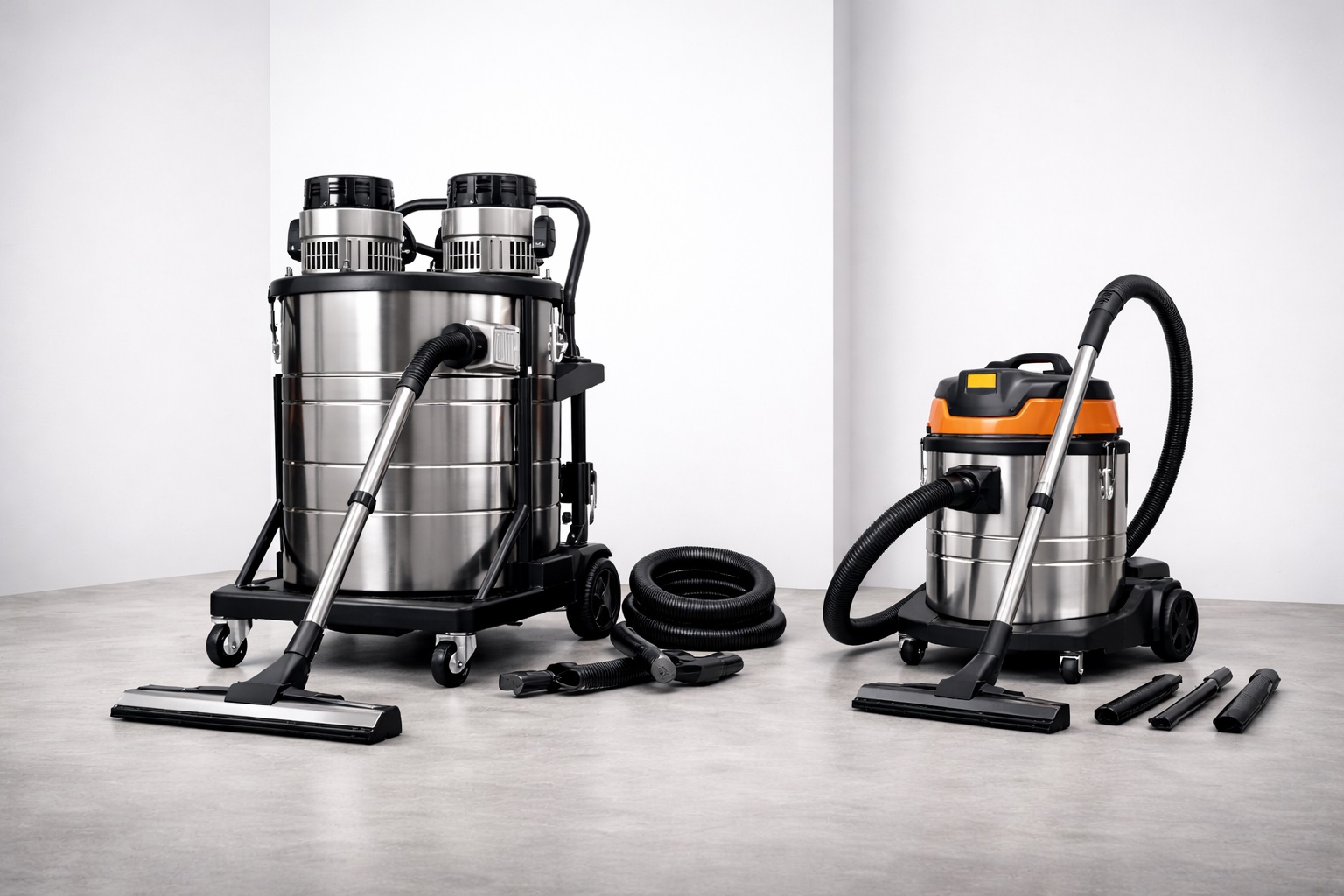
Maintaining clean and safe environments is essential for businesses across industries. From factories and warehouses to offices and retail spaces, different workplaces generate different types of debris that require specialized cleaning equipment.
One of the most common questions businesses ask when purchasing professional cleaning equipment is the difference between industrial vacuum vs commercial vacuum systems. While both machines perform similar cleaning functions, they are designed for very different workloads, environments, and debris types.
This guide explains the differences between industrial and commercial vacuum systems, their applications, and how businesses can choose reliable wet dry vacuum manufacturers and wet dry vacuum suppliers when sourcing professional cleaning equipment vacuum systems.
🏭 What Is an Industrial Vacuum
An industrial vacuum is designed for heavy-duty cleaning tasks in demanding environments such as factories, manufacturing facilities, workshops, and construction sites.
Industrial machines are built to handle:
Large volumes of dust and debris
Heavy particles such as metal chips or wood dust
Continuous operation in harsh environments
Industrial floor and machinery cleaning
A typical factory vacuum cleaner is engineered with powerful motors, durable materials, and large tank capacities to support demanding industrial cleaning operations.
Many of these machines are produced by specialized wet dry vacuum manufacturers that focus on industrial cleaning equipment engineering.
🧹 What Is a Commercial Vacuum
A commercial vacuum is designed for routine cleaning tasks in environments such as offices, hotels, retail stores, schools, and commercial buildings.
Typical uses include:
Carpet and floor maintenance
Daily facility cleaning
Removing light dust and debris
Maintaining customer-facing environments
Commercial machines prioritize portability, lower noise levels, and ease of use.
These machines are often supplied through professional wet dry vacuum suppliers serving facility management companies and cleaning service providers.
⚙️ Key Differences Between Industrial Vacuum and Commercial Vacuum
| Feature | Industrial Vacuum | Commercial Vacuum |
|---|---|---|
| Application | Factories, workshops | Offices, retail spaces |
| Motor Power | High power | Moderate power |
| Tank Capacity | 50L – 90L | 20L – 40L |
| Durability | Heavy-duty construction | Moderate durability |
| Operating Time | Continuous operation | Scheduled cleaning |
Industrial vacuums prioritize performance and durability, while commercial machines focus on convenience and portability.
📊 Industrial vs Commercial Vacuum Performance Comparison
| Specification | Industrial Vacuum | Commercial Vacuum |
|---|---|---|
| Motor Power | 1200W – 3000W | 800W – 1200W |
| Tank Capacity | 50L – 90L | 20L – 40L |
| Usage Frequency | Continuous | Periodic |
| Debris Type | Heavy dust, chips | Light debris |
| Machine Weight | Heavier | Lighter |
Matching the equipment specifications with the working environment helps businesses select the most efficient cleaning solution.
📌 Quick Decision Guide
| If Your Business Environment Is | Recommended Vacuum |
|---|---|
| Office or retail cleaning | Commercial vacuum |
| Hotel or hospitality cleaning | Commercial vacuum |
| Workshop or garage cleaning | Industrial vacuum |
| Factory or production facility | Industrial vacuum |
This quick guide helps businesses determine whether they need industrial cleaning equipment vacuum systems or lighter commercial machines.
🏭 Common Applications for Industrial Vacuums
Industrial vacuum systems are widely used in environments that generate large volumes of debris or require continuous cleaning.
Typical applications include:
Manufacturing plants
Metal processing facilities
Furniture production workshops
Construction sites
Warehouse maintenance
In these environments, a powerful factory vacuum cleaner helps maintain workplace safety and productivity.
🧼 Typical Applications for Commercial Vacuums
Commercial vacuum systems are used for regular facility maintenance tasks.
Common commercial environments include:
Office buildings
Hotels and hospitality facilities
Shopping centers
Educational institutions
Cleaning service companies
These environments require equipment that is easy to operate and transport.
🔧 Industrial Vacuum Types Used in Factories
Industrial cleaning environments often use different types of vacuum systems depending on the application.
Common industrial vacuum types include:
Wet Dry Vacuum
Handles both liquid spills and solid debris, making it one of the most versatile industrial cleaning machines.
Dust Extractor Systems
Designed for capturing fine dust from machinery such as woodworking tools or metal processing equipment.
Central Vacuum Systems
Installed in large manufacturing facilities to support centralized dust collection.
Many professional machines are developed by experienced wet dry vacuum manufacturers that specialize in industrial cleaning equipment engineering.
❓ Can a Commercial Vacuum Replace an Industrial Vacuum?
In some cases, businesses may consider using commercial machines in light industrial environments.
However, commercial vacuums typically have:
Smaller motors
Lower tank capacity
Reduced durability
As a result, they may struggle with heavy debris or continuous cleaning tasks.
For environments such as factories, workshops, and warehouses, a dedicated industrial vacuum or factory vacuum cleaner is usually the more reliable solution.
🏭 Case Study: Manufacturing Facility Upgrading Cleaning Equipment
A manufacturing facility producing metal components experienced heavy dust accumulation around production equipment.
The factory initially used small commercial vacuums that struggled with metal debris and required frequent maintenance.
The facility upgraded to a professional factory vacuum cleaner developed by a specialized wet dry vacuum manufacturer.
The new system included:
1600W industrial motor
80L stainless steel tank
high-efficiency filtration system
The upgrade improved cleaning efficiency and reduced equipment downtime.
🧰 Case Study: Cleaning Service Company Choosing Portable Equipment
A commercial cleaning company responsible for multiple office buildings required lightweight machines for daily facility maintenance.
The company selected portable machines supplied by a reliable wet dry vacuum supplier designed for commercial environments.
The machines included:
1000W motor power
30L tank capacity
compact design for easy mobility
These machines enabled cleaning teams to efficiently maintain multiple facilities.
🏭 OEM Wet Dry Vacuum Opportunities for Equipment Brands
Many cleaning equipment brands collaborate with factories that specialize in OEM wet dry vacuum manufacturing.
OEM partnerships allow companies to:
Launch customized vacuum products
Develop branded cleaning equipment
Reduce manufacturing investment
Expand into new industrial markets
Working with a professional wet dry vacuum manufacturer allows distributors and equipment brands to develop specialized cleaning equipment for factories and commercial facilities.
📋 Checklist: Choosing a Wet Dry Vacuum Supplier
Businesses purchasing cleaning equipment should evaluate suppliers carefully.
Key considerations include:
Does the supplier specialize in professional cleaning equipment manufacturing?
What vacuum performance specifications are available?
Are filtration systems suitable for industrial environments?
Does the supplier support OEM wet dry vacuum customization?
Are spare parts available for long-term maintenance?
Working with a reliable wet dry vacuum supplier ensures long-term equipment reliability.
❓ FAQ: Industrial vs Commercial Vacuum Questions
What is the difference between industrial and commercial vacuum cleaners?
Industrial vacuum cleaners are designed for heavy-duty environments such as factories and workshops, while commercial vacuums are intended for daily cleaning tasks in offices and retail facilities.
Can commercial vacuums handle factory debris?
Commercial machines may work for light cleaning tasks, but heavy debris typically requires specialized factory vacuum cleaners.
Do companies develop OEM industrial vacuum products?
Yes. Many cleaning equipment brands collaborate with professional wet dry vacuum manufacturers to produce customized vacuum systems through OEM wet dry vacuum programs.
🔮 Future Trends in Cleaning Equipment Vacuum Systems
The professional cleaning equipment industry continues to evolve as businesses seek more efficient maintenance solutions.
Key trends include:
Higher suction efficiency with lower energy consumption
Advanced filtration systems for industrial dust control
More compact industrial cleaning equipment
Customized solutions through OEM wet dry vacuum manufacturing
These innovations help businesses maintain cleaner and safer workplaces.
🎯 Conclusion
Understanding the difference between industrial vacuum vs commercial vacuum systems helps businesses select the most suitable cleaning equipment for their operational environments.
Industrial machines provide durability and performance for factory environments, while commercial vacuums offer portability and convenience for facility maintenance.
By partnering with reliable wet dry vacuum manufacturers and wet dry vacuum suppliers, businesses can access professional cleaning equipment designed for their specific operational needs.
📌 Suitable Audience
Facility maintenance managers
Industrial equipment distributors
Commercial cleaning service companies
Factory operations managers
Cleaning equipment entrepreneurs
📌 Hashtags
wet dry vacuum manufacturer, wet dry vacuum supplier, OEM wet dry vacuum, industrial vacuum vs commercial vacuum, factory vacuum cleaner, cleaning equipment vacuum, industrial cleaning equipment, commercial cleaning machines, factory cleaning equipment, warehouse cleaning systems, industrial maintenance equipment, professional vacuum cleaner supplier, industrial vacuum solutions, commercial facility cleaning equipment, industrial cleaning technology, vacuum cleaner OEM factory, professional cleaning equipment supplier, industrial vacuum engineering, cleaning equipment distributors, facility management cleaning tools, warehouse maintenance equipment, vacuum cleaner customization, industrial equipment manufacturers, commercial cleaning solutions, cleaning equipment market trends, professional cleaning industry equipment, industrial cleaning machines supplier, vacuum cleaner supply chain, facility cleaning equipment supplier, professional industrial vacuum equipment, cleaning equipment wholesale, industrial cleaning efficiency tools, vacuum cleaner engineering, professional cleaning technology, industrial vacuum innovation, cleaning equipment distributors network, industrial cleaning solutions provider, professional vacuum systems, facility maintenance cleaning machines, commercial building cleaning equipment, industrial vacuum technology, vacuum cleaner global market, industrial equipment entrepreneurs, Lanxstar