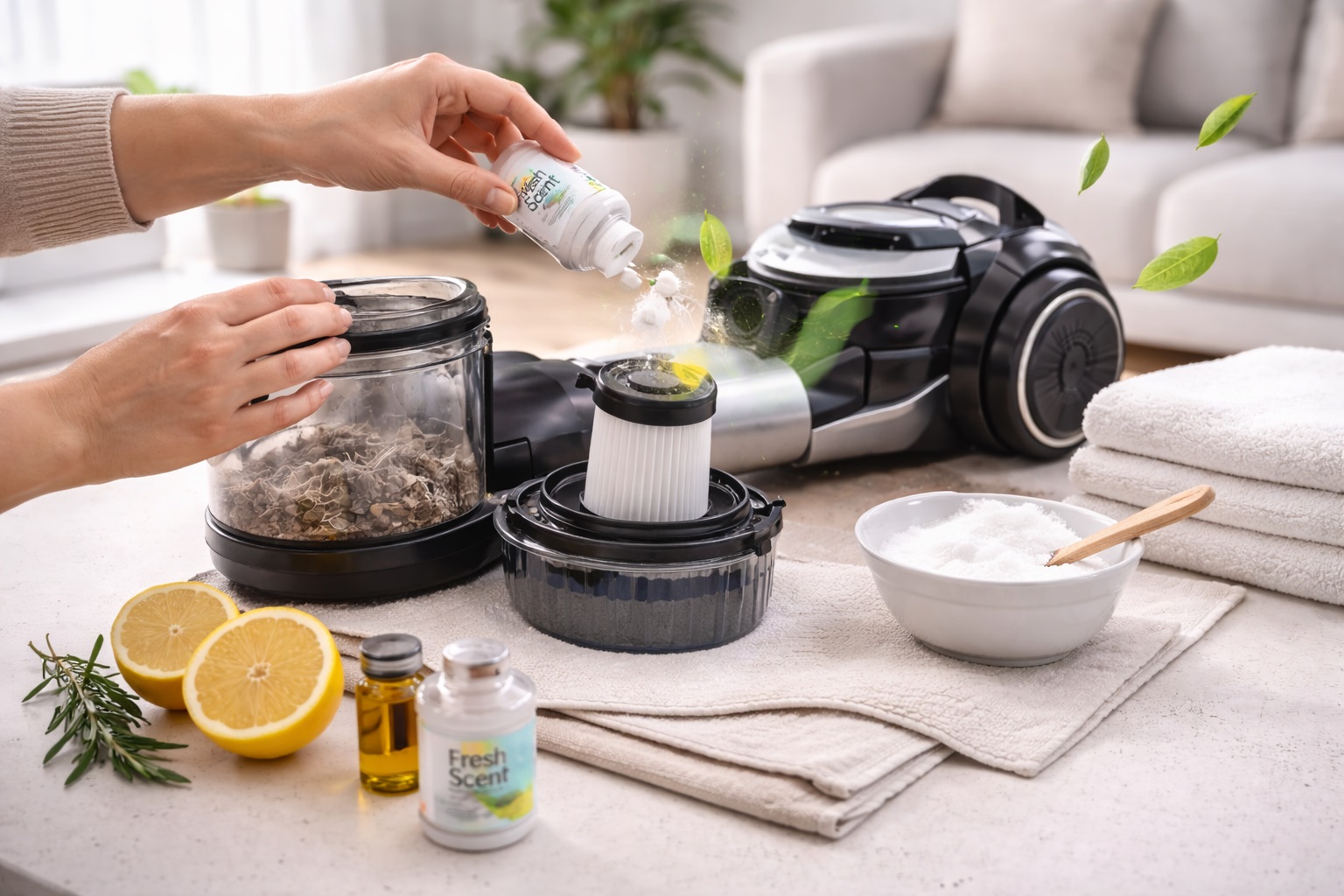
🎯 Target Audience
Homeowners, pet owners, apartment residents, and anyone who wants to maintain a fresh-smelling vacuum cleaner while extending its lifespan and improving indoor air quality.
Introduction: Why Your Vacuum Cleaner Smells
Vacuum cleaners are designed to remove dirt and debris, but over time, they can develop unpleasant odors. The smells may come from dirt, pet hair, mold, or even dust buildup in places you can’t see. The good news is: you don’t have to tolerate those smells.
In this guide, we’ll show you how to keep your Upright Vacuum Cleaners, Household Vacuum Cleaners, HEPA Filter Vacuum Cleaner models, Portable Self-Cleaning Vacuum Cleaners, Quiet Vacuum Cleaners, and Vacuum Cleaner for Pet Hair smelling fresh with simple, effective cleaning tips.
🔍 Why Does My Vacuum Smell?
Vacuum cleaners trap dirt, dust, and debris, but when they’re not cleaned properly, the debris can build up and cause bad odors. Here are common sources of vacuum smells:
Pet Hair: Pet hair, when not removed regularly, can decompose and create a stale odor.
Mold and Moisture: If your vacuum has been used on wet surfaces or stored improperly, mold can grow inside the vacuum.
Dirty Filters: Clogged or dirty filters can harbor odors and reduce suction.
Dust and Debris: Dust and small debris in the bag or bin can produce a musty smell.
🧠 Step 1: Empty the Dust Bin After Every Use
A full dust canister is the most common cause of odor buildup.
Best practice:
Empty the dust bin immediately after every use to prevent smells from forming.
If you forget, you may find your vacuum releasing odors every time you turn it on.
For Household Vacuum Cleaners and Upright Vacuum Cleaners, a quick emptying routine prevents odor-causing debris from lingering inside.
🧼 Step 2: Clean the Vacuum Filters Regularly
A HEPA Filter Vacuum Cleaner works hard to trap fine particles, but if the filter is not cleaned regularly, it can harbor mold, bacteria, and dust, which leads to unpleasant smells.
To keep your vacuum smelling fresh:
Clean or replace the filter every 1-3 months (depending on your usage).
For Portable Self-Cleaning Vacuum Cleaner models, run the self-cleaning function regularly to keep the filters in top condition.
Pro Tip: If your vacuum cleaner smells musty, soak the filter in warm soapy water and let it dry thoroughly before reinserting.
🌿 Step 3: Use a Deodorizing Disc or Scented Bag
You can add a deodorizing disc or a scented vacuum bag to your vacuum cleaner to keep it smelling fresh between deep cleans.
Best practice:
Use a scented filter or deodorizing disc specifically designed for vacuums. These discs help neutralize odors without releasing artificial fragrances.
Make sure the scent doesn’t clog airflow. Always choose vacuum-safe deodorizers.
For a Quiet Vacuum Cleaner, this method works well to keep your machine quiet while ensuring it doesn’t smell.
🧳 Step 4: Clean the Brush Roll and Beater Bar
The brush roll can trap hair, dirt, and dust, which can contribute to bad smells if left uncleaned.
What to do:
Remove pet hair and debris tangled around the brush roll at least once a month.
Use a damp cloth to wipe the brush and beater bar. This will prevent odor-causing buildup while also improving cleaning performance.
For Vacuum Cleaner for Pet Hair, this step is especially crucial to ensure that accumulated pet hair doesn’t lead to unpleasant smells.
🧴 Step 5: Vacuum Regularly and Avoid Overstuffing Bags
Regular vacuuming is not only about cleanliness but also about reducing odors.
To keep your vacuum cleaner from smelling:
Don’t let the dust bag get too full. Overfilled bags cause blockages, reduced airflow, and trapped odors.
Vacuum more frequently to avoid dust buildup in the machine. This also prevents stale smells from lingering.
🌬️ Step 6: Keep Your Vacuum Cleaner Dry and Clean the Hose
Moisture is a breeding ground for mold and bacteria, which are a major source of bad smells.
After each cleaning session, make sure to check the hose for moisture.
If the hose gets wet, leave it to dry in a well-ventilated area.
Clean the hose periodically to remove any trapped debris that could cause odors.
❌ Common Mistakes That Cause Your Vacuum to Smell
Here are some things to avoid when maintaining your vacuum cleaner:
Not replacing the filter regularly, causing the buildup of bacteria and odors.
Ignoring pet hair—pet hair in the brush roll and hoses can decompose and produce bad smells.
Not emptying the dust bin often enough, allowing smells to build up.
Using non-vacuum-safe air fresheners that could damage your machine’s internal components.
✅ Conclusion
Keeping your vacuum cleaner smelling fresh is easier than you think with the right maintenance routine. By regularly cleaning the dust bin, changing filters, and taking simple steps to prevent pet hair and moisture buildup, you can ensure your Household Vacuum Cleaners, Upright Vacuum Cleaners, HEPA Filter Vacuum Cleaner models, and Vacuum Cleaner for Pet Hair continue to perform well and smell fresh for years.
A clean vacuum not only works better but keeps your home smelling fresher too.
📌 Suitable Readers
Pet owners
Apartment and home residents
Allergy-sensitive households
Families looking to maintain a clean, fresh-smelling home
Anyone wanting to prolong the life of their vacuum cleaner
📌 Hashtags
Upright Vacuum Cleaners, Household Vacuum Cleaners, HEPA Filter Vacuum Cleaner, Portable Self-Cleaning Vacuum Cleaner, Quiet Vacuum Cleaner, Quiet Vacuum for Night Use, Vacuum Cleaner for Pet Hair, Vacuum Maintenance Tips, Household Cleaning Guide, Pet Hair Removal, Vacuum Cleaning Tips, Fresh Smelling Vacuum, Vacuum Filter Cleaning, Vacuum Deodorizer, Vacuum Cleaner Care, Clean Air Home, Indoor Air Quality, Allergy Friendly Cleaning, Low Noise Vacuum, Pet Friendly Cleaning, Vacuum Performance Tips, Smart Cleaning Routine, Practical Cleaning Tips, Home Care Solutions, Minimal Effort Cleaning, Effective Vacuum Use, Pet Hair Cleaning, Home Hygiene Solutions, Easy Vacuum Maintenance, Household Appliance Care, Clean Home Lifestyle, Easy Home Maintenance, Regular Vacuum Cleaning, Dust Control Solutions, Efficient Home Care, Pet Hair Free Home, Quiet Home Cleaning, Efficient Vacuum Use, Time Saving Maintenance, Vacuum Care Guide, Sustainable Home Appliances, Long Lasting Vacuums, Regular Appliance Care, Vacuum Troubleshooting, Lanxstar