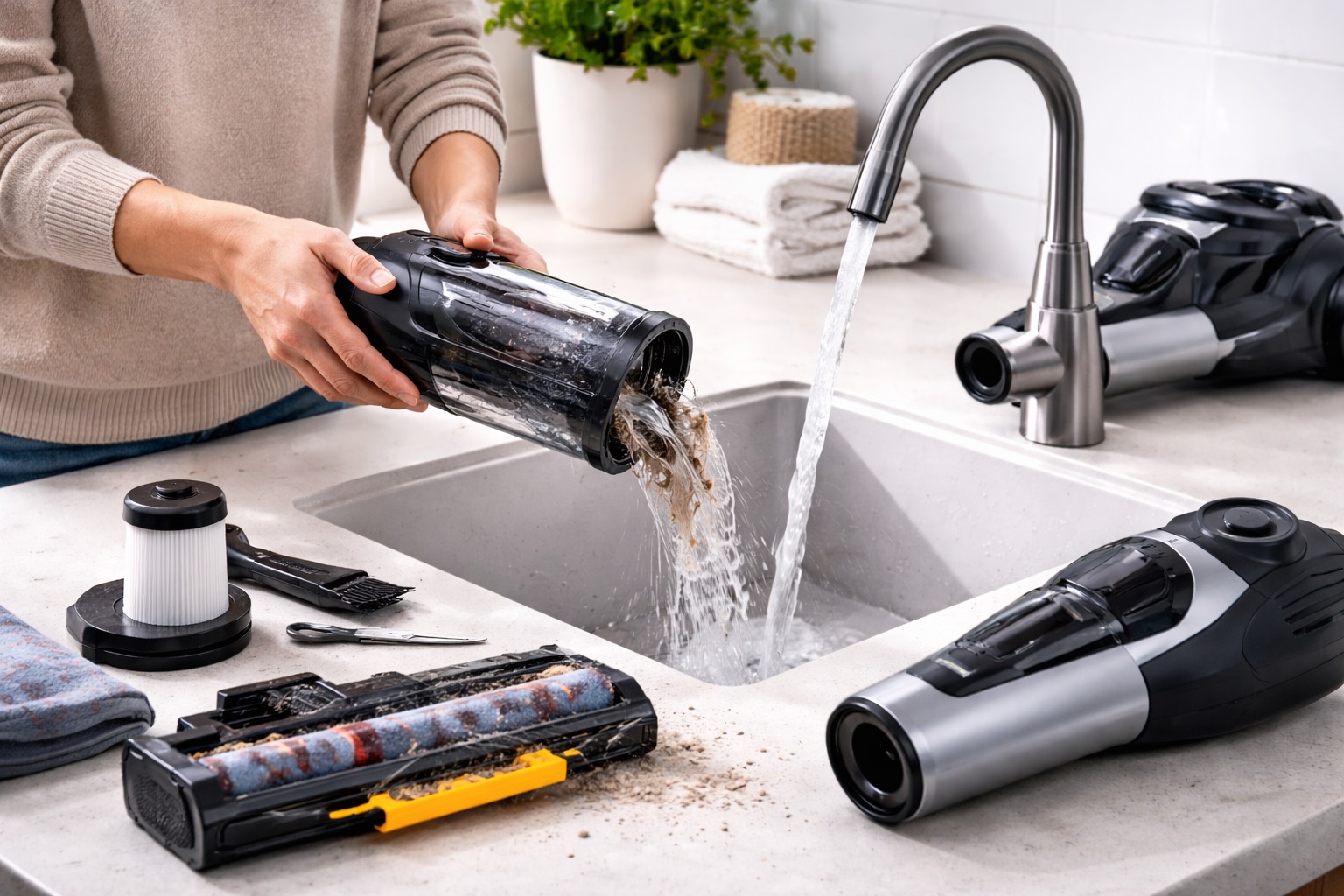
🎯 Target Audience
Homeowners, apartment residents, families, and users who want consistent vacuum performance, low noise, and longer product lifespan.
Introduction: Why Cleaning Your Vacuum Matters More Than You Think
Many people focus on cleaning their homes, but forget one critical detail:
the vacuum cleaner itself also needs regular cleaning.
When a vacuum is not cleaned on time, dust buildup, clogged filters, and tangled brushes can lead to weaker suction, higher noise levels, and shorter lifespan. This applies to Household Vacuum Cleaners, Upright Vacuum Cleaners, and even modern self-cleaning models.
So how often should you clean your vacuum?
This guide explains the ideal cleaning frequency and best maintenance practices to keep your vacuum efficient, quiet, and reliable.
🔍 What Happens If You Don’t Clean Your Vacuum Regularly
Skipping maintenance causes gradual performance loss.
Common problems include:
Reduced suction and airflow
Increased operating noise
Overheating motors
Dust and allergens released back into the air
Even a Quiet Vacuum Cleaner becomes louder when airflow is restricted.
🗓️ How Often Should You Clean Your Vacuum? (Quick Answer)
Here is a practical frequency guide for most homes:
After every use: Check and empty dust container
Weekly: Inspect brushes and remove visible hair or debris
Monthly: Clean or inspect filters and hoses
Every 3–6 months: Deep-clean internal components and replace filters if needed
This schedule keeps performance stable without adding unnecessary work.
🏠 Household Vacuum Cleaners: Simple, Consistent Care
For Household Vacuum Cleaners used several times per week:
Best practices:
Empty the dust bin before it reaches full capacity
Wipe the container to prevent fine dust buildup
Inspect airflow openings once a month
Regular light maintenance prevents long-term suction loss.
🧩 Upright Vacuum Cleaners: Focus on Brushes and Airflow
Upright Vacuum Cleaners handle heavy debris and carpets, making brush care essential.
Recommended frequency:
Remove hair from brush rolls weekly
Check belt and brush rotation monthly
Inspect hoses for blockages every 1–2 months
Ignoring brush maintenance is one of the most common reasons uprights lose effectiveness.
🔁 Portable Self-Cleaning Vacuum Cleaner: Still Needs Attention
A Portable Self-Cleaning Vacuum Cleaner reduces manual work—but does not eliminate it.
Best practice:
Activate self-cleaning features regularly
Perform visual inspections monthly
Clean sensors and air paths occasionally
Self-cleaning systems help maintain performance, but human checks prevent hidden issues.
🌬️ HEPA Filter Vacuum Cleaner: Clean on Schedule, Not on Guesswork
HEPA filters trap fine dust and allergens—but clog over time.
For a HEPA Filter Vacuum Cleaner:
Dirty HEPA filters reduce airflow and increase noise, even if suction feels strong at first.
🔇 Quiet Vacuum Cleaner: Maintenance Keeps It Quiet
Noise increases when airflow becomes unstable.
A properly maintained Quiet Vacuum Cleaner stays quiet because:
If a vacuum becomes louder over time, cleaning—not replacement—is often the solution.
🌙 Quiet Vacuum for Night Use: Why Timing Matters
A Quiet Vacuum for Night Use depends on optimal airflow.
To keep night cleaning comfortable:
Clean filters before evening use
Empty dust bins after each session
Avoid operating with partially blocked air paths
Quiet performance is directly linked to cleanliness inside the machine.
📋 Simple Vacuum Cleaning Schedule (Easy to Follow)
After Every Use
Weekly
Monthly
Clean or inspect filters
Inspect hoses and wheels
Every 3–6 Months
This routine takes minimal time but prevents major performance issues.
❌ Common Mistakes About Vacuum Cleaning Frequency
Waiting until suction drops
Assuming self-cleaning means no maintenance
Cleaning filters too late or too aggressively
Ignoring noise changes
Good maintenance is preventive, not reactive.
✅ Conclusion
So, how often should you clean your vacuum?
More often than you think—but less than you fear.
With a simple, consistent schedule, users can keep Household Vacuum Cleaners, Upright Vacuum Cleaners, HEPA-filter models, quiet vacuums, and self-cleaning designs performing at their best—while maintaining low noise, clean air, and long product life.
A clean vacuum cleans better—and stays quiet longer.
📌 Suitable Readers
Apartment and home residents
Busy families
Allergy-sensitive households
Night-time cleaners
Anyone wanting long-lasting vacuum performance
📌 Hashtags
Household Vacuum Cleaners, Upright Vacuum Cleaners, Portable Self Cleaning Vacuum Cleaner, Quiet Vacuum Cleaner, HEPA Filter Vacuum Cleaner, Quiet Vacuum for Night Use, Vacuum Cleaning Frequency, Vacuum Maintenance Guide, Home Appliance Care, Long Lasting Vacuums, Clean Air Home, Allergy Friendly Cleaning, Quiet Home Cleaning, Night Cleaning Solutions, Efficient Home Care, Vacuum Filter Cleaning, Brush Roll Maintenance, Dust Bin Cleaning, Low Noise Appliances, Vacuum Performance Tips, Smart Cleaning Habits, Appliance Care Schedule, Durable Home Appliances, Household Cleaning Guide, Practical Maintenance Advice, Time Saving Maintenance, Clean Home Lifestyle, Vacuum Care Best Practices, Easy Home Maintenance, Appliance Longevity, Consistent Cleaning Power, Home Hygiene Solutions, Modern Home Cleaning, Healthy Living Spaces, Efficient Vacuum Use, Filter Replacement Tips, Corded and Cordless Vacuums, Monthly Maintenance Routine, Smart Home Care, Reliable Cleaning Tools, Quiet Cleaning Technology, Low Noise Vacuum Care, Long Term Value Appliances, Lanxstar