Hi, message us with any questions.
We're happy to help!





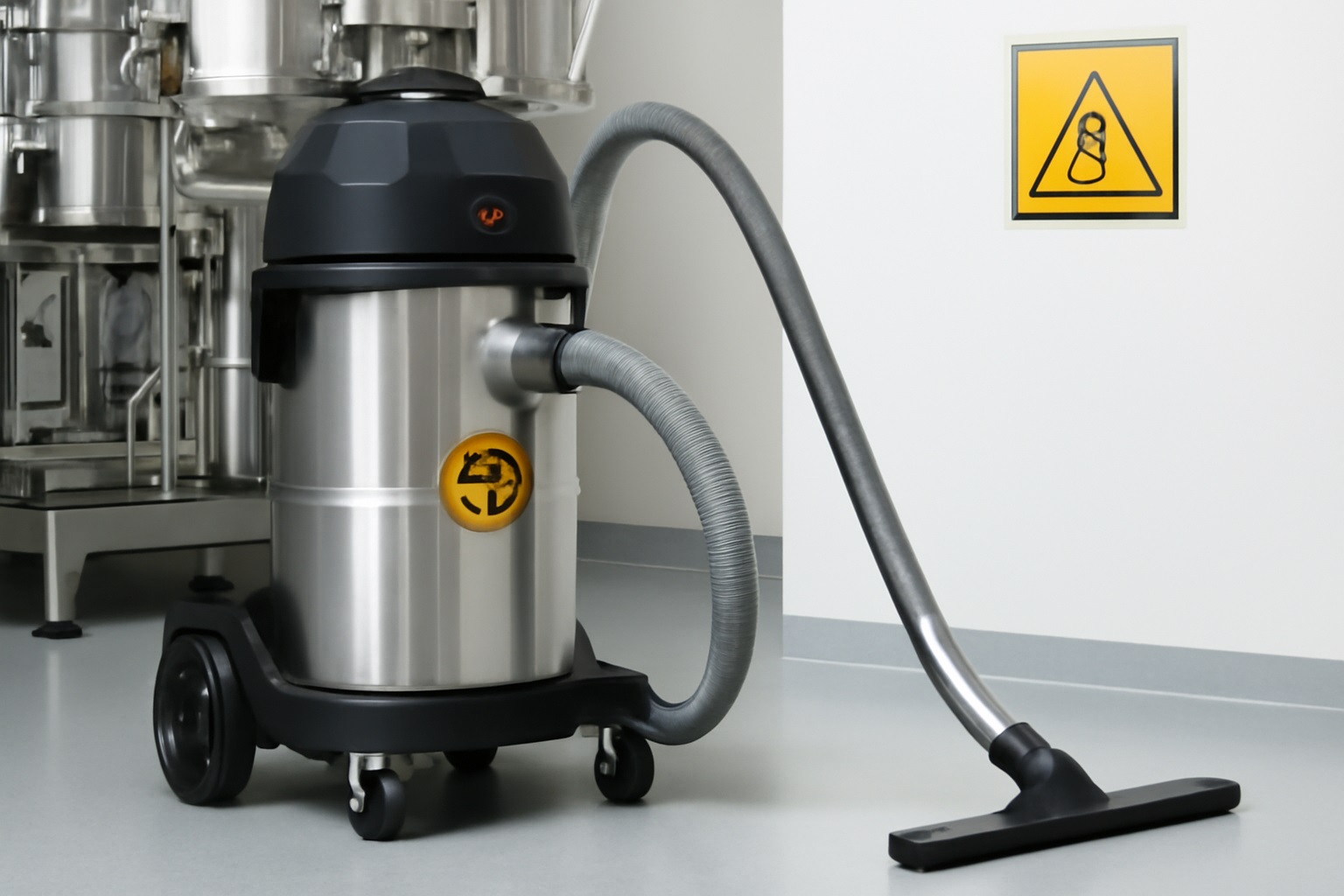
Pharmaceutical manufacturing often involves handling combustible powders, volatile ingredients, and electrostatically sensitive materials. These substances can create environments where explosions or ignition hazards are possible if proper equipment is not used. Explosion-proof and anti-static vacuum systems are therefore essential for ensuring operator safety, protecting facilities, and maintaining compliance with ATEX, NFPA, and global safety standards.
This article provides a comprehensive overview of why pharmaceutical facilities require explosion-proof vacuums, how anti-static engineering reduces ignition risks, and what standards must be met to ensure safe operation in high-risk production zones.
1. Why Pharmaceutical Production Requires Explosion-Proof Vacuums
Many pharmaceutical powders—especially micronized active pharmaceutical ingredients (APIs)—are classified as combustible dusts. When dispersed in air, these powders can ignite or explode under the right conditions.
Explosion-proof vacuums help prevent ignition caused by:
Static discharge
Electrical sparks
Motor heat
Friction from moving components
Hot surfaces
Particle accumulation in confined spaces
These risks make standard vacuums unsafe in API processing, powder blending, granulation, and capsule production.
2. Combustible Dust Hazards in Pharmaceutical Environments
Pharmaceutical dusts can be:
Highly combustible
Electrostatic
Airborne and easily dispersed
Hazardous to operators
Sensitive to heat or friction
Pharma powders such as lactose, starch, acetaminophen, ibuprofen, antibiotics, hormones, and excipients have demonstrated explosive potential.
Explosion-proof vacuums reduce hazard levels by incorporating non-sparking, static-safe, and temperature-controlled engineering.
3. ATEX Certification Requirements
ATEX certification is the global standard for equipment used in explosive dust zones.
ATEX Zone Classifications
Zone 21
Dust is likely to occur in normal operation.
Zone 22
Dust is present only under abnormal or emergency conditions.
Explosion-proof vacuums must comply with:
ATEX 94/9/EC
ATEX 2014/34/EU
NFPA 484 (combustible metals)
NFPA 652 (combustible dust)
These standards govern:
Material safety
Electrical insulation
Motor design
Static control
Spark prevention
4. Anti-Static Design Principles
Static electricity is one of the primary causes of ignition in powder-handling environments. Anti-static vacuum design includes:
Anti-Static Components
Hoses
Handles
Dust bins
Filters
Nozzles
Wheels and connectors
Proper Grounding
Ensures no stray charge can accumulate on the equipment.
Conductive Hose Systems
Prevent charge buildup while powder is flowing through the vacuum.
Static Dissipative Materials
Reduce resistance and minimize the risk of spark formation.
These design principles are essential for controlling electrostatic discharge (ESD).
5. Explosion-Proof Motor and Electrical Architecture
Explosion-proof vacuums must use motors that avoid heat or spark generation.
Key features include:
Sealed motor chambers
Brushless motors
Intrinsically safe wiring
Temperature-regulated controls
Non-sparking components
Insulated housings
All electrical components must be flame-proof and certified for hazardous dust zones.
6. Filtration Requirements for Pharma Hazard Control
Explosion-proof vacuums must include multi-stage filtration that captures combustible and hazardous particles safely.
Typical filtration stages:
Mechanical pre-filter
Fine particle filter
Anti-static filter media
HEPA H13/H14 final filter
HEPA filters capture API dust, allergens, and micro-particles, ensuring clean exhaust air and reducing contamination risk.
7. Containment for Hazardous Pharmaceutical Powders
Beyond explosion prevention, pharmaceutical vacuums must protect operators from potent powders.
Containment features include:
Sealed dust-collection chambers
Bag-in/bag-out disposal
Negative-pressure containment
Leak-proof design
Non-porous internal surfaces
Zero-emission filtration
These systems help manage high-potency APIs used in hormone, oncology, or antibiotic manufacturing.
8. Cleanability & Sanitation Requirements
Explosion-proof vacuums must still meet GMP cleanliness standards.
Key cleanability features:
Tool-free disassembly
Cleanable stainless housings
Smooth internal surfaces
Chemical-resistant seals
Washable pre-filters
Cleanability supports compliance with:
GMP
FDA cleaning expectations
ISO 14644 cleanroom standards
9. Operational Integration in Pharmaceutical Facilities
Explosion-proof and anti-static vacuums are used in:
Tablet compression rooms
Granulation areas
Powder mixing rooms
Capsule filling lines
API processing
R&D laboratories
Cleanrooms with combustible dust
Packaging lines
Proper integration ensures safe removal of powder without creating ignition risks.
10. Documentation, Validation & Compliance Requirements
Explosion-proof vacuums used in regulated pharmaceutical facilities must include:
ATEX certification documents
HEPA filter test reports
Electrical safety certificates
Material compliance statements
Cleaning validation protocols
SOPs for operation and maintenance
Annual inspection records
Grounding verification logs
Documentation ensures compliance with GMP and regulatory audits.
Conclusion
Explosion-proof and anti-static vacuums are essential for safe operations in pharmaceutical production facilities where combustible powders and electrostatic hazards exist. By following ATEX requirements, implementing static-control engineering, using safe materials, and ensuring proper filtration and containment, these vacuums help ensure compliance, protect personnel, and maintain safe production environments.
👉 Learn more: www.lxvacuum.com
Target Readers
Pharmaceutical production engineers
Cleanroom facility managers
ATEX safety compliance teams
GMP and QA/QC managers
Industrial hygienists
API handling specialists
Equipment procurement teams
Safety and risk management departments
Production supervisors
Regulatory auditors
50 Keywords
explosion-proof pharmaceutical vacuum, anti-static vacuum system, ATEX vacuum cleaner, combustible dust vacuum, pharma powder vacuum, hazardous dust vacuum, intrinsically safe vacuum, cleanroom explosion-proof vacuum, HEPA pharma vacuum, API containment vacuum, static-dissipative vacuum cleaner, non-sparking vacuum system, sealed pharmaceutical vacuum, negative-pressure containment vacuum, dust ignition-proof vacuum, ULPA filtration vacuum, vacuum for powder mixing rooms, vacuum for granulation areas, vacuum for capsule filling, vacuum for tablet compression, industrial ATEX vacuum system, explosion-safe vacuum cleaner, safe material vacuum cleaner, static control vacuum equipment, hazardous zone vacuum system, Zone 21 vacuum, Zone 22 vacuum cleaner, explosion-protected vacuum motor, grounded vacuum hose system, safe powder handling vacuum, pharmaceutical dust extractor, cleanroom hazardous vacuum, vacuum for API processing, vacuum for oncology drug production, vacuum for hormone powders, HEPA containment vacuum, anti-static filtration vacuum, chemical-resistant vacuum cleaner, industrial hygiene vacuum, ATEX dust removal vacuum, validated pharma vacuum, controlled environment vacuum, safe operation vacuum system, vacuum for hazardous production zones, non-shedding industrial vacuum, contamination prevention vacuum, safe-airflow industrial vacuum, explosion-resistant vacuum design, electrostatic-safe vacuum cleaner.



