Hi, message us with any questions.
We're happy to help!





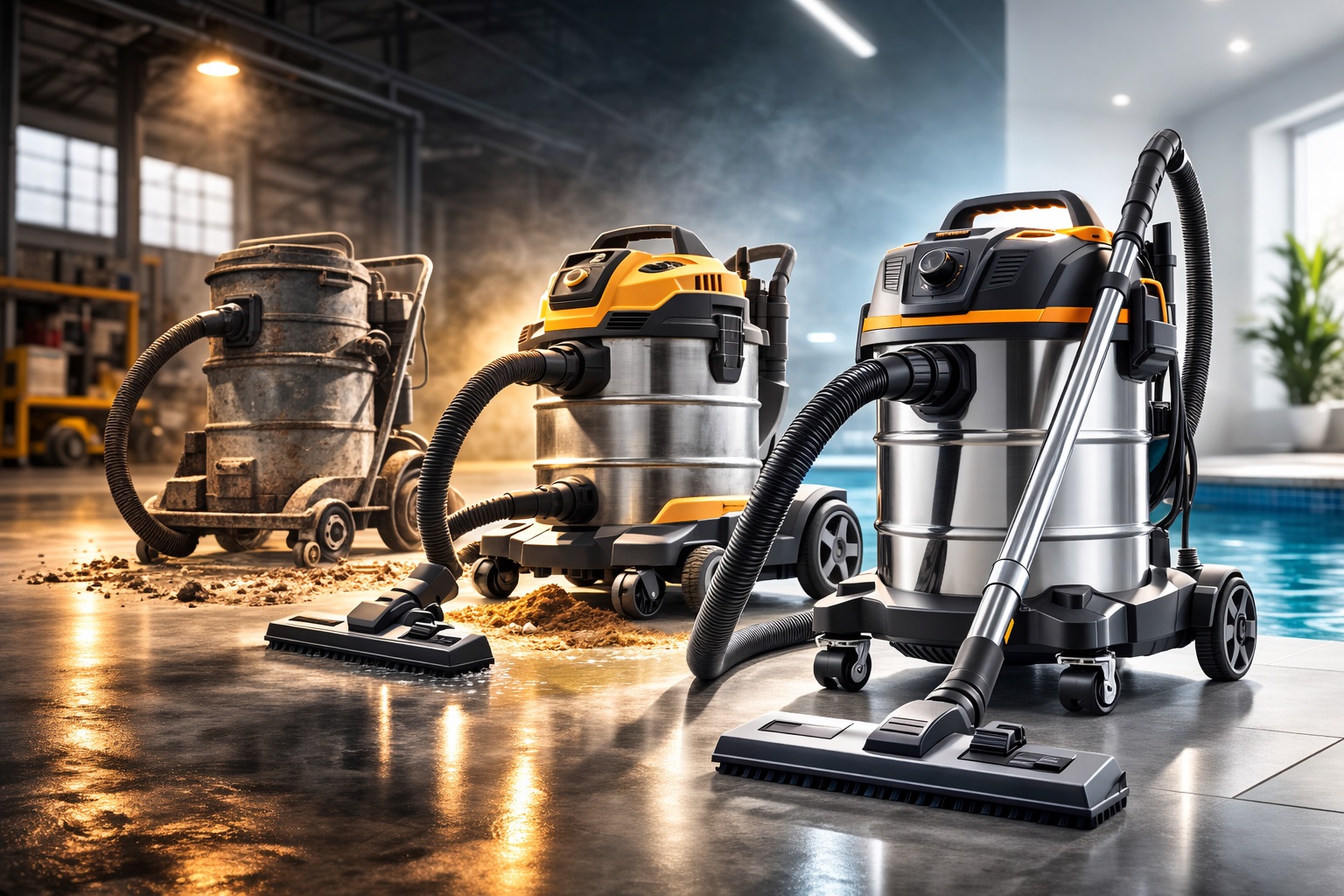
(For European & Middle Eastern Vacuum Distributors & Industry Professionals)
🏭 The Structural Correction No One Talks About
The transition of barrel systems from industrial environments to residential homes was not a trend.
It was a structural correction in the vacuum industry.
For years, upright and stick vacuums dominated retail shelves because they were:
Compact
Visually modern
Easy to market
But market maturity exposed their limitations.
The rise of the wet and dry vacuum cleaner in homes did not happen because consumers wanted industrial equipment.
It happened because household cleaning demands became more complex.
And traditional residential platforms struggled to adapt.
⚙️ Industrial Foundations: Why Barrel Architecture Endured
The original barrel platform was built for:
Heavy debris
Liquid spills
High dust load
Continuous operation
Its structural advantages included:
Straight airflow channels
Separated motor housing
Large debris tank
Superior thermal dissipation
This design naturally supported a multi-functional durable vacuum cleaner concept long before the term became marketing language.
Industrial DNA created long lifecycle stability.
📊 Lifecycle Reality: A Data Perspective
While performance varies by manufacturer, field data across commercial markets shows general trends:
Industrial barrel systems: 5–8 year average operational lifecycle
Upright household vacuums: 3–5 years
Stick cordless systems: 2–4 years (battery dependent)
In high-load environments (renovation, pet-heavy households, GCC sand exposure):
Stick vacuum failure rates increase due to:
Battery degradation
Motor overheating
Dust blockage in compact airflow paths
Barrel systems, due to airflow simplicity and larger cooling capacity, maintain suction stability longer.
Durability became the bridge from workshop to living room.
🔊 Why Upright & Stick Systems Struggle Under Stress
Upright and stick vacuums are optimized for:
Daily light cleaning
Carpet surface debris
Lightweight portability
However, under heavy-duty scenarios they face structural limitations:
Narrow airflow channels increase clogging
Compact motors overheat under dust load
Small tanks require frequent emptying
Battery systems limit sustained power
A true high suction vacuum cleaner requires airflow stability under load — not just peak motor wattage.
Barrel systems were designed for sustained airflow dominance.
That structural advantage proved transferable to residential demands.
🧠 Introducing the Barrel Adaptation Model
To understand how industrial equipment became a household solution, consider what we call:
The Barrel Adaptation Model
1️⃣ Industrial Core
Heavy-duty suction and wet capability.
2️⃣ Acoustic Refinement
Noise reduction engineering transformed early loud units into competitive quiet vacuum cleaner models.
3️⃣ Filtration Upgrade
Integration of advanced filters improved dust containment for residential use.
4️⃣ Ergonomic Optimization
Improved wheels, compact tank sizes, and mobility adjustments made barrel systems viable as an apartment vacuum cleaner option.
5️⃣ Energy Optimization
Modern motor design reduced energy consumption while preserving airflow efficiency.
This five-stage adaptation explains the platform’s successful migration into homes.
🐾 The Pet Hair Catalyst
One of the strongest drivers of barrel adoption in residential markets has been pet ownership.
A reliable vacuum cleaner for pet hair must manage:
Continuous fiber shedding
Allergen containment
Suction stability under hair accumulation
Stick vacuums often experience airflow reduction when brush heads clog.
Barrel systems, with stronger airflow and larger debris chambers, sustain performance longer under pet-heavy conditions.
Pet households accelerated the structural advantage.
🔇 The Quiet Transformation
Early barrel vacuums were criticized for noise.
Modern models incorporate:
Balanced impeller systems
Motor insulation
Anti-vibration mounts
Optimized airflow channels
Noise levels in contemporary designs can reach 70–78 dB, competitive with many residential uprights.
The shift toward quiet vacuum cleaner performance was not cosmetic — it required airflow and motor rebalancing.
🌍 Urbanization & Apartment Adaptation
Urban European and Middle Eastern living conditions created new demands:
Balcony sand intrusion
Renovation debris
Car interior cleaning
Occasional liquid spills
A compact barrel wet and dry vacuum cleaner became a versatile solution for tasks traditional apartment models could not handle.
Many households now adopt a dual-system approach:
Lightweight daily cleaner
Heavy-duty barrel system for demanding tasks
Barrel vacuums no longer compete directly with stick vacuums — they complement them.
🔋 Energy Efficiency & Modern Engineering
Energy regulations in Europe accelerated refinement.
Modern barrel platforms evolved into energy-efficient systems by:
Improving copper winding density
Optimizing impeller blade geometry
Reducing airflow turbulence
Enhancing thermal protection
Instead of increasing wattage, manufacturers improved airflow management.
True efficiency is airflow control, not raw motor size.
📈 Why This Evolution Matters for Distributors
For B2B distributors, barrel evolution demonstrates:
Lower long-term warranty exposure
Broader application scope
Higher accessory revenue potential
Easier OEM customization
Stable demand across commercial and residential segments
A well-positioned multi-functional durable vacuum cleaner platform offers lifecycle stability that trend-driven devices rarely achieve.
🔮 The Next Stage of Evolution
Future development will likely emphasize:
Further acoustic refinement
Enhanced filtration systems
Hybrid wet-dry + pet optimization
Smarter energy load management
Compact high-efficiency motor design
But the fundamental lesson remains:
Structural engineering, when adaptable, outlasts aesthetic trends.
The evolution of barrel vacuums was not accidental.
It was inevitable.
📌 Suitable Readers
European Vacuum Distributors
Middle Eastern Cleaning Equipment Importers
B2B Retail Buyers
Home Appliance Industry Professionals
Product Development Engineers
📌 Hashtags
wet and dry vacuum cleaner, multi-functional durable vacuum cleaner, high suction vacuum cleaner, quiet vacuum cleaner, vacuum cleaner for pet hair, apartment vacuum cleaner, industrial vacuum system, commercial cleaning equipment, stainless steel barrel vacuum, heavy duty vacuum cleaner, renovation cleaning vacuum, balcony sand cleaning vacuum, GCC cleaning equipment supplier, European vacuum distributor, OEM vacuum cleaner manufacturer, ODM vacuum factory, B2B vacuum sourcing, professional suction equipment, facility management vacuum, workshop vacuum cleaner, car interior cleaning vacuum, dust extraction vacuum cleaner, energy efficient vacuum motor, cyclone filtration vacuum system, dual motor industrial vacuum, compact barrel vacuum, portable wet dry vacuum, sealed filtration vacuum system, anti static hose vacuum cleaner, high airflow vacuum equipment, durable tank vacuum cleaner, polypropylene barrel vacuum, low noise vacuum cleaner, sand resistant vacuum system, commercial suction equipment, cleaning equipment wholesaler Europe, vacuum cleaner spare parts supply, filter replacement vacuum system, motor upgrade vacuum cleaner, heavy duty suction equipment, apartment cleaning solution, home renovation vacuum cleaner, Middle East vacuum market demand, Europe cleaning equipment industry, household cleaning equipment supplier, pet hair removal vacuum, Lanxstar