Hi, message us with any questions.
We're happy to help!





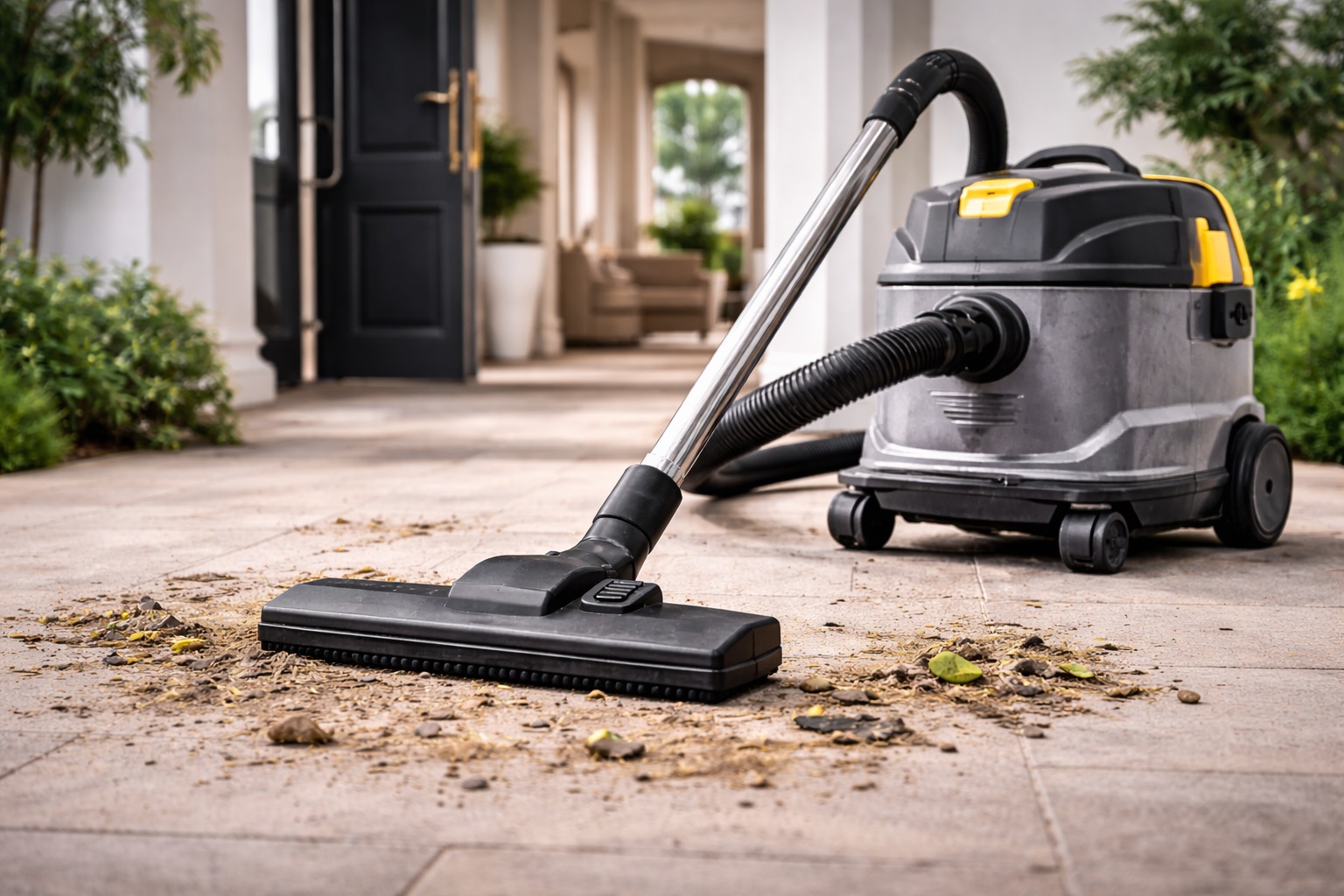
When cleaning efficiency drops, the usual explanations sound familiar:
“Staff are slower than before.”
“Sites are more complex now.”
“Labor shortages are the real problem.”
But experienced operators in large facilities and multi-zone cleaning operations know a different reality:
When productivity drops everywhere, the bottleneck is usually built into the system—not the people.
In commercial cleaning, efficiency is rarely limited by effort.
It is limited by tools that define how fast work can realistically be done.
This article explains how vacuum cleaners quietly become the real bottleneck in cleaning performance, how to recognize equipment-driven inefficiency, and how high-performing companies remove system constraints instead of pushing staff harder.
🧠 1. Productivity Is a System Outcome, Not a Personal Trait
Cleaning speed is often measured per worker, but it is created by systems.
An operator’s pace is constrained by:
How easily equipment moves
How often tasks are interrupted
How many passes are required
How frequently tools must be switched
When these limits are built into the equipment, motivation cannot compensate.
A Fast Lightweight Vacuum Cleaner increases system throughput by:
Reducing physical resistance
Improving maneuverability across zones
Allowing operators to maintain rhythm over long shifts
Key insight:
If every cleaner feels “slow,” the bottleneck is structural.
⚠️ 2. High Suction Is Useless Without Stability
Many buyers assume stronger suction automatically means faster cleaning.
In real operations, unstable suction creates rework.
Vacuum cleaners with inconsistent airflow:
Require multiple passes
Lose efficiency as filters clog
Slow operators gradually and invisibly
A true High Suction Vacuum Cleaner is defined by consistent airflow across full shifts, not peak performance during short demonstrations.
Efficiency comes from repeatable results, not maximum numbers.
🕒 3. Interruptions Destroy Output More Than Low Speed
Efficiency rarely collapses all at once.
It erodes through constant micro-interruptions:
Emptying tanks
Clearing clogs
Switching machines
Restarting tasks
In large facilities, these interruptions multiply across teams and zones.
A Multi-Functional Durable Vacuum Cleaner reduces output loss by:
Handling multiple scenarios reliably
Minimizing breakdowns and clogging
Maintaining performance throughout long duty cycles
Every avoided interruption restores minutes that compound into hours.
🧹 4. Pet Hair Is a Hidden Time Sink in Modern Facilities
Pet-friendly buildings, serviced apartments, and mixed-use spaces introduce a major efficiency challenge.
Vacuum cleaners not designed for pet hair often:
Scatter debris
Clog frequently
Require repeated passes
A dedicated Vacuum Cleaner for Pet Hair focuses on:
Continuous airflow
Anti-tangle pathways
Effective fiber agitation
Reality check:
Repeated passes don’t just waste time—they break operator momentum.
🪵 5. Surface Mismatch Slows Teams Without Being Noticed
Modern commercial sites rarely have uniform flooring.
Within a single shift, teams may clean:
Hardwood floors in lobbies
Carpeted office areas
Transition zones
A poorly matched vacuum causes:
Operator hesitation
Surface damage risk
Re-cleaning
A well-designed Vacuum Cleaner for Hardwood Floors balances suction and contact to:
Protect sensitive surfaces
Maintain operator confidence
Eliminate hidden slowdowns
When equipment feels unsafe, people slow down—even unconsciously.
🔄 6. Wet & Dry Flexibility Removes Workflow Friction
Unexpected spills are among the biggest efficiency disruptors in large facilities.
Without the right equipment:
Operators stop
Supervisors intervene
Schedules slip
A wet and dry vacuum cleaner allows immediate response without switching tools, preserving workflow continuity.
At scale, flexibility is not convenience—it is speed.
📌 Case Insight: When “Slow Staff” Was Actually a System Bottleneck
A commercial cleaning contractor operating multi-zone office buildings and serviced apartments reported:
Declining output per shift
Growing supervisory pressure
Consideration of additional hiring
A workflow review revealed:
Excessive machine switching
Frequent clogging on pet hair
Fatigue caused by heavy equipment
After standardizing on:
Fast, lightweight designs
Stable high-suction systems
Multi-functional platforms supporting wet & dry tasks
the company achieved:
Faster completion without increasing pace
More consistent output across teams
Reduced pressure to add headcount
The workforce didn’t change.
The bottleneck did.
🚀 How High-Performance Cleaning Teams Think About Efficiency
Leading operators don’t ask:
“Why are our people slower?”
They ask:
Where does work stop unnecessarily?
Which tasks require rework?
How often does equipment interrupt momentum?
Can one machine reliably replace two?
They understand a core principle:
Efficiency is designed—not demanded.
✅ Efficiency Diagnostic Path: Fix the Right Thing First
When cleaning efficiency declines, follow this order:
Check equipment constraints before adjusting staffing
Evaluate suction stability over full shifts, not peak power
Identify interruptions caused by clogging or switching tools
Review surface compatibility, especially hardwood floors
Assess whether pet hair or fine debris is creating rework
Only then reconsider labor allocation or headcount
If steps 1–4 reveal issues, pushing people harder will not improve results.
✅ Conclusion: Remove the Bottleneck, Don’t Pressure the Workforce
Low cleaning efficiency is rarely a motivation problem.
It is usually a system limitation disguised as a labor issue.
By investing in:
Fast, lightweight designs
Stable High Suction Vacuum Cleaner performance
Multi-functional durability
Reliable wet & dry capability
Surface-appropriate solutions for pet hair and hardwood floors
cleaning companies unlock productivity without burnout.
Don’t push people harder.
Design the system to move faster.
🔖 Hashtags
wet and dry vacuum cleaner, Multi-Functional Durable Vacuum Cleaner, High Suction Vacuum Cleaner, Fast Lightweight Vacuum Cleaner, Vacuum Cleaner for Pet Hair, Vacuum Cleaner for Hardwood Floors, cleaning efficiency improvement, commercial cleaning productivity, professional vacuum systems, industrial cleaning equipment
cleaning workflow optimization, labor efficiency cleaning, commercial janitorial tools, durable cleaning machines, pet friendly cleaning solutions, hard floor cleaning equipment, multi surface vacuum cleaner, facility operations efficiency, smart cleaning technology, vacuum performance stability
commercial cleaning efficiency, equipment bottleneck analysis, cleaning system design, professional cleaning operations, vacuum lifecycle cost, energy efficient cleaning equipment, cleaning productivity tools, workforce efficiency cleaning, operational improvement cleaning, modern cleaning equipment
EU cleaning equipment market, Middle East cleaning industry, commercial cleaning strategy, facility management tools, advanced vacuum engineering, scalable cleaning equipment, commercial vacuum solutions, efficiency focused cleaning, productivity driven equipment, Lanxstar