Hi, message us with any questions.
We're happy to help!





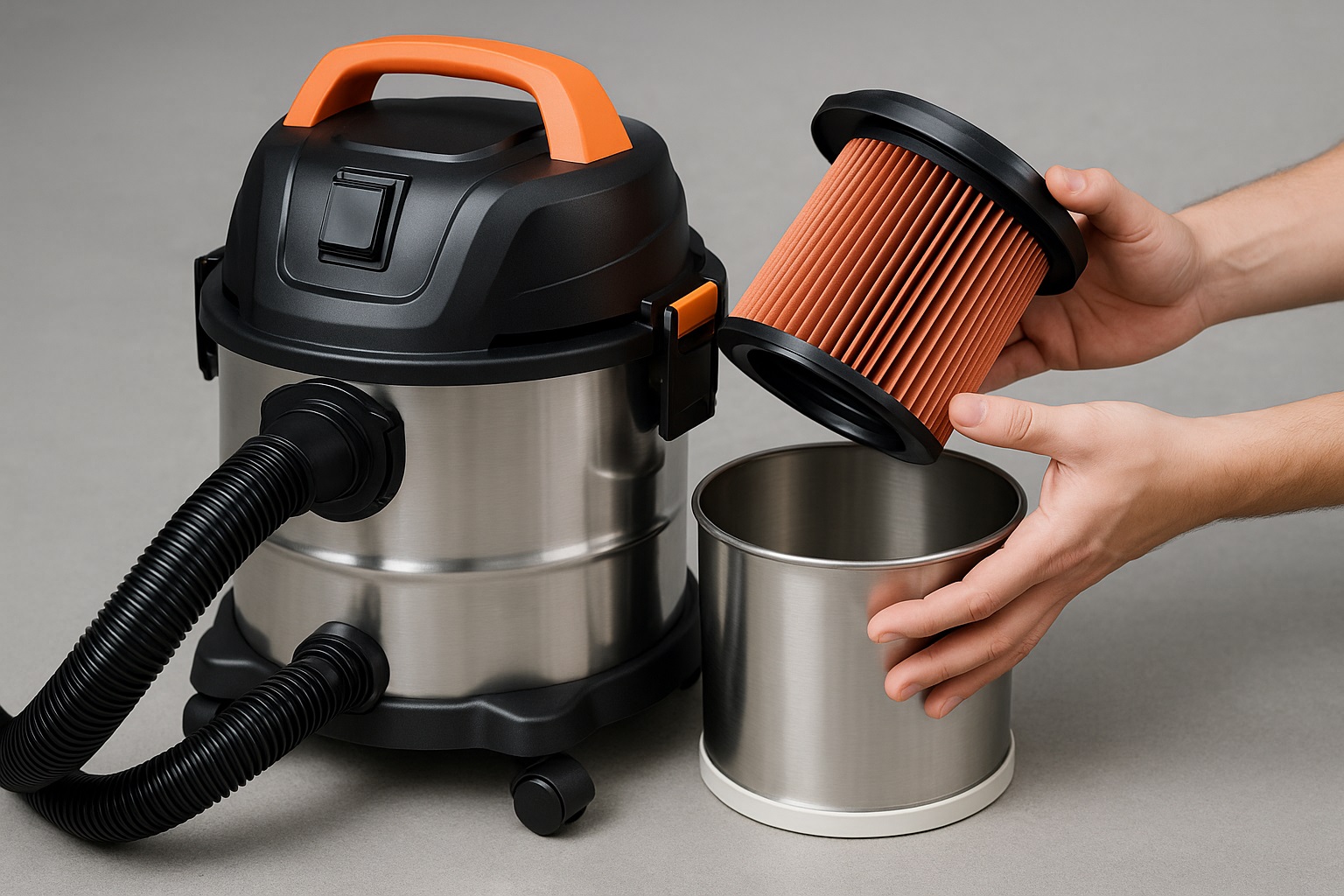
(Audience: EU & Middle East vacuum cleaner distributors + B2B buyers who want fewer “low suction” complaints and more stable shift performance)
When a barrel vacuum cleaner “loses suction,” the motor is rarely the real problem. In most cases, the vacuum is simply airflow-starved—and the filter system is the main bottleneck. The good news: if you clean filters correctly (and at the right time), you can restore performance quickly, reduce overheating risk, and extend motor life—without changing the machine.
This guide shows exactly how to clean barrel vacuum filters safely and efficiently, how to avoid the common mistakes that damage filter media (especially for a HEPA Filter Vacuum Cleaner), and how to set a schedule that prevents performance collapse mid-shift. It also explains how to deploy complementary formats—Upright Vacuum Cleaners, Household Vacuum Cleaners, Wet Dry Vacuum Cleaners, an Energy-Saving Efficient Powerful Vacuum Cleaner, and a Portable Self-Cleaning Vacuum Cleaner—to reduce filter abuse and improve total cleaning output per hour.
One、🧠 Performance Basics: Filter Cleaning = Airflow Recovery
A barrel vacuum “performance” is mostly two things:
Airflow (how much air moves through the system)
Resistance (how much the filter/nozzle/hose blocks that airflow)
Filters add resistance by design. As they load with dust, resistance rises and airflow drops. That leads to:
lower pickup
hotter motor temperatures
higher noise and strain
more clogs and rework
more customer complaints
Core principle: Cleaning a filter is not about “making it look clean.” It’s about restoring the airflow pathway without damaging the filter media or creating dust blowback.
Two、🧩 Identify Your Filter Stack Before You Clean
Barrel vacuums typically use some version of a staged system:
🧱 Common filter layers
Pre-filter (foam or mesh): catches large particles first
Main filter (cloth/cartridge): captures medium dust
HEPA stage (optional): captures fine particles for air quality compliance
Optional dust bag (in some systems): reduces filter load and makes disposal cleaner
If your unit is positioned as a HEPA Filter Vacuum Cleaner, staged filtration is not optional—it’s how you keep HEPA performance and maintain suction.
Three、⚠️ Safety First: The “Don’t Turn Filter Cleaning Into Dust Exposure” Rules
Before cleaning:
Unplug the machine (or power off and isolate)
Wear basic PPE for dusty environments (mask + eye protection)
Clean in a controlled area (avoid customer-facing spaces)
🛑 Three mistakes to avoid
Aggressive beating of HEPA media (can cause micro-tears and bypass leakage)
Wet washing filters that must stay dry (can deform media and promote odor)
Reinstalling filters while damp (dust sticks, airflow collapses faster, mold risk rises)
Key point: Safe filter handling is part of performance—if you create dust plumes while cleaning, you lose both air quality and customer trust.
Four、🧪 The 90-Second Diagnosis: Confirm the Filter Is the Real Bottleneck
Before cleaning anything, confirm it’s a filter issue—not a hose clog or seal leak.
🧭 Quick test sequence
Nozzle-off test: remove the nozzle and test suction at the wand end
Hose straight test: fully straighten the hose to reveal partial blockages
Seal check: inspect lid gasket/clamps for leaks
Filter check: if suction is still weak, the filter system is likely loaded
If suction improves dramatically after removing filters, you’ve confirmed the filter stack is the restriction.
Five、🧽 How to Clean Each Filter Type Correctly
Different filters require different methods. Cleaning the wrong way is one of the fastest routes to permanent performance loss.
🧼 A) Pre-filter (foam/mesh)
Goal: remove coarse dust so the main filter and HEPA stage stay breathable.
Best method
Tap gently to release loose dust
If washable (per product design), rinse with clean water
Squeeze gently (do not twist aggressively)
Air-dry completely before reinstalling
Performance tip: A clean pre-filter protects airflow more than people expect—especially in fine-dust regions.
🧱 B) Main filter (cloth or cartridge)
Goal: remove embedded dust without damaging structure.
Best method
Tap gently or use low-risk cleaning method recommended by design
Clean from the “clean side” outward when possible to push dust away
Avoid harsh brushing that destroys fibers
Do not
Use high-pressure air blasting in a way that drives dust deeper or damages pleats
Reinstall while damp
Operator rule: If the main filter looks clean but feels “heavy” or airflow is still weak, it’s loaded internally—schedule replacement, not endless cleaning.
🫁 C) HEPA stage (for HEPA Filter Vacuum Cleaner setups)
Goal: preserve filtration integrity while maintaining airflow.
Best method
Handle gently and minimize physical shock
Use staged filtration so HEPA loads slowly
Replace on schedule rather than over-cleaning
Critical warning: Many “HEPA failures” are actually seal or pre-filter failures. A perfect HEPA filter cannot compensate for a leaking lid gasket or missing pre-filter.
Distributor-grade advice: Teach customers this line: “Protect HEPA by cleaning pre-filters early, not by attacking HEPA late.”
Six、💧 Wet Dry Vacuum Cleaners: Filter Cleaning Rules Change Completely
If the unit is used as part of Wet Dry Vacuum Cleaners operations, the filter routine must follow wet/dry discipline.
🧯 Wet pickup best practices
Confirm wet-mode configuration before any liquid pickup
Empty liquids promptly
Rinse and dry the drum if sludge forms
Dry hose/tools to prevent odor and biofilm
⚠️ The #1 performance killer
Switching back to dry cleaning while components are damp:
dust sticks instantly
filters clog faster
suction collapses early
smells appear
motor stress increases
Rule: After wet work, dry everything fully before switching to dry dust environments.
Seven、📆 The Schedule That Prevents Mid-Shift Suction Collapse
Most performance complaints happen because teams clean filters after suction drops. The better approach is preventative cleaning based on dust type.
🗓️ Suggested cleaning cadence
Light dust / general use: pre-filter daily quick check; main filter weekly
Fine dust / construction handover: pre-filter mid-shift + end shift; main filter more frequent; HEPA protected by staging
Hair/fiber environments: tool/brush cleaning weekly; filter checks more frequent due to matting
B2B KPI: If you see more than one “suction collapse” event per shift, your schedule is too reactive.
Eight、🔧 Restore Performance Faster: The “Airflow Reset” Method
When teams are busy, they need speed. This method reduces downtime.
🧠 3-step airflow reset
Empty drum/bag to reduce turbulence
Clean/replace pre-filter first (highest ROI)
Inspect and clean the main filter as needed
Why this works: The pre-filter is the fastest way to recover airflow. Many teams waste time “deep cleaning” the wrong layer.
Nine、💡 Procurement Angle: Clean Filters = Lower Operating Cost
Filter maintenance isn’t just technical—it’s financial.
How clean filters save money
fewer overheating incidents
longer motor life
fewer service calls
less rework per job
more m² cleaned per hour
This is where positioning an Energy-Saving Efficient Powerful Vacuum Cleaner becomes practical: a machine can only be energy-efficient when airflow is healthy. A clogged system consumes energy and produces less cleaning output.
Buyer-friendly framing: “Clean filters increase cleaning output per watt.”
Ten、🧭 Reduce Filter Abuse by Using the Right Machine in the Right Zone
Many filter problems come from using a barrel vacuum everywhere.
🧹 Upright Vacuum Cleaners
Best where carpets dominate and brush agitation is needed. Proper use can reduce barrel filter loading in hotel corridors.
🏠 Household Vacuum Cleaners
Best for light-duty detail zones where a barrel vacuum is overkill and gets abused.
🧼 Portable Self-Cleaning Vacuum Cleaner
Ideal for teams with high turnover or sites where filter handling discipline is weak. Self-cleaning functions can reduce touchpoints, speed up maintenance, and protect consistency.
💧 Wet Dry Vacuum Cleaners
Use where wet pickup is routine, but enforce strict post-wet drying to prevent performance collapse.
✳️ Summary
If you reduce misuse, you reduce filter overload. If you reduce filter overload, you improve performance and reduce failure risk.
Conclusion
To clean the filter of a barrel vacuum cleaner and improve performance, focus on restoring airflow safely: identify your filter stack, clean pre-filters early, handle main filters correctly, and treat HEPA as a delicate compliance component—especially in HEPA Filter Vacuum Cleaner configurations. For Wet Dry Vacuum Cleaners, drying discipline is essential to prevent odor and suction collapse. Finally, combine smart scheduling with the right tool-by-zone strategy—using Upright Vacuum Cleaners, Household Vacuum Cleaners, and a Portable Self-Cleaning Vacuum Cleaner—to reduce filter abuse and keep suction stable across the whole shift.
Hashtags
Lanxstar, Barrel Vacuum Cleaner, Filter Cleaning SOP, Pre-Filter Maintenance, Main Filter Cleaning, HEPA Filter Vacuum Cleaner, HEPA Handling Rules, Airflow Recovery, Suction Drop Prevention, Dust Exposure Control, Fine Dust Compliance, Middle East Sand Dust, EU Janitorial Supply, B2B Vacuum Distributor, Procurement Maintenance Plan, Service Call Reduction, Warranty Claim Prevention, Filter Replacement Strategy, Staged Filtration System, Seal Gasket Inspection, Lid Clamp Check, Hose Blockage Prevention, Nozzle Restriction Test, 90-Second Diagnostic SOP, Airflow Reset Method, Wet Dry Vacuum Cleaners, Post-Wet Drying Protocol, Odor Prevention, Mold Prevention, Rust Prevention, Motor Overheating Prevention, Energy-Saving Efficient Powerful Vacuum Cleaner, Output Per Watt, Cost Per Cleaned Square Meter, Operator Training Checklist, End-of-Shift Routine, Weekly Deep Clean, Monthly Inspection, Consumables Forecasting, Portable Self-Cleaning Vacuum Cleaner, Touchpoint Reduction, Fast Maintenance Workflow, Upright Vacuum Cleaners, Carpet Corridor Strategy, Household Vacuum Cleaners, Light Duty Cleaning Zones, Facility Management Cleaning, Hotel Housekeeping SOP, Construction Handover Cleaning, Reliable Shift Performance