Hi, message us with any questions.
We're happy to help!





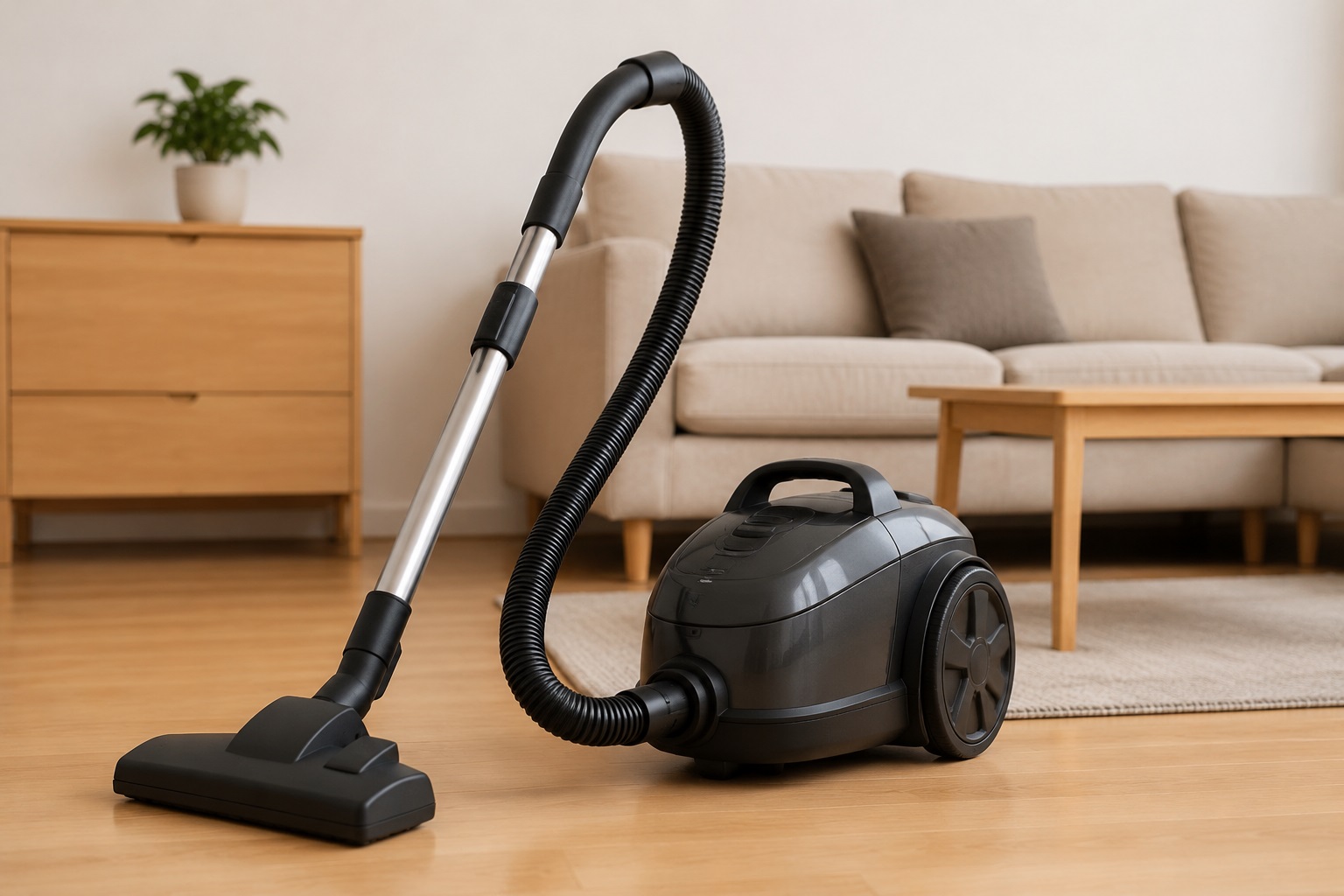
How US & EU Buyers Reduce Risk, Avoid Supplier Traps, and Build Scalable Supply Chains
In global sourcing, bulk vacuum cleaner buying is not a pricing exercise—it is a risk engineering system disguised as procurement.
Most importers fail not because they choose the wrong product, but because they misunderstand how supplier behavior, certification integrity, and engineering design interact at scale.
This upgraded guide integrates real-world sourcing failure patterns and success case studies to help B2B buyers make decisions based on evidence, not assumptions.
⚠️ Hidden Risk Reality in Bulk Vacuum Cleaner Sourcing
❌ 1. Certification Illusion Risk (Case-Based Insight)
A US-based importer selected a supplier offering CE-certified vacuum cleaners at a highly competitive price of $9.50/unit.
However, during EU customs inspection:
CE certificate was found to belong to a different SKU family
Shipment of 4,800 units was detained for 5 weeks
Additional storage and re-certification cost exceeded $18,000
👉 Final outcome:
The importer lost the entire seasonal sales window.
Key Insight:
Certification is not a document—it is a product-specific compliance system.
❌ 2. Low Price Trap Leading to Margin Collapse (Amazon Case)
A mid-size Amazon seller sourced bulk order vacuum units at $10.20 to compete in the entry-level category.
Initial results looked strong:
Sales increased 38% in 30 days
But after 60–90 days:
Motor overheating failure rate reached 19%
Return rate increased to 27%
Amazon listing ranking dropped due to negative reviews
👉 Net result:
Despite strong revenue, the seller ended with negative net profit after returns + refunds + PPC loss.
Key Insight:
In vacuum products, defect rate is more important than unit price.
❌ 3. OEM Upgrade Success Case (EU Distributor Transformation)
A German distributor previously relied on a trading-based vacuum cleaner supplier network.
Performance before upgrade:
Defect rate: 11.4%
Annual return cost: high volatility
Brand reviews: inconsistent (3.8–4.1 range)
After switching to an integrated wholesale vacuum factory OEM model:
Defect rate dropped to 3.2%
Warranty cost reduced by 41%
Average review score improved to 4.6
👉 Result:
Overall gross margin increased by 18% within one product cycle
Key Insight:
Factory structure matters more than negotiation power.
🏭 Supplier Structure Reality Map (Revised with Case Logic)
🔹 Trading Companies (High Risk Scaling Layer)
Flexible MOQ
High batch inconsistency
Often used for “test orders only”
👉 Risk: Mixed components across batches lead to unstable brand reviews
🔹 OEM Factories (Balanced Scaling Option)
Stable production
Moderate customization
Suitable for controlled scaling
👉 Best for importers transitioning from testing to scaling phase
🔹 ODM Manufacturers (Brand Development Layer)
Strong R&D capability
Product differentiation
Higher MOQ but stronger defensibility
👉 Best for private label expansion in EU/US retail markets
🔹 Integrated Manufacturing Factories (Lowest Risk Case Model)
Motor + airflow system fully controlled
Stable QC systems
Lowest long-term defect rate
👉 Proven in EU distributor success case above
🧪 Engineering Failure Reality (Why Vacuums Fail in Western Markets)
Across multiple bulk vacuum cleaner buying cases, failure patterns are consistent:
🔬 Core technical failure points:
Air duct turbulence → suction instability after repeated use
Motor heat accumulation → lifespan reduction of 30–50%
HEPA filter saturation → airflow collapse in high-dust environments
Structural sealing weakness → micro dust leakage into motor system
👉 Industry observation:
80% of warranty claims originate from airflow system design, not motor defects.
📊 Supplier Scoring Model (Used in Real Procurement Decisions)
Professional importers use a weighted scoring system before placing bulk orders:
| Evaluation Factor | Weight |
|---|---|
| Motor stability test results | 25% |
| Certification verification accuracy | 20% |
| Batch consistency (FRI reports) | 20% |
| Engineering design quality | 15% |
| Logistics reliability | 10% |
| Communication & responsiveness | 10% |
👉 Rule:
Suppliers scoring below 75/100 are not eligible for scaling contracts
📦 Bulk Order Strategy (Validated Procurement Model)
🧩 Stage 1: Prototype Validation (100–300 units)
Goal: Identify engineering weaknesses early
Motor heat testing
Noise consistency testing
Filter efficiency validation
🧩 Stage 2: Market Validation (500–1,000 units)
Goal: Real customer behavior testing
Return rate tracking
Packaging durability analysis
Early review sentiment monitoring
🧩 Stage 3: Scaling Phase (1,000–10,000+ units)
Goal: Supply chain stabilization
Lock BOM (Bill of Materials)
Freeze design changes
Contract annual volume pricing
👉 Critical rule:
Never scale without real 60–90 day field performance data
🚢 Logistics Risk Case Insight (Hidden Margin Killer)
A common mistake in bulk vacuum cleaner buying is underestimating volumetric shipping cost.
Real-world impact:
Air freight increases unit cost by 3–5x
Poor packaging design increases container inefficiency by 18–25%
Improper stacking leads to internal component damage
👉 Case insight:
A US importer lost 11% margin purely due to inefficient carton design—not product cost.
💰 True Cost Structure (Reality-Based Model)
| Cost Component | Real Range |
|---|---|
| Materials | 35–45% |
| Motor system | 20–30% |
| Labor | 10–15% |
| Packaging | 5–8% |
| Logistics | 10–20% |
| Warranty loss (hidden) | 8–12% |
👉 Key insight:
Most importers ignore warranty cost until scaling begins—this is where margins collapse.
📉 Strategic Misconception: “Cheap Supplier Advantage”
Across all case studies above, one pattern is consistent:
Lower unit price does NOT equal higher profitability.
Instead:
Low-cost suppliers → higher defect rate
Higher defect rate → return spikes
Return spikes → retail delisting risk
Delisting → long-term revenue destruction
👉 Conclusion:
Price optimization without engineering control is structurally unstable.
🧠 Strategic Shift: From Procurement to Category Control
High-performing EU/US importers evolve from buyers to category architects.
They focus on:
Segment ownership (pet hair, allergy care, lightweight cleaning)
Private label differentiation
After-sales ecosystem control (filters, motors, accessories)
👉 Real profit driver:
Not sourcing cost—but category defensibility
📈 Final Insight
A mature bulk vacuum cleaner buying strategy is built on:
Real supplier behavior data (not brochures)
Engineering failure understanding
Case-based decision validation
Logistics-aware cost modeling
Long-term category positioning
Importers who operate at this level consistently outperform competitors who rely only on pricing negotiation.
🔖 Hashtags
bulkvacuumcleanerbuying, vacuumimportstrategy, wholesalefactory, vacuumcleanersupplier, oemvacuum, odmmanufacturing, privatebrandvacuum, b2bimporters, usimportbusiness, euimporters, sourcingstrategy, procurementmodel, supplychainrisk, factoryaudit, qcinspection, productioncontrol, hepa filtration, vacuumengineering, airflowdesign, motorperformance, productdevelopment, industrialdesign, cleaningequipment, homeappliancebusiness, ecommercewholesale, amazonfba, retaildistribution, logisticsoptimization, seafreight, ddpshipping, cecertification, ulcompliance, rohsstandard, defectanalysis, warrantycost, marginoptimization, coststructure, businessstrategy, categorydesign, brandbuilding, productstrategy, chinafactory, exportbusiness, globaltrade, manufacturinginsight, sourcingagent, bulkordervacuum, vacuumtechnology, Lanxstar



