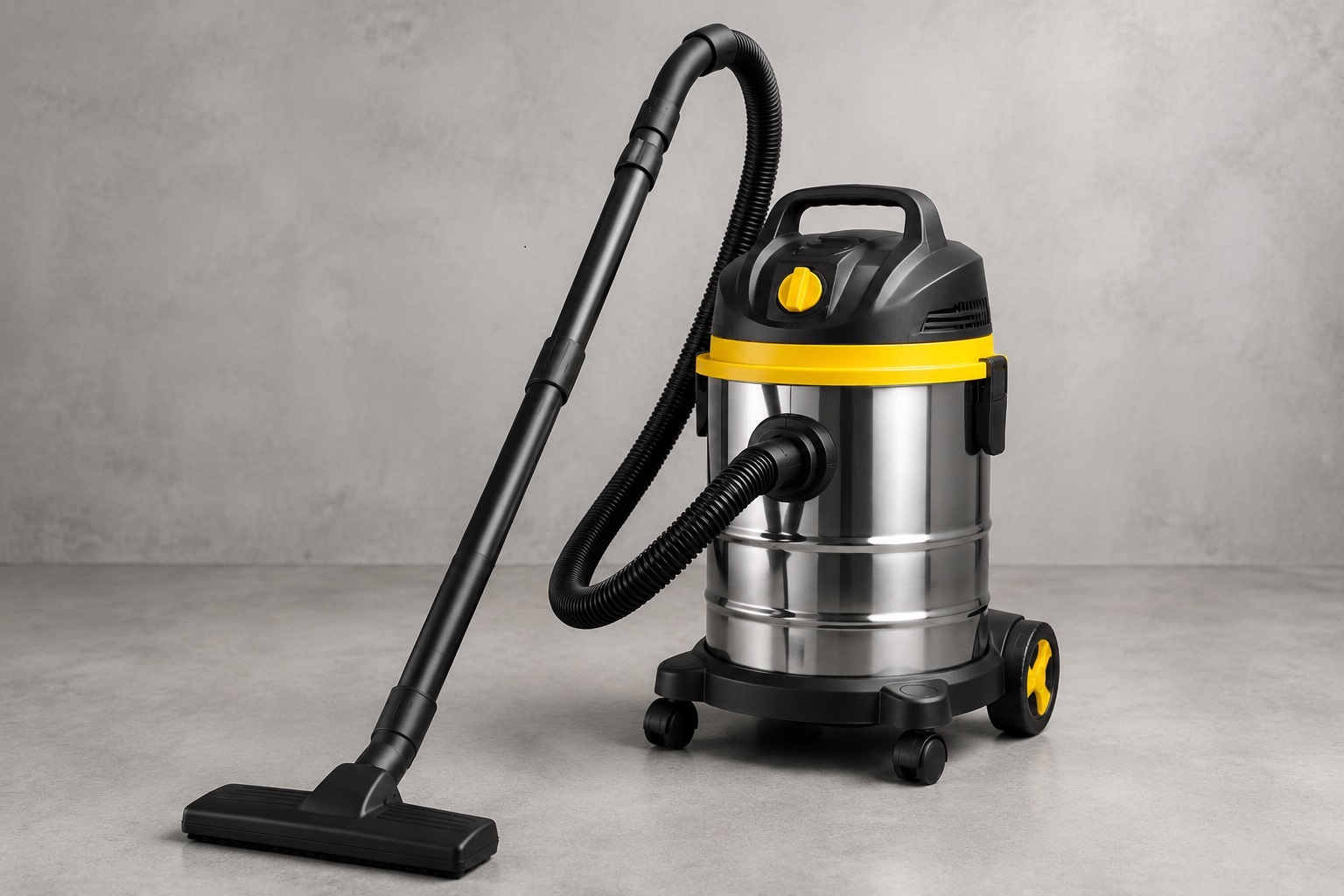
A Decision System for US & EU Importers to Reduce Risk and Build Scalable Supply Chains
In global sourcing, the ability to choose best vacuum supplier is not a procurement skill—it is a profit protection system.
Most importers fail not at sourcing—but at scaling. The difference between a profitable importer and a losing one is how well they evaluate a vacuum cleaner manufacturer before committing to volume orders.
This upgraded version turns supplier selection into a decision framework used by real importers in US/EU markets.
⚠️ The Real Cost of Choosing the Wrong Vacuum Supplier (Case Evidence)
❌ Case 1: $18,400 Customs & Season Loss (EU Importer Failure)
In Q4 peak season, a European distributor placed a 5,000-unit order with a “trusted vacuum factory” offering CE-certified products at aggressive pricing.
What happened:
Shipment detained at Rotterdam customs
CE certificate matched a different SKU series
Re-certification delay: 6 weeks
Storage + penalties: $18,400 total loss
Missed Christmas retail window
👉 Final impact:
Lost entire seasonal revenue cycle.
Key Insight:
Certification mismatch is not paperwork—it is market timing destruction.
❌ Case 2: Amazon Margin Collapse (US Seller Failure)
A US Amazon seller sourced from a low-cost OEM vacuum supplier at $10.10/unit.
Initial performance:
After 60–90 days:
Motor overheating failure rate: 21%
Return rate: 28%
Review score dropped from 4.4 → 3.7
Amazon ranking suppression triggered
👉 Final result:
Total net profit turned negative after returns + ads + refunds
Key Insight:
Low unit price does not survive real-world usage cycles.
✅ Case 3: OEM Upgrade Profit Expansion (Germany Distributor)
A German importer replaced trading suppliers with an integrated vacuum cleaner manufacturer (OEM factory model).
Before:
Defect rate: 10.9%
Warranty cost unstable
Brand rating fluctuating
After:
👉 Result:
Business shifted from “price competition” to category ownership
📊 The Real Supplier Market Structure (What Buyers Misunderstand)
🔹 Trading Companies (Hidden Risk Layer)
Appear flexible and cheap
No real production control
Batch inconsistency is common
👉 Risk: scaling failure due to uncontrolled sourcing
🔹 OEM Vacuum Suppliers (Operational Layer)
Stable production system
Limited design control
Medium scalability
👉 Best for initial scaling stage
🔹 ODM Manufacturers (Brand Creation Layer)
R&D capability
Product differentiation
Higher MOQ requirement
👉 Best for building long-term brand value
🔹 Integrated Vacuum Factories (Lowest Risk Model)
👉 Used by high-performing EU/US distributors
📉 Why Most Importers Lose Money (Hidden System Failure)
Across real sourcing data, failure is NOT caused by price—but by system mismatch:
Three hidden failure drivers:
Airflow design instability → long-term suction loss
Motor thermal overload → delayed failure after 30–90 days
Batch inconsistency → brand trust erosion
👉 Industry truth:
80% of warranty losses come from engineering design, not manufacturing cost.
⚖️ OEM vs Trading Company Reality Comparison
📊 Performance Comparison (Real Market Behavior)
| Factor | Trading Company | OEM Factory |
|---|
| Unit Price | Lower | Slightly higher |
| Defect Rate | 8–18% | 2–6% |
| Batch Stability | Low | High |
| Scaling Capability | Weak | Strong |
| Brand Risk | High | Controlled |
👉 Key insight:
Lower price often equals higher long-term loss
🧠 Supplier Evaluation System (Decision Tool)
To choose the best vacuum cleaner supplier, use this pass/fail system:
✅ PASS RULE (All must be true)
Can provide SKU-level certification mapping
Has motor specification documentation
Demonstrates batch consistency data (FRI reports)
Owns or directly controls production line
Supports engineering-level explanation of airflow system
Maintains defect rate below 5% at scale production
👉 If any 2 conditions fail → supplier is NOT scalable
📦 Bulk Order Risk Model (Hidden Profit Formula)
Most importers ignore this:
True cost equation:
Real Cost = Unit Price + Defect Cost + Return Cost + Brand Loss Cost
Example:
👉 The $12 supplier often generates higher net profit
🚢 Logistics Reality That Breaks Margins
Vacuum cleaners are volume-heavy products, not weight-heavy.
Real impact:
Air freight cost increase: 3–6x
Poor packaging = 15–25% container inefficiency
Damage rate increases in weak carton design
👉 One US importer case:
Lost 11% margin purely from packaging inefficiency
🧭 Final Strategic Decision Framework
To consistently choose the best vacuum cleaner manufacturer, importers must shift mindset:
❌ Old model:
“Who gives me the lowest price?”
✅ New model:
“Who gives me the most stable production system?”
📈 Decision Summary (Executive Level)
A reliable supplier must demonstrate:
Engineering stability (airflow + motor design)
Certification traceability (SKU-level compliance)
Batch consistency (repeatable production quality)
Scalability (no quality drop at volume increase)
Low defect economics (not just low unit cost)
👉 This is how EU/US importers build sustainable vacuum brands.
🔖 Hashtags
bestvacuumcleanersupplier, choosevacuumsupplier, vacuumcleanermanufacturer, oemvacuum, odmmanufacturing, trustedvacuumfactory, supplierselection, supplierdecision, sourcingstrategy, procurementmodel, importbusiness, usimporters, euimporters, chinafactory, globalmanufacturing, supplychainrisk, factoryaudit, qcinspection, productioncontrol, vacuumengineering, airflowdesign, motorperformance, filtrationtechnology, hepa vacuum, productdevelopment, industrialdesign, brandbuilding, categoryownership, ecommercewholesale, amazonfba, retaildistribution, logisticsoptimization, seafreight, ddpshipping, cecertification, ulcompliance, rohsstandard, defectanalysis, warrantycost, marginoptimization, coststructure, businessstrategy, sourcingagent, bulkorderstrategy, privatebrandvacuum, vacuumtechnology, manufacturinginsight, exportbusiness, globaltrade, Lanxstar