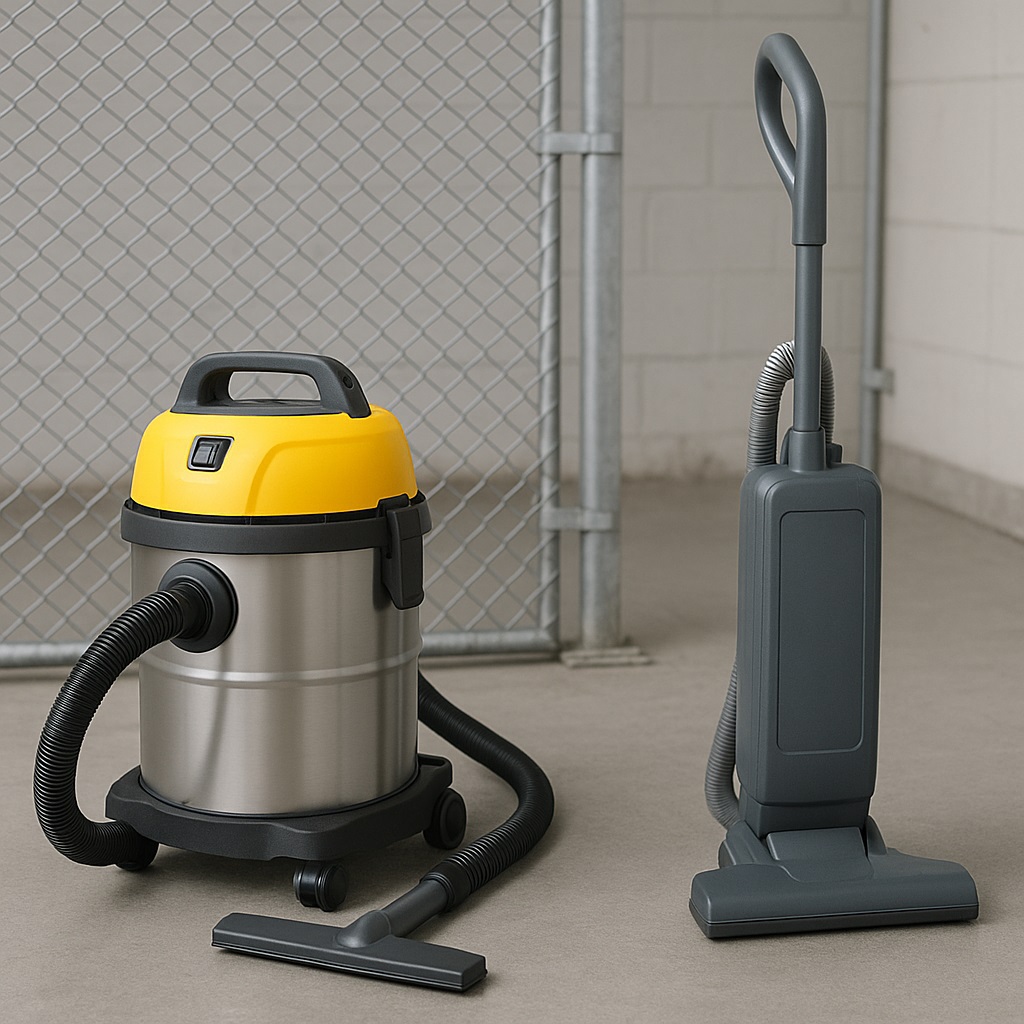
Industrial cleaning environments place extreme demands on equipment. Dust volume, debris type, long operating hours, and safety requirements all exceed typical commercial or residential conditions.
For distributors and buyers serving factories, warehouses, and industrial facilities, the key question is clear: Are barrel vacuum cleaners a safer and more reliable choice than upright vacuums for industrial use?
1. Understanding Industrial Cleaning Requirements 🏭
Industrial environments differ significantly from offices or homes.
Typical challenges include:
Large quantities of dust and debris
Long, continuous cleaning cycles
Mixed dry and wet waste
Safety and compliance requirements
Vacuum cleaners used in these environments must be designed for robustness, not convenience.
2. Structural Strength and Equipment Stability 🔧
Safety begins with physical stability.
Upright vacuum cleaners:
Are taller and more top-heavy
Are prone to tipping on uneven surfaces
Use lighter structural materials
Barrel vacuum cleaners:
Have low center of gravity
Offer stronger, reinforced housings
Remain stable during movement and operation
This structural advantage reduces accident risk in busy industrial settings.
3. Capacity and Workflow Efficiency 📦
Industrial cleaning often involves large debris volumes.
Upright vacuums:
Have limited dust container capacity
Require frequent emptying
Interrupt cleaning workflows
Barrel vacuum cleaners:
Offer large-capacity containers
Support extended operation
Reduce handling and exposure risks
Fewer interruptions improve both productivity and safety.
4. Motor Protection and Continuous Operation ⚙️
Industrial use places heavy stress on motors.
Upright vacuum cleaners:
Barrel vacuum cleaners:
Use motors designed for extended runtime
Feature better airflow and cooling
Deliver consistent performance under load
Reliable operation reduces downtime and maintenance incidents.
5. Wet, Heavy, and Hazardous Material Handling 💧
Industrial facilities frequently deal with mixed waste.
Barrel vacuum cleaners:
Are suitable for wet and dry applications
Handle heavier debris safely
Are easier to clean and maintain after exposure
Upright vacuums are typically unsuitable for liquids and heavy industrial debris, increasing risk of damage and unsafe operation.
6. Maintenance Safety and Serviceability 🔄
Maintenance itself can introduce risk.
Upright vacuums:
Use integrated components
Are harder to repair safely
Often require full unit replacement
Barrel vacuum cleaners:
Easier maintenance supports safer long-term operation.
7. Compliance and Professional Standards 📋
Many industrial clients must comply with safety and operational standards.
Barrel vacuum cleaners:
Are more easily adapted to compliance requirements
Support filtration and containment upgrades
Align with professional cleaning standards
This compliance readiness is critical for industrial procurement decisions.
8. Risk Profile From a Distributor Perspective 📉
Distributors serving industrial markets must manage risk carefully.
Barrel vacuum cleaners:
Upright vacuums carry higher risk when sold into industrial environments due to misuse, damage, and performance limitations.
Industrial Safety Comparison Summary
From an industrial safety and reliability standpoint:
Upright vacuum cleaners: limited capacity, higher instability, higher operational risk
Barrel vacuum cleaners: stronger structure, safer handling, better suitability for industrial use
This makes barrel vacuums the safer bet in demanding environments.
Conclusion: Safety, Reliability, and Long-Term Value Favor Barrel Vacuums
In industrial cleaning applications, safety and reliability are non-negotiable. Barrel vacuum cleaners outperform upright vacuums in stability, capacity, continuous operation, and maintenance safety, making them the preferred choice for factories, warehouses, and heavy-duty cleaning tasks.
For distributors focused on reducing risk and strengthening vacuums procurement and vacuum cleaner distribution in industrial markets, barrel vacuum cleaners provide a safer, more predictable foundation for long-term success.
For industrial-grade vacuum solutions and professional cooperation opportunities, visit www.lxvacuum.com.
Target Readers
Industrial vacuum cleaner distributors
Commercial and industrial cleaning equipment importers
Factory and warehouse procurement managers
B2B risk and operations teams
OEM and private-label vacuum brands
50 Related Keyword Groups
barrel vacuum cleaner, industrial vacuum cleaner, upright vacuum cleaner, industrial cleaning equipment, commercial vacuum safety, heavy duty vacuum cleaner, industrial vacuum durability, barrel vs upright vacuum industrial, factory cleaning vacuum, warehouse vacuum cleaner, professional industrial vacuum, wet and dry industrial vacuum, large capacity industrial vacuum, industrial vacuum safety standards, vacuum cleaner distributor industrial, B2B vacuum distribution, vacuums procurement, vacuum cleaner distribution, Lanxstar vacuum cleaner, commercial vacuum supplier, industrial vacuum distributor, professional cleaning equipment wholesale, industrial vacuum risk management, vacuum cleaner stability industrial, industrial vacuum motor protection, industrial vacuum maintenance safety, vacuum cleaner compliance industrial, industrial vacuum long runtime, professional vacuum solutions, industrial cleaning safety equipment, wholesale industrial vacuum, vacuum cleaner industrial ROI, industrial vacuum application analysis, vacuum cleaner industrial standards, B2B industrial cleaning equipment, industrial vacuum market, heavy duty cleaning solutions, vacuum cleaner industrial performance, distributor industrial vacuum strategy, industrial cleaning equipment procurement, professional industrial vacuum systems