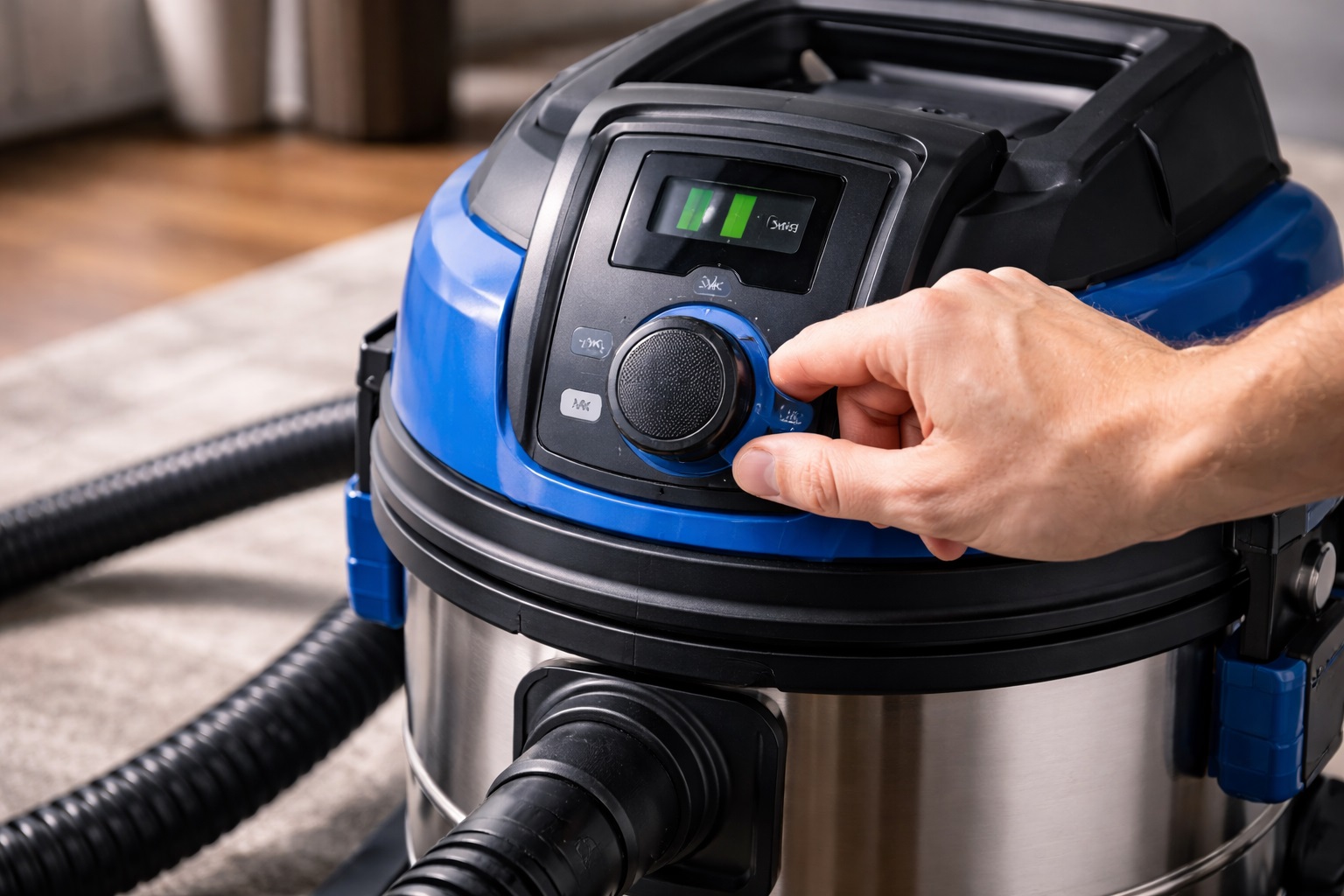
Adjusting suction power is one of the most overlooked yet critical aspects of professional cleaning.
Using excessive suction on delicate floors can cause:
Using insufficient suction on carpets can result in:
Whether operating a wet and dry vacuum cleaner in commercial spaces or using a Multi-Functional Durable Vacuum Cleaner in mixed-use environments, understanding suction control improves both efficiency and equipment longevity.
⚙️ ① Understanding How Suction Power Works
Suction strength depends on:
Motor wattage
Airflow (CFM)
Water lift (mmH₂O)
Airflow resistance
A High Suction Vacuum Cleaner delivers stronger negative pressure, allowing deeper debris extraction.
However, suction must be matched to surface type to avoid unnecessary strain on the motor and flooring.
Proper adjustment improves both cleaning quality and energy efficiency.
🪵 ② Hardwood Floors: Controlled & Gentle Suction
Hardwood and delicate surfaces require moderate suction.
Using a system configured as a Vacuum Cleaner for Hardwood Floors helps:
Recommended settings:
Lower airflow setting
Soft brush attachment
Reduced motor speed
Excessive suction on hardwood may cause vibration and surface wear.
Balanced suction preserves floor integrity.
🧶 ③ Low-Pile Commercial Carpet: Medium to High Suction
Office buildings and retail spaces often use low-pile carpets.
Recommended:
Medium-to-high suction
Standard floor nozzle
Slow overlapping passes
A High Suction Vacuum Cleaner removes embedded dust without requiring multiple passes.
Too low suction increases cleaning time and leaves fine particles behind.
🧵 ④ Thick or High-Pile Carpet: Maximum Suction with Care
High-pile carpets trap deep dust and sand.
Recommended:
Ensure motor cooling remains adequate during long sessions.
For large carpeted areas, a Fast Lightweight Vacuum Cleaner improves mobility and reduces operator fatigue.
Strong suction + smooth maneuverability = optimal productivity.
🧱 ⑤ Tile & Concrete Floors: Balanced Power for Dust Extraction
In industrial or warehouse environments:
Use:
If moisture is present, a wet and dry vacuum cleaner ensures safe and efficient liquid removal before switching back to dry mode.
Avoid running maximum suction unnecessarily on smooth surfaces — it increases energy use without added benefit.
🏢 ⑥ Multi-Surface Commercial Environments
Modern facilities often combine:
Hardwood offices
Carpeted corridors
Tile entrances
Concrete storage areas
A Vacuum for Multi-Surface system allows seamless suction adjustment without switching machines.
Key features to look for:
Versatility reduces downtime and improves operational flexibility.
🔋 ⑦ Energy Efficiency & Motor Protection
Running maximum suction continuously increases:
Energy consumption
Motor temperature
Component wear
An Energy-Saving Efficient Powerful Vacuum Cleaner (if integrated in barrel systems) optimizes airflow-to-power ratio.
Practical tip:
Use maximum suction only when necessary.
Lower settings extend motor lifespan and reduce electricity cost.
Efficiency improves when suction matches actual cleaning demand.
📊 Suction Setting Guide by Surface Type
| Surface Type | Recommended Suction | Attachment Type |
|---|
| Hardwood | Low–Medium | Soft brush |
| Tile | Medium | Standard nozzle |
| Low-Pile Carpet | Medium–High | Carpet brush |
| High-Pile Carpet | High | Adjustable head |
| Wet Surface | Wet Mode | Liquid nozzle |
Structured adjustment reduces cleaning time by 15–25% in multi-surface facilities.
🌍 Europe vs Middle East Flooring Considerations
Europe
Precise suction adjustment protects delicate surfaces.
Middle East
Higher suction often required for sand removal.
🔧 ⑧ Common Suction Adjustment Mistakes
❌ Running maximum power on every surface
❌ Ignoring airflow resistance when filters clog
❌ Using incorrect nozzle attachments
❌ Not adjusting suction when switching from carpet to hardwood
Small mistakes reduce efficiency and increase wear.
❓ FAQ
Q1: Is higher suction always better?
No. Excessive suction can damage delicate floors and waste energy.
Q2: How do I know if suction is too strong?
If the nozzle sticks aggressively to the floor or causes vibration, reduce airflow.
Q3: Does suction adjustment affect motor lifespan?
Yes. Balanced usage reduces overheating and wear.
Q4: Can one machine handle all flooring types?
Yes, especially when designed as a Vacuum for Multi-Surface with adjustable suction control.
✅ Conclusion
Adjusting suction power correctly ensures:
Whether using a High Suction Vacuum Cleaner, a durable barrel platform, or a flexible wet and dry vacuum cleaner, proper suction management transforms cleaning from brute force into controlled precision.
The smarter you adjust, the longer your equipment performs.
📌 Suitable Readers
Commercial cleaning contractors
Facility managers
Property management companies
Hospitality maintenance teams
Cleaning equipment distributors
📌 Hashtags
Lanxstar, wet and dry vacuum cleaner, Multi-Functional Durable Vacuum Cleaner, High Suction Vacuum Cleaner, Fast Lightweight Vacuum Cleaner, Vacuum Cleaner for Hardwood Floors, Vacuum for Multi-Surface, commercial vacuum suction adjustment, multi surface cleaning equipment, hardwood floor vacuum solution, industrial barrel vacuum system, professional cleaning equipment guide, energy efficient cleaning system, B2B vacuum distributor, Europe cleaning equipment supplier, Middle East facility maintenance tools, high airflow vacuum system, durable cleaning machine, facility management cleaning tools