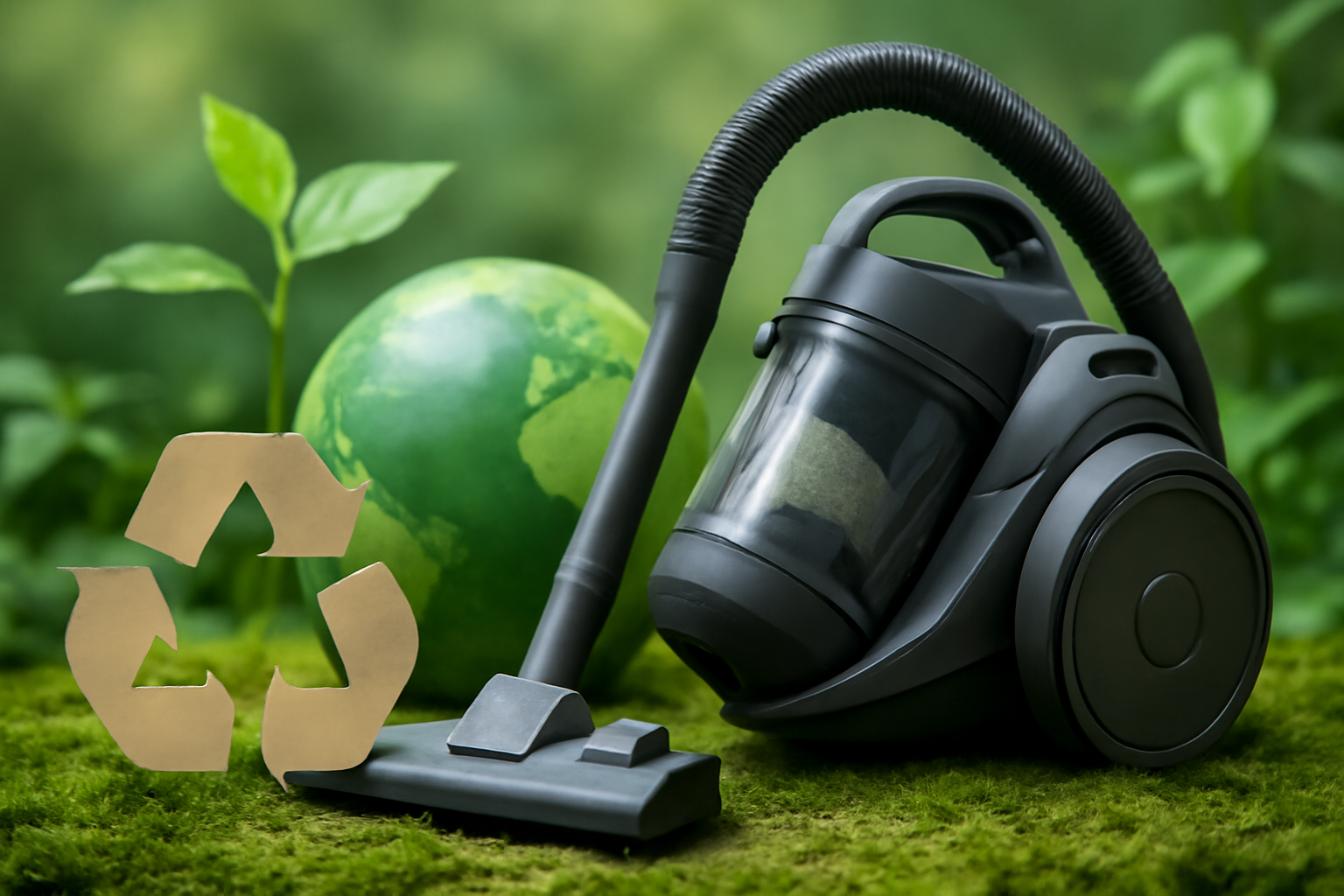
As environmental awareness increases across global markets, consumers are demanding more from the products they buy—including their vacuum cleaners. In this climate, sustainability isn’t just a competitive edge for manufacturers; it’s a non-negotiable expectation.
1. The Rise of the Eco-Conscious Consumer
Today’s consumers are more informed and environmentally aware than ever before. They seek out brands that actively reduce carbon footprints, use recyclable materials, and adopt responsible production methods. In a recent study by NielsenIQ, over 70% of global consumers said they would pay a premium for sustainable household products. For vacuum cleaner manufacturers, this shift represents both a challenge and an opportunity.
2. Designing for Sustainability
From material selection to energy performance, sustainability should be built into every stage of vacuum cleaner production. Leading brands like Dyson are reimagining their supply chains by using recycled plastics, energy-efficient motors, and modular designs that make repairs easier—reducing landfill waste and extending product life cycles.
But sustainability also means rethinking the vacuum cleaner itself. Imagine a model that delivers high suction for effective cleaning, is easy to move thanks to a portable and lightweight frame, and operates with minimal noise in any environment. Add a self-cleaning mechanism that reduces user maintenance, multi-functionality that adapts to different floor types, and a durable build for long-term use. This machine should be fast in response, energy-saving to reduce electricity usage, efficient in airflow, powerful enough for industrial spaces, and designed with a large-capacity tank for both wet and dry tasks. All of these features come together in a truly high-suction and portable, yet quiet and self-cleaning, multi-functional and durable, fast-operating and lightweight, energy-saving and efficient, powerful with large-capacity wet and dry vacuum cleaner.
3. Meeting Global Regulatory Requirements
Governments worldwide are enforcing stricter sustainability regulations. The European Union, for instance, mandates energy labeling and eco-design compliance for all household appliances. Manufacturers failing to meet these standards risk product bans or penalties. Similarly, in the U.S., Energy Star ratings are becoming a critical factor in retail shelf space allocation.
To stay ahead, vacuum cleaner manufacturers must partner with global compliance experts like Intertek or TÜV SÜD to ensure every unit meets regional expectations—while also aligning with the United Nations Sustainable Development Goals (SDGs).
4. Building Consumer Trust Through Green Innovation
Sustainable design is also a brand-builder. Products marketed as eco-friendly often attract higher brand loyalty and better customer reviews. Transparency in sourcing, low-noise and low-emission performance, and energy-saving credentials all matter to today’s buyers.
Incorporating sustainability doesn’t mean sacrificing performance—it means delivering long-term value in a conscious package. When done right, it sets the stage for global expansion and next-generation brand identity.
Manufacturers that embed sustainability into product design and business operations are more likely to meet regulatory demands, earn customer loyalty, and lead in the next era of home cleaning technology. To explore how sustainability can shape the future of your product line, visit www.lxvacuum.com.