Hi, message us with any questions.
We're happy to help!





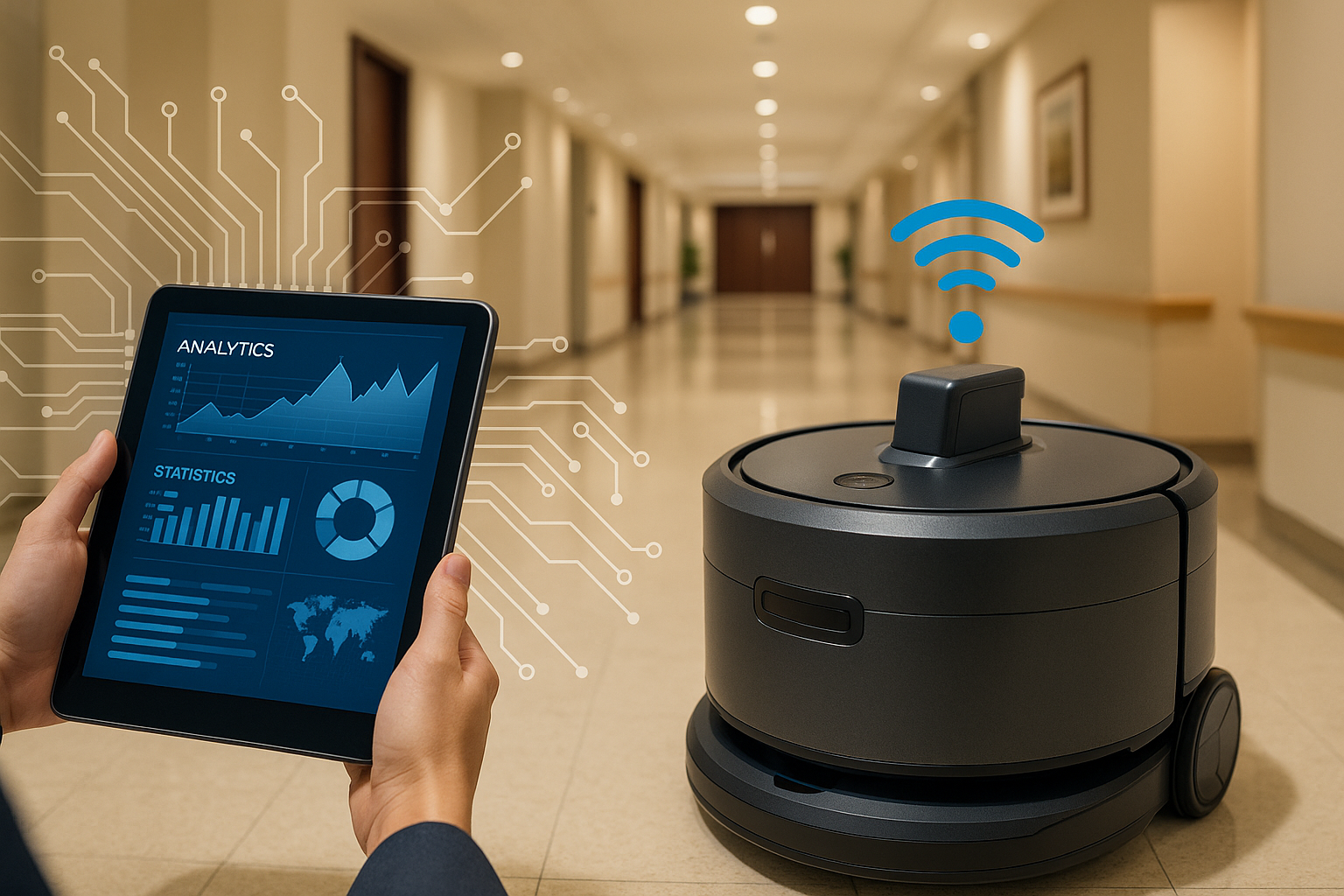
🌍 For importers, distributors, and manufacturers, the most valuable clients in the vacuum cleaner industry are not individual households but large facilities such as hotels, hospitals, and corporate campuses. These clients purchase in bulk, demand consistent service, and represent long-term recurring revenue opportunities. However, converting them from traditional procurement to smart vacuum contracts requires more than just machines. The integration of IoT (Internet of Things) and data analytics can transform how these facilities perceive value, providing visibility, efficiency, and predictive services that traditional models cannot match.
This article explores the strategic role of IoT and analytics in convincing large facilities to adopt smart vacuum solutions, while also highlighting how manufacturers and importers can structure offerings for sustainable growth.
📦 1. Why Large Facilities Are Ideal for Smart Contracts
Large facilities face challenges that make them prime candidates for IoT-enabled solutions:
Scale of operations: A luxury hotel may operate hundreds of cleaning devices daily.
Hygiene standards: Hospitals cannot risk downtime in cleaning equipment.
Cost control: Facility managers are under pressure to reduce labor and maintenance costs.
Smart contracts offer a solution by integrating IoT and analytics into everyday cleaning operations. For example:
A High Suction Vacuum Cleaner used in warehouses can report filter saturation before failure.
A Portable Quiet Vacuum Cleaner in hotels can optimize usage schedules to reduce noise during guest hours.
A Self-Cleaning Vacuum Cleaner in hospitals can automatically notify staff when cartridges are due for replacement.
🌍 2. IoT as the Backbone of Smart Contracts
IoT transforms vacuums from standalone devices into connected systems. By embedding sensors and connectivity, suppliers create an ongoing stream of operational data.
The Multi-Functional Durable Vacuum Cleaner can monitor motor health and transmit diagnostics to service teams.
A Fast Lightweight Vacuum Cleaner can log runtime hours and send alerts when brushes require replacement.
The Energy-Saving Efficient Powerful Vacuum Cleaner can optimize electricity use, ensuring facilities meet energy reduction goals.
For large facilities, this level of connectivity builds confidence, as managers no longer rely on manual inspections or guesswork.
🚚 3. Data Analytics for Predictive Maintenance
IoT generates data, but analytics transforms it into actionable insights. Predictive maintenance is particularly appealing for hospitals and hotels.
A Large-Capacity Wet Dry Vacuum Cleaner used in hospital corridors can send predictive alerts when tanks near saturation.
A Li-ion Cordless Handheld Vacuum Cleaner in hotel housekeeping can forecast when batteries need replacing, preventing sudden downtime.
Usage analytics from Wet Dry Vacuum Cleaners can identify overworked units and redistribute workloads to extend lifespan.
Predictive insights reduce emergencies, saving facilities both money and reputation risk.
⚙️ 4. Shifting from Equipment Sales to Service Contracts
With IoT integration, vacuum cleaners are no longer just machines but service platforms. This shift allows suppliers to sell contracts instead of one-time products.
A hotel chain may sign a three-year smart contract for the 4 in 1 Cordless Smart Wet & Dry Vacuum Cleaner, with consumables included.
A hospital may commit to annual service plans for cordless handheld vacuums, bundling predictive maintenance and data dashboards.
Universities may sign multi-facility contracts for the Cordless Vacuum Cleaner, paying for uptime guarantees instead of outright ownership.
This model locks in customers while creating stable, predictable income for suppliers.
💡 5. Operational Efficiency for Facilities
Facility managers face pressure to do more with fewer resources. IoT-enabled vacuums directly address this challenge.
The Car Vacuum Cleaner in a rental company fleet can report usage per vehicle, reducing redundancy.
The quiet vacuum cleaner in a luxury resort can be scheduled during low-occupancy hours, balancing cleaning efficiency with guest experience.
IoT data from a wet dry vacuum can help facility managers assign the right devices to the right jobs, avoiding overuse.
For importers and distributors, this efficiency is a selling point that justifies premium pricing.
🔄 6. Sustainability and Compliance Benefits
Sustainability has become a non-negotiable factor in procurement decisions. IoT and data analytics help facilities prove compliance with ESG goals.
A Self-Cleaning Vacuum Cleaner can log consumable cartridge recycling rates.
Energy dashboards from an Energy-Saving Efficient Powerful Vacuum Cleaner show compliance with green building certifications.
A Large-Capacity Wet Dry Vacuum Cleaner can track water use and align with zero-waste reporting.
This strengthens proposals for contracts in Europe and North America, where procurement policies demand eco-friendly solutions.
📊 7. Building Dashboards for Facility Clients
Data without visibility has no value. Dashboards provide clients with actionable insights.
The High Suction Vacuum Cleaner can show suction efficiency trends over time.
A Portable Quiet Vacuum Cleaner can integrate noise monitoring reports for compliance audits.
A Multi-Functional Durable Vacuum Cleaner can generate fleet-wide health reports, enabling managers to optimize asset allocation.
Dashboards also reinforce lock-in: once facilities depend on your platform for daily operations, switching suppliers becomes costly and inconvenient.
🌐 8. Training and Integration for Facility Teams
Technology adoption is only successful when facility teams are trained to use it effectively.
Housekeeping staff using the Fast Lightweight Vacuum Cleaner must be trained to interpret usage alerts.
Maintenance engineers servicing the Large-Capacity Wet Dry Vacuum Cleaner must understand predictive data reports.
Staff handling cordless handheld vacuums must follow proper charging cycles indicated by IoT alerts.
Training ensures that IoT and analytics deliver value instead of confusion.
🔧 9. Addressing Barriers to Adoption
Despite the benefits, some facility managers resist IoT solutions. Concerns include:
Cost: Initial contracts may seem expensive.
Complexity: Fear of managing new dashboards and systems.
Trust: Worries about supplier reliability.
To overcome these barriers, suppliers must offer pilots, ROI calculators, and transparent service-level agreements. Demonstrating how the Cordless Vacuum Cleaner reduces long-term operational costs can shift conversations from expense to investment.
🚀 10. The Future of Smart Facility Contracts
As IoT adoption grows, contracts will evolve from machine-focused to outcome-focused agreements. Facilities will pay for cleanliness levels, uptime guarantees, and sustainability metrics rather than individual machines.
Resorts may commit to quiet-hour guarantees powered by the quiet vacuum cleaner.
Hospitals may sign hygiene-compliance contracts tied to the Self-Cleaning Vacuum Cleaner.
Industrial complexes may agree to uptime guarantees for fleets of wet dry vacuum units.
This future rewards suppliers who invest early in IoT and analytics infrastructure.
✅ Conclusion
IoT and data analytics are not just add-ons but transformative tools for converting hotels, hospitals, and large facilities into long-term smart vacuum contracts. From the High Suction Vacuum Cleaner to the Cordless Vacuum Cleaner, every model becomes a service platform when connected, predictive, and integrated with sustainability.
By shifting from product sales to service-based ecosystems, suppliers create lasting relationships, stable revenue, and competitive advantages in mature markets.
For more insights on building smart contracts for B2B clients, visit www.lxvacuum.com
📌 Suitable Audience
Importers and distributors targeting large facilities
Facility procurement managers in hotels and hospitals
Manufacturers exploring IoT-enabled service contracts
Engineers developing connected vacuum solutions
📌 50 Related Keywords
IoT vacuum cleaner solutions, predictive analytics vacuum cleaners, smart vacuum contracts B2B, hotel facility vacuum management, hospital vacuum cleaner ecosystem, data-driven vacuum sales, vacuum cleaner subscription contracts, smart cleaning equipment procurement, IoT-enabled consumables tracking, vacuum cleaner digital dashboards, facility management vacuum analytics, sustainable vacuum cleaner contracts, recurring revenue smart vacuums, connected vacuum cleaner training, AI-enabled cleaning equipment, cross-border smart appliance contracts, vacuum cleaner IoT monitoring, cordless vacuum contract solutions, hybrid robot vacuum contracts, predictive consumable replacement vacuum cleaners, vacuum cleaner uptime guarantees, hospital hygiene vacuum analytics, hotel quiet vacuum procurement, smart ecosystem appliances B2B, vacuum cleaner importer digital strategies, fleet vacuum cleaner IoT integration, ESG compliance vacuum cleaners, cloud-based vacuum dashboards, data-powered appliance contracts, smart cleaning fleet management, predictive warranty vacuum cleaners, connected consumables subscription appliances, B2B client retention smart vacuums, IoT-enabled wet dry vacuums, cordless handheld vacuum analytics, energy-saving vacuum contract proposals, large-capacity vacuum IoT services, sustainable smart appliance contracts, vacuum cleaner predictive ROI, AI-enabled consumable forecasts, facility automation cleaning equipment, smart cleaning procurement strategies, predictive maintenance IoT vacuums, hospital smart contract cleaning, hotel appliance IoT procurement, connected cleaning equipment supply chain, digital ecosystem vacuum cleaners, importer IoT adoption strategies, long-term smart vacuum partnerships